Breakfast forum: Mexico's Deadly Drug War
Hovedinnhold
Åse Gilje Østensen (UiB) in conversation with Camilo Pérez-Bustillo (UACM/CROP) and Benedicte Bull (SUM/UiO)
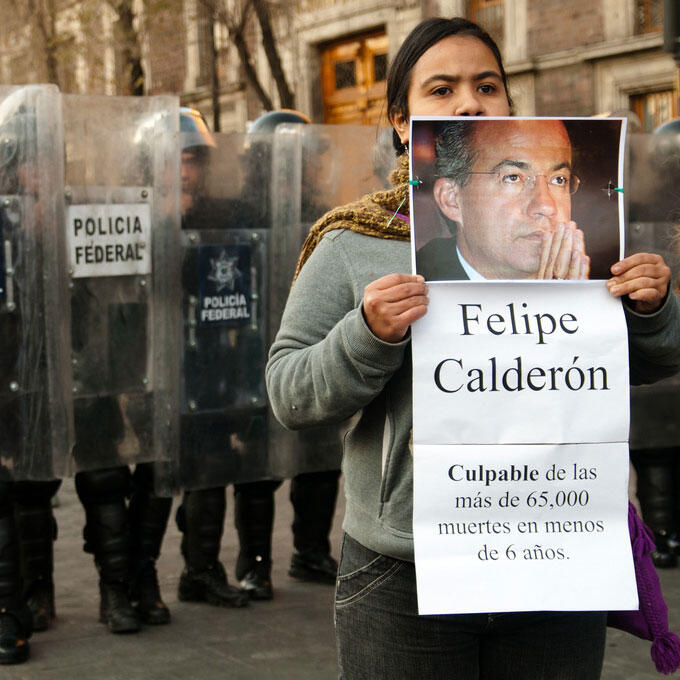
The Mexican Drug War is an ongoing armed conflict between rival drug cartels and the Mexican government forces. In 2006, former president Felipe Calderón launched a severe clampdown against drug trafficking with assistance from the U.S. According to Human Rights Watch, more than 60,000 people have lost their lives in drug-related violence in Mexico over the last six years.
There is no agreement on how to address and solve Mexico's internal strife. However, a tendency is that a growing number of analysts highlight that the U.S. war on drugs needs a new strategy. In December 2012, Enrique Peña Nieto succeeded Calderón as president and he has announced intentions to shift Mexico’s drug war strategy.
What is the situation in Mexico today? Who are the cartels, and how many are they? What are the Mexican and American strategies? What kind of consequences does the drug-related crime have on the Mexican society and the people living there?
Camilo Pérez-Bustillo is Research Professor of the Graduate Programme in Human Rights and the Faculty of Law, Autonomous University of Mexico City (UACM) since April 2006, and was from 1993 to 2002 Research Professor at the Instituto Tecnológico y de Estudios Superiores de Monterrey (ITESM). He has written extensively on global human rights discourse and practices and their historical, philosophical, and ethical origins, and regarding the rights of indigenous peoples, and migrants, refugees, and the displaced ("peoples in movement") in the context of poverty and inequality. He has been engaged with CROP´s work on human rights and poverty since 1997.
Bendicte Bull is Associate Professor and Project Leader for the Norwegian Network of Latin America Studies (NorLARNet) at The Center for Development and the Environment (SUM). Her main research interests focus on the role of business in governance, free trade and regional integration and multilateral aid and conditionality. Her current research projects focus on the role of political and economic elites and public-private relations in development and environmental governance in Latin America.