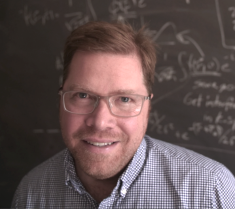
Louis Deslauriers : Beyond the Lecture
The Illusion of Learning, What to Do About It, and How AI Can Help
Hovedinnhold
Why do students and faculty so often overestimate the effectiveness of traditional lectures, even in the face of overwhelming evidence for active learning? Research from our 2019 PNAS study shows that the ease of listening to a polished lecture can create a powerful illusion of learning—students feel like they’ve learned more, even when they’ve learned less. This “feeling of learning” bias plays out in classrooms every day, influencing student choices, faculty decisions, and course evaluations. In contrast, the more demanding approach of deliberate practice—structured, effortful, and iterative—is often considered the gold standard of active learning, a kind of active learning on steroids. Rooted in expertise research, it produces significantly greater learning gains. Cognitive psychology helps explain why: perceived fluency and feelings of learning can diverge sharply from actual learning, leading students to undervalue approaches that feel harder but teach more. Practical strategies can address these misperceptions and help students embrace the productive discomfort that drives genuine mastery.
AI offers new tools to help meet these challenges. Real-time AI can answer student questions during class and increase engagement, while high-performance AI tutors can mimic expert human teachers to provide personalized, scalable support. Combining evidence-based teaching with advanced AI can close the gap between how much students think they’re learning and how much they actually learn
Louis Deslauriers is the Director of Science Teaching and Learning in the Faculty of Arts and Sciences and a Senior Preceptor in Physics at Harvard University. His academic career began in experimental atomic physics and now includes research in astrophysics, alongside his work in physics education.
At Harvard, he mentors instructors in adopting research-based pedagogical approaches, develops methods to assess instructional effectiveness, and designs teaching techniques to optimize learning outcomes. His research includes a significant focus on deliberate practice, applied to increase the effectiveness of active learning inside and outside the classroom. One study on this approach (L. Deslauriers, et al., Science, 2011) showed that it can yield substantial learning gains without sacrificing content coverage and has been widely adopted across North American universities.
He also investigates the cognitive psychology of learning, notably the gap between students’ perception of learning and their actual learning (L. Deslauriers, et al., PNAS, 2019). Most recently, his work has expanded to integrating artificial intelligence in the classroom—from real-time AI tools that answer student questions during lectures to high-performance AI tutors that deliver personalized, scalable learning experiences.