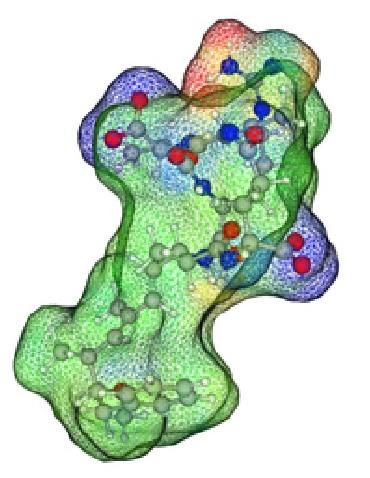
Chemical modifications of toxins - Making a trojan horse for cancer cells
Several cyanobacterial peptides are potent toxins for cancer cells when they are injected into the cells. However, the toxins often lack the ability of being transported into cells spontaneously.

Hovedinnhold
In a recent report by Lars Herfindal and coworkers they present a strategy to facilitate transport of a cancer killing toxin into cells by chemical modifications.
The cyanobacterial peptides nodularin and microcystin inhibit major protein Ser/Thr phosphatases, causing severe perturbation of protein phosphorylation leading to rapid apoptotic death. The toxins cannot be used directly against cancer cells, since they do not enter such cells, but rather enter liver cells (hepatocytes) via specific transporters. The TSG group (S. Døskeland) has, with chemists in Germany and Poland, produced acyloxymethyl- modified nodularin and microcystin. These compounds have no protein phosphatase inhibitory activity and low toxicity for hepatocytes, but when introduced specifically into cells (like cancer cells) they become activated through cleavage of the acyloxymethyl-group by intracellular esterases (see figure below). This paves the way for the use these potent toxins in formulations (like liposomes) targeted for cells (like cancer cells) to be eliminated. The results has been published in Journal of Medicinal Chemistry.