
Nyhetsarkiv for Globale samfunnsutfordringer

How are geopolitical change, new technologies, and shifting norms transforming migration and asylum regimes? These questions will be at the centre of a symposium, co-organised by UiB, held in Tijuana, Mexico, on 22 April 2026.
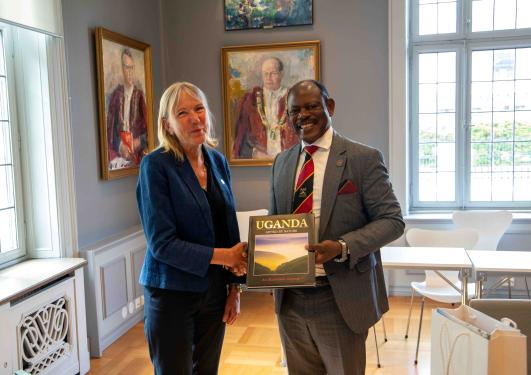
The two new projects will strengthen a global network for sustainable energy storage and Norwegian-Ugandan cooperation on global health. The partnerships will provide new initiatives and opportunities for international collaboration for students and staff at UiB, as well as for the partners.

Hybrid intelligence is the future, according to Professor Barbara Wasson. She will head the new research centre AI LEARN, which will conduct research on the interaction between human and artificial intelligence (AI) over the next five years.
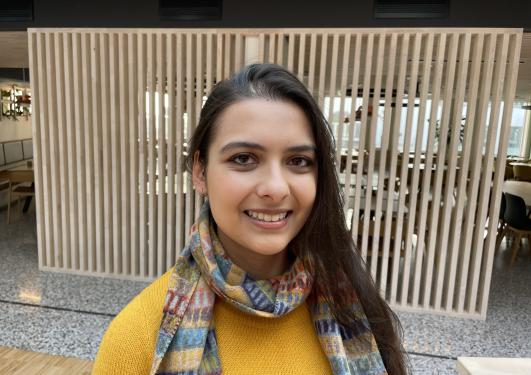
PhD candidate Sejal Pramlall is one of five young ocean researchers to be given the French Institute Nordic Award (FINA). The award will fund her participation at the third UN Ocean Conference in Nice in France in June.
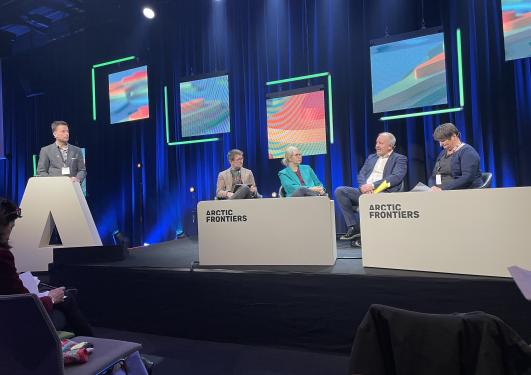
In the side event “License to Operate – The Arctic Energy Transition” at Arctic Frontiers 2025, stakeholders from across sectors joined forces to discuss the challenges lying ahead for the Arctic and the green transition of energy markets in a geopolitically challenging situation.

The University of Bergen has been confirmed as the UNAI SDG14 Hub Chair for 2025-2027 taking on three more years of responsibility to engage the global knowledge community in matters related to a sustainable ocean.

16 universities from across the globe come together to improve and increase access to higher education for refugees and their communities.

The SmallFish4Food project by University of Bergen researchers Jeppe Kolding and Ragnhild Overå is one of only 12 projects globally and five Norwegian projects to be awarded with funding through the SDG Pilots Call of the Global Research Council, with funding supplied via the Research Council of Norway.

Principal investigator Kerry Ryan Chance of the Habitable Air project spoke at the 2024 High-Level Political Forum (HLPF) at the United Nations in New York on the urgent issue of air pollution and how this impacts on climate change and public health.
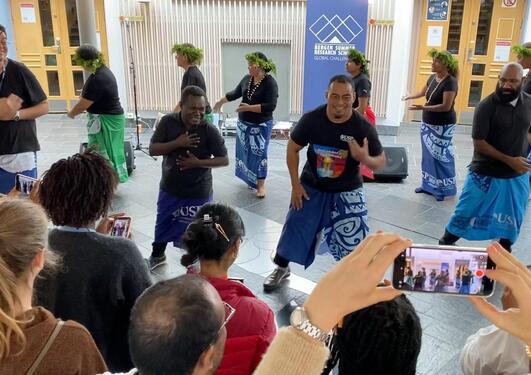
The Norway-Pacific Ocean-Climate (N-POC) Scholarship Programme is unique both in its content and scope. Both for its clear science-policy objectives and the way it’s been shaped as a truly joint doctoral programme.
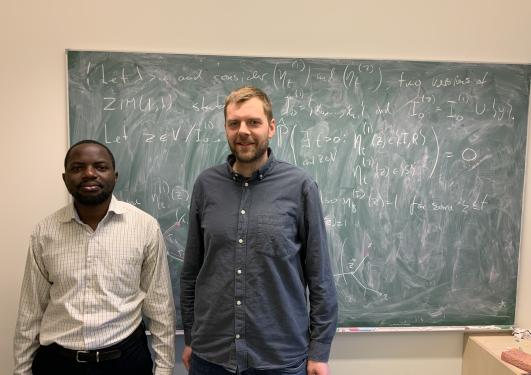
For PhD candidate Frank Namugera having in person tuition with Associate Professor Stein Andreas Bethuelsen at the University of Bergen is probably the most valuable component of work on his PhD thesis.

The Norway-Pacific Ocean-Climate (N-POC) Scholarship Programme was an active ingredient at the 2024 Bergen Summer Research School, bridging ideas of scientific knowledge and traditional knowledge on the ocean-climate nexus during two hectic weeks in Bergen.
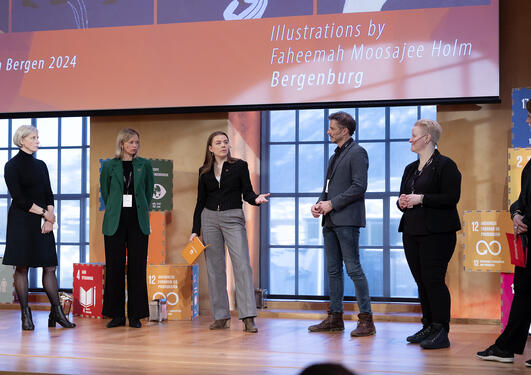
The 2024 conference consisted of both a digital day with talks and debates in English, where around 1300 people participated, and a physical conference day in Norwegian.

«We are well aware that a significant change is necessary. We have the knowledge that is needed. Now we must figure out what to do,» professor Håvard Haarstad at UiB says. The seventh SDG Conference in Bergen will be held from 7.-9. February. We ask: What should be the role of universities?
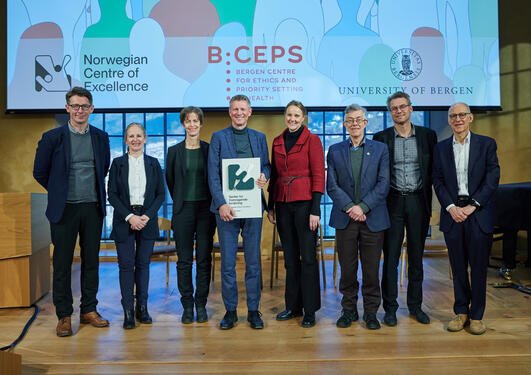
On Monday 8 January, the official opening of BCEPS Centre of Excellence took place in the university aula. The centre will develop new methods and ethical frameworks to help decision-makers in ensuring a fairer distribution of health services.
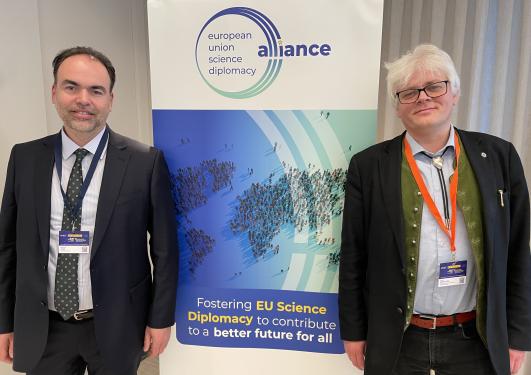
The Norway-EU Science Diplomacy Network had a strong presence at the European Science Diplomacy Conference, which took place in Madrid in December 2023.
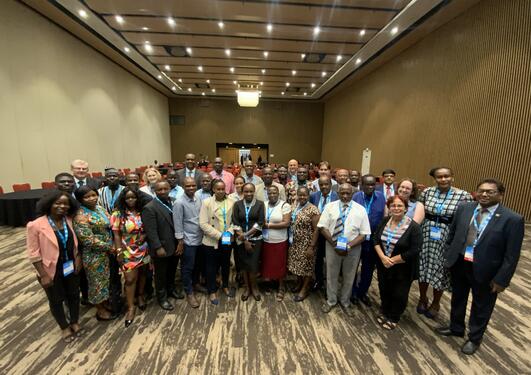
The Water ESSENCE Africa project organized an excellent and well-visited workshop during the International Water Association’s Congress in Kigali, Rwanda discussing how universities can contribute towards achievement of SDG6, Clean Water and Sanitation.
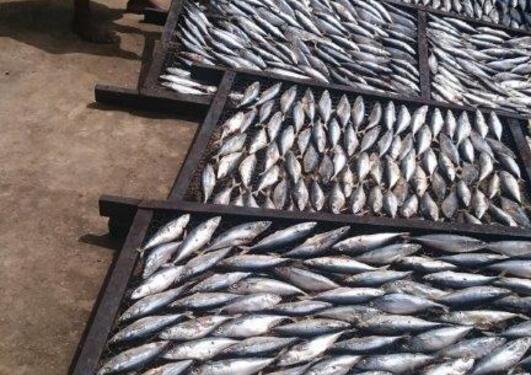
A new report from the UN’s Food and Agriculture Organization (FAO) states that small fish are an underestimated source of nutrition and can contribute to solving challenges related to food security globally. The conclusion is that the world must eat more nutritious food – and one of the answers is small fish.
Sider
- april 2026 (1)
- september 2025 (1)
- juni 2025 (1)
- april 2025 (1)
- februar 2025 (1)
- januar 2025 (1)
- september 2024 (1)
- august 2024 (1)
- juli 2024 (1)
- juni 2024 (3)
- februar 2024 (2)
- januar 2024 (1)
- desember 2023 (2)
- november 2023 (2)
- oktober 2023 (1)
- september 2023 (1)
- juni 2023 (2)
- mai 2023 (1)
- april 2023 (1)
- februar 2023 (2)
- januar 2023 (1)
- november 2022 (1)
- september 2022 (1)
- juni 2022 (1)
- april 2022 (3)
- februar 2022 (2)
- desember 2021 (2)
- oktober 2021 (1)
- august 2021 (1)
- juni 2021 (1)
- mai 2021 (2)
- februar 2021 (1)
- januar 2021 (1)
- september 2020 (1)
- august 2020 (1)
- april 2020 (1)
- september 2019 (1)
- januar 2019 (1)
- september 2017 (1)
- juni 2017 (4)
- november 2016 (1)
- august 2016 (1)