Opaque Futures: Challenge for Social Sciences
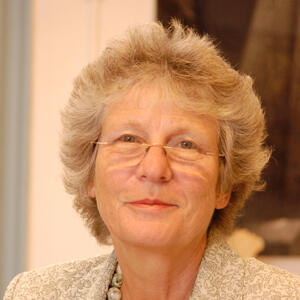
The Department of Sociology is pleased to invite you to a guest lecture from one of social science’s most prominent scholars on the topic of time. Professor Barbara Adam is a professor emerita at the University of Cardiff, UK. Her work has received wide acclaim and numerous prizes. Her most current research project was on the future, which is also the topic of her lecture.
Hovedinnhold
The future is opaque. Engagement with the future is therefore a confrontation with imperfect knowledge, ignorance, even non-knowledge. As such it is a problematic domain for scientific enquiry in general and social science investigation in particular. Conceived as ‘not yet’, the future is inaccessible as evidence, given that it becomes factual only once it materialises in the present. It is possible to produce probability calculations, predictions and models of the future, which are compatible with scientific methods of enquiry. However, given that this knowledge is rooted in past and present actions or events, its results are inescapably past-based simulations, masquerading as ‘knowledge’ of a future - at best imperfect, at worst a contradiction in terms. And yet, despite general awareness of the impossibility and mismatches involved, there is a clamour for such ‘knowledge’ as the basis for choices and actions in the present. The persistent disjuncture between such wishful expectation and possibility tends to underpin much of the drama of inappropriate responses to contemporary threats such as those associated with climate change, new technologies, novel viruses, wars and globalised markets. Given the many decades these challenges have been troubling contemporary societies, the pitiful lack of progress in apposite responses deserves serious attention by the social sciences, as do efforts to take account of some of the foundational matters that need to be addressed. In this lecture I offer a broad-brush overview of some issues for consideration as precondition to embracing social future making as key feature of social science practice.