
Nyhetsarkiv for Senter for dyphavsforskning
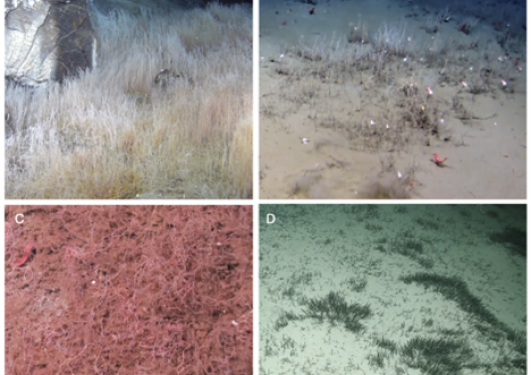
The start of the year marked the launch of WormFEST — a groundbreaking project exploring the fascinating worm forests found deep underwater near Arctic hydrothermal vents and cold seeps.

In collaboration, five researchers from several research institutions in Bergen have succeeded in attracting the largest international conference in deep-sea biology to Bergen in 2028. The team will jointly organize the conference, supported by local professional network Bergen Bathysphere.
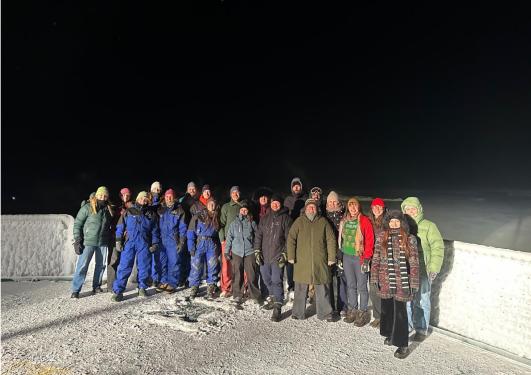
The CDeepSea Ultima Thule expedition on the R/V Kronprins Haakon left Longyearbyen on November 26, 2024 with the primary objective of mapping and sampling in the Lena Trough. However, the researchers and crew onboard were prepared for challenging sea ice conditions given the time of year and the northern latitudes... and that is what they encountered!

On the beautiful island of Milos (Greece), a recent field course offered CDeepSea students a unique opportunity to dive deep into the world of mineral deposits and hydrothermal systems. With an impressive ratio of 8 instructors to 14 students, the participants received training on a wide variety of topics relevant for minerals and mineral exploration, from economic geology and geochemistry to... Les mer
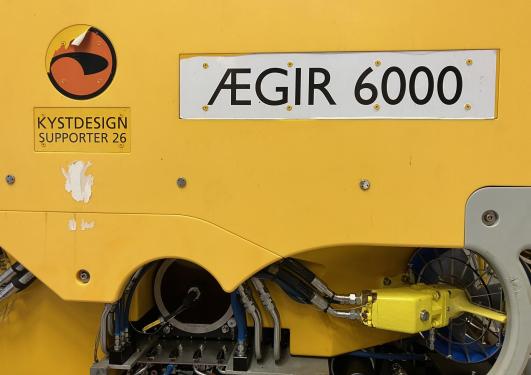
At the end of September it was announced that the NORMAR-II grant for upgrades to the Ægir 6000 ROV system has been approved! This funding ensures the Centre’s continued access to this essential deep-sea infrastructure and will allow us to keep the ROV system state-of-the-art. We’re looking forward to many more dives with upgraded equipment, pushing the boundaries of deep-sea exploration.

The GoNorth 2024 expedition concluded last week after a three-week scientific voyage, from August 29 to September 19, exceeding expectations with a wealth of new data, thanks to favourable ice and weather conditions.
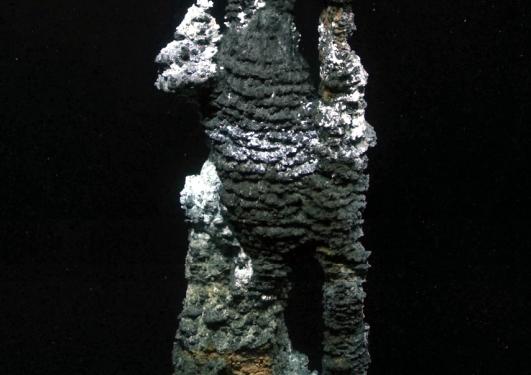
Our colleague at the Centre, deep-sea biologist Pedro Ribeiro, is onboard the RV Maria S. Merian participating in a research cruise led by the German Centre for Marine Environmental Sciences (MARUM) to explore and investigate the Jøtul hydrothermal vent field.
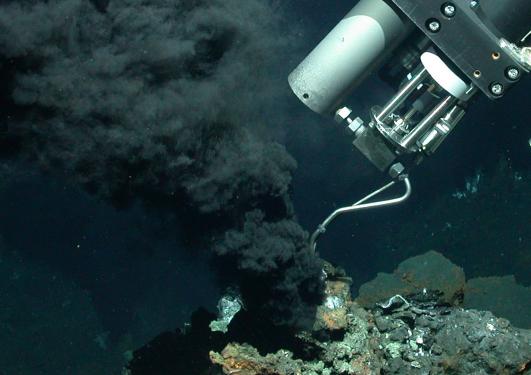
A new study led by Associate Professor Eoghan Reeves at the Centre for Deep Sea Research, just published in Geochimica et Cosmochimica Acta, sheds light on one of the pillars of chemosynthetic life at deep sea hot springs – the dissolved natural gas molecule, methane.
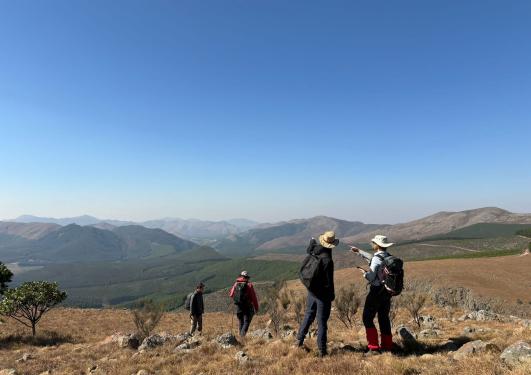
One of the best things of being a researcher is when you get the chance to broaden your horizons. This summer, geochemist Desiree Roerdink traveled to the Barberton Greenstone Belt in South Africa and dove back into the research field of sedimentology to find out how sulfate minerals formed on ancient shorelines, more than 3.2 billion years ago.
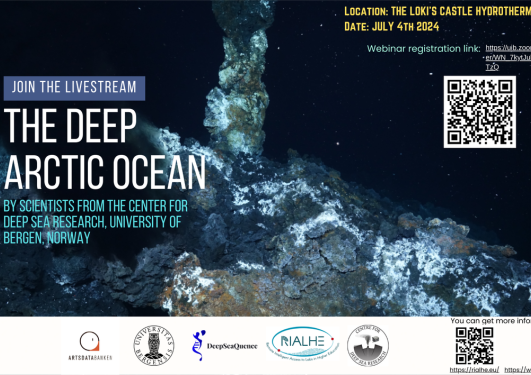
Watch the recording of our live-streamed remotely-operated dive at Loki's castle hydrothermal vent field in the Arctic, 2300 meters below sea level.
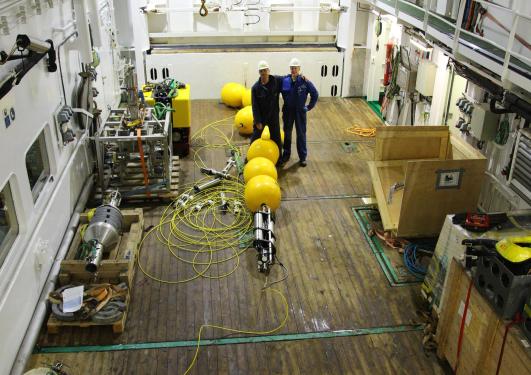
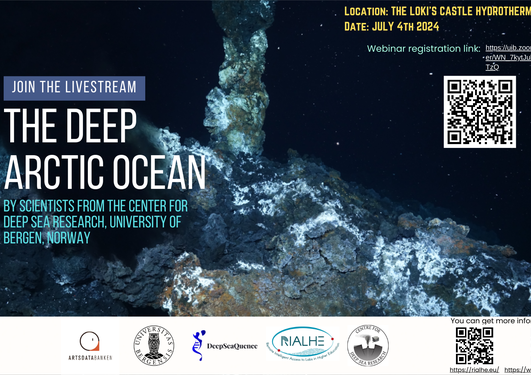
Join us for a live stream of a remotely-operated dive at Loki's castle hydrothermal vent field in the Arctic, 2300 meters below sea level.
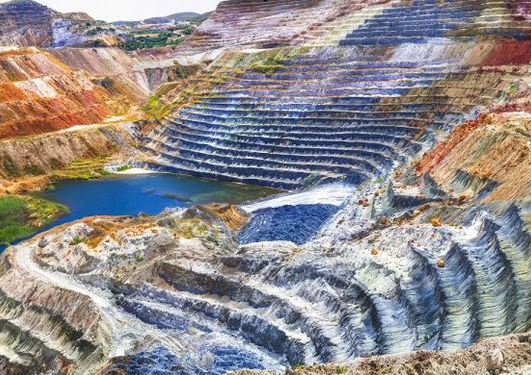
Members of the Center for Deep Sea Research have received funding from Akademia Avtalen to organize a field-based course on the Island of Milos (Greece). Here is the description and the application link.
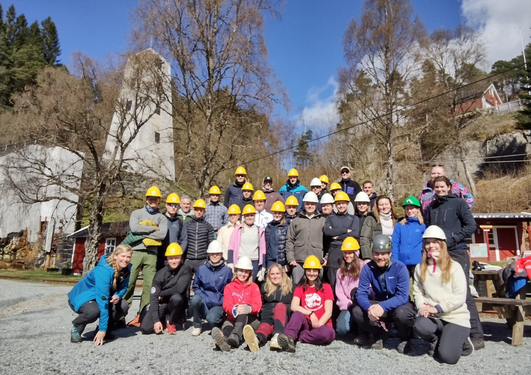
Last week, four members of the Centre for Deep Sea Research led a field excursion for the GEOV-109 Introduction to Geochemistry course at a former pyrite mine in Sunnhordland Geopark.

A lot is happening next week in Bergen, with among other the One Ocean week and the Ocean outlook events. Several members of the Centre for Deep Sea Research are involved in various events.
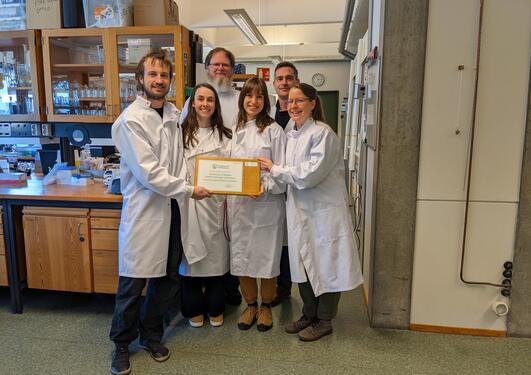
The Geomicrobiology Laboratory at UiB becomes the first public laboratory in Norway to receive the environmental certification from My Green Lab. The work on the certification has been done with support from the UiB Climate Fund.
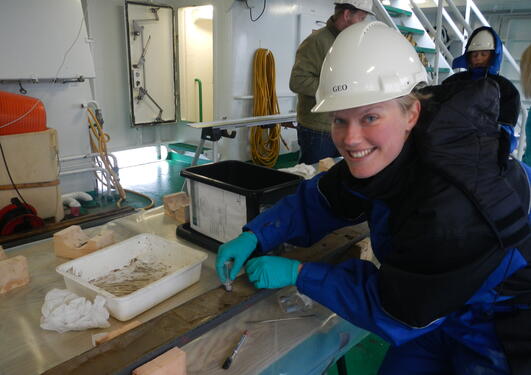
Are inactive hydrothermal area really inactive? Maybe not... At least not microbiologically.
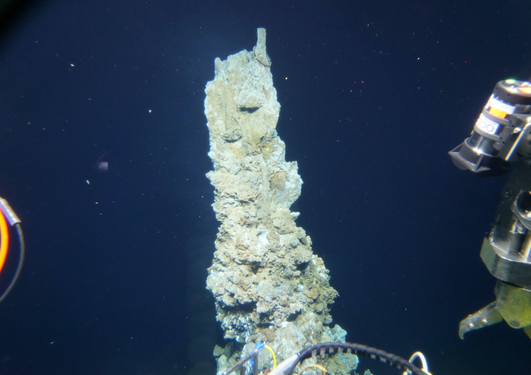
New microbiology research shows inactive hydrothermal vents are not so ‘dead’ after all (01.02.2024)
A new microbiology study points to highly active microorganisms living on ‘dead’ chimneys long after fluid flow has ceased to supply them with traditional chemical fuels. The findings have important implications for understanding inactive hydrothermal vents of commercial interest for deep-sea mining.
Sider
- februar 2025 (1)
- januar 2025 (1)
- desember 2024 (1)
- november 2024 (1)
- oktober 2024 (1)
- september 2024 (2)
- august 2024 (1)
- juli 2024 (3)
- juni 2024 (2)
- april 2024 (2)
- mars 2024 (1)
- februar 2024 (2)
- september 2023 (1)
- august 2023 (3)
- juli 2023 (3)
- juni 2023 (1)
- mai 2023 (1)
- februar 2023 (1)
- januar 2023 (1)
- august 2022 (1)
- juni 2022 (2)
- mai 2022 (1)
- mars 2022 (2)
- februar 2022 (2)
- november 2021 (2)
- september 2021 (3)
- juli 2021 (1)
- juni 2021 (6)
- juli 2020 (1)
- mai 2020 (1)
- april 2020 (1)
- mars 2020 (2)
- oktober 2019 (2)
- september 2019 (2)
- juni 2019 (7)
- januar 2019 (1)
- oktober 2018 (3)
- februar 2018 (1)
- desember 2017 (1)
- november 2017 (1)
- oktober 2017 (3)
- september 2017 (1)
- juli 2017 (1)
- mai 2017 (1)
- mars 2017 (1)