Back to the Plastic Island
On September 25th, the University of Bergen (UiB) organized a coastal cleanup for students and staff. As last year, the destination was Lisle Lyngøy, often referred to as “Plastic Island” off the coast of Hellesøy. The day was filled with strong impressions — and some good news for the island’s ecosystem.

Hovedinnhold
When the bus carrying students and staff headed towards Hellesøy — and the boat transfer to Lisle Lyngøy — it marked the sixth time UiB and its partners had arranged a plastic cleanup in connection with the national cleanup initiative known as “Strandryddeuka” (Beach Cleanup Week).
“With clear skies and a motivated group, the day was filled with positive energy and strong commitment from all involved,” said Professor Odd André Karlsen. He leads the Plastics Network at UiB, which organized the cleanup in collaboration with UiB’s Sustainability Pilots, the Bergen og Omland Friluftsråd (BOF), and Naturvernforbundet Hordaland.
An important initiative
“The Plastics Network aims to combat plastic pollution. One of the most important actions one can participate in is cleaning up plastic waste — especially along the coast, where the influx of plastic debris is high throughout the year. Organizing these cleanups is also crucial for raising awareness and engagement around plastic pollution. Many participants are surprised to see just how much plastic waste accumulates in our coastal and shoreline areas,” said Karlsen.

Ella Carlson was among the students who helped clean up Lisle Lyngøy on September 25th.
From 2018 to 2023, Lisle Lyngøy was the site of a research project led by NORCE, in collaboration with the University of Bergen, Clean Shores Global, and TAM NJFF Hordaland. The aim was to investigate how plastic waste affects nature, and whether cleanup efforts can mitigate these impacts.

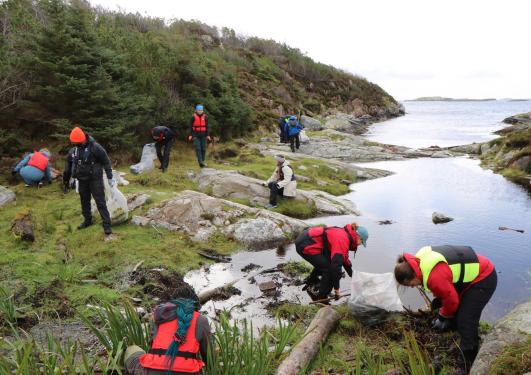
Students searching for plastic in and around the water.
The main conclusion of the project shows that although several negative effects of plastic pollution on the ecosystem can be documented, cleanup efforts can help reduce these effects. One of the most notable findings was a dramatic reduction in microplastics following cleanup activities.

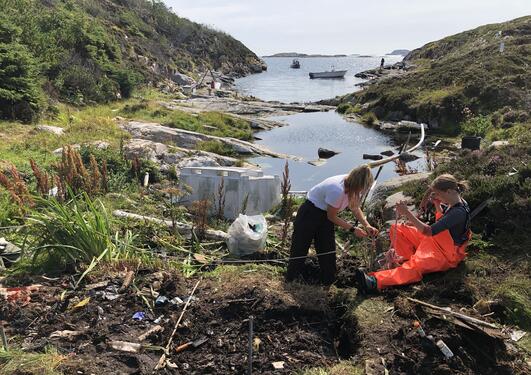
Pollution on Lisle Lyngøy.

Ropes are among the most common sources of marine litter.
Lisle Lyngøy also gained national attention through the NRK documentary Plasthavet, released in 2021. The documentary sparked widespread interest, particularly after revealing that caddisfly larvae on the island were using plastic fragments to build their protective cases — which would normally be constructed from natural materials like twigs, straw, or grains of sand.
The actual impact of this behavior on the insects themselves, on birds and fish that feed on them, or even on humans who consume those animals, remains uncertain and requires further research. Nevertheless, the image of caddisfly larvae encased in plastic became a powerful symbol from the NRK series. Similar plastic cases were also found during UiB’s cleanup on Lisle Lyngøy last year.
Since the island was cleaned around the same time last year, there was anticipation about how much plastic waste had washed ashore in the meantime, and whether microplastics were still affecting insects and the ecosystem to the same extent.
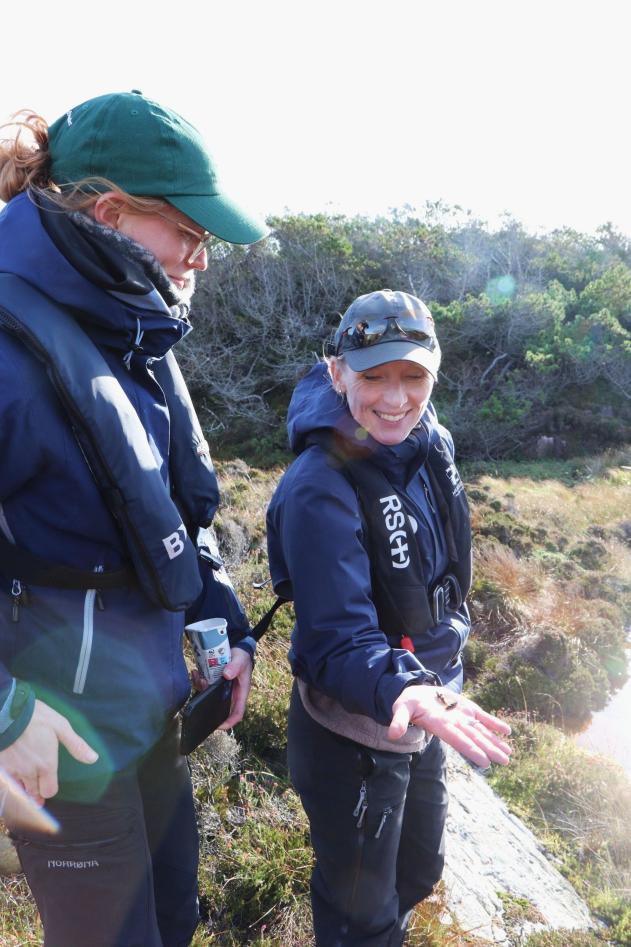
The answer brought a ray of hope during this year’s cleanup: there was significantly less visible microplastic on the island’s surface. This has led to a positive development — the caddisfly larvae observed this time were using natural building materials, not plastic.

Caddisfly larvae without plastic cases.
Despite the positive developments, Lisle Lyngøy cannot yet be declared free of plastic pollution. Plastic researcher Marte Haave, now with SALT, played a central role in the NORCE-led research project on the island. She explained to the students that the embankment they helped clean has formed over several decades as plastic debris washed ashore and accumulated. As a result, the soil is estimated to consist of more than 70 percent plastic.
In front of the students, she demonstrated how digging just a few centimeters below the surface at a random spot immediately reveals both macro- and microplastics.
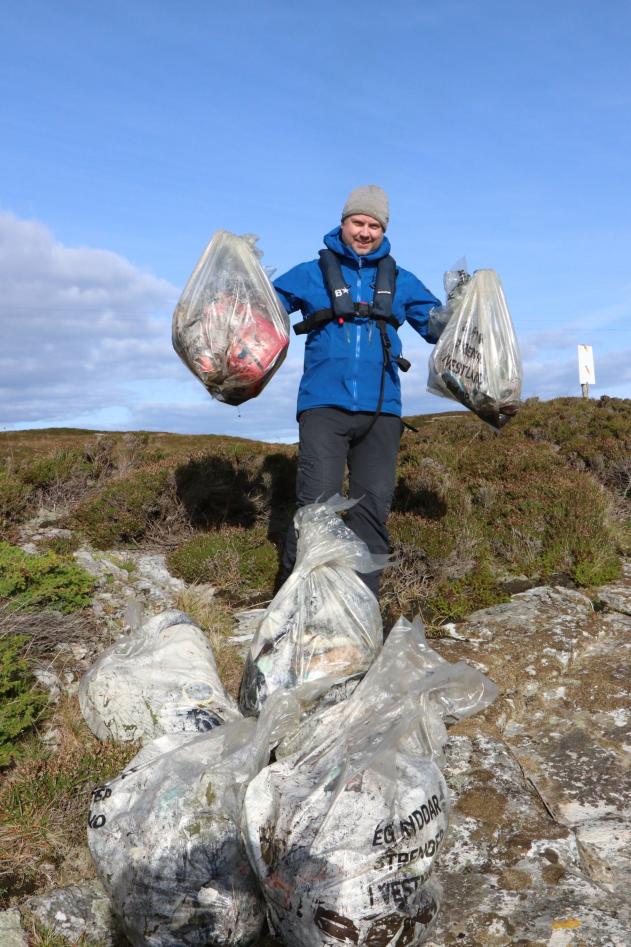
It didn’t take long to fill several garbage bags with plastic from the island’s surface. In just over an hour, more than 70 kilograms of plastic trash were collected.

Outstanding effort from the students.

Plastic cleanup in beautiful autumn weather.
Although 70 kilograms may not sound like that much, it’s important to remember that even small amounts of plastic can cause significant harm to marine life. Many will recall the story of the “Plastic Whale,” which had to be euthanized after stranding near Sotra in 2017.
Researchers from UiB removed over 30 plastic bags and several large plastic sheets from the whale’s stomach, concluding that the animal had become ill because the plastic blocked its digestive system, preventing it from absorbing nutrients.
Today, the Plastic Whale is on display at the University Museum, where it continues to inspire new generations to take action against plastic pollution. Alongside the whale skeleton, the plastic found in its stomach is exhibited — weighing approximately just 1.5 kilograms. In comparison, the cleanup on Lisle Lyngøy yielded nearly 47 times more plastic in just one hour.
Professor Odd André Karlsen from the Plastic Networks expressed gratitude to this year’s partners and is already looking ahead to next year:
“This year’s cleanup was once again organized in collaboration with BOF and Naturvernforbundet Hordaland, and we’re grateful to our co-organizers for helping make the event a success. We also want to thank UiB Climate Fund for the grant that made this year’s cleanup possible. We’re absolutely planning to repeat the initiative next autumn,” he said.

Bergen og Omland Friluftsråd (BOF), represented by Helene Johnsen, provided the boat transport to and from Lisle Lyngøy.
Plastics Network
- UIB’s network for marine plastic pollution ("Plastnettverket") embraces cross-disciplinary research around plastic and microplastic pollution in our oceans.
- This encompasses the investigation of the presence, spread and effects of plastic pollution in our oceans, as well as its societal, legal and health implications.
- Read more about the Plastics network
UiB Climate Fund
- The University of Bergen Climate fund shall finance measures that support the work to ensure a more environmentally and climate friendly university. Either through direct reduction of UiB’s climate footprint, or by motivating students and employees to participate in a joint “environment and climate action”.
- The next application deadline is October 10th.
- Read more here