Methods
-
Blood flow measurements
Laser Doppler Flowmetry (LDF) is a non invasive method to measure the microcirculatory blood flow based on the fact that a very small frequency shift arises in light that has been scattered by moving red blood cells, known as the Doppler effect.
-
ELISA / Multiplex protein analyses
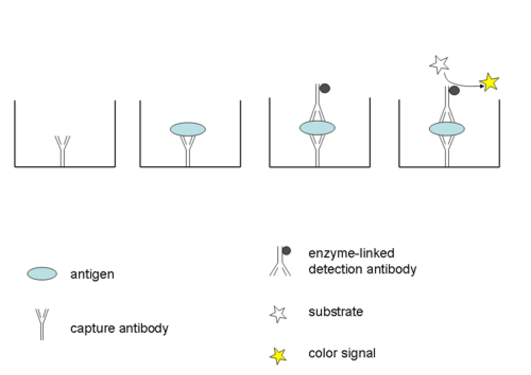
The specific binding between antigen-antibody is the basis for the biochemical technique called Enzyme-Linked ImmunoSorbent Assay (ELISA) which is widely used in immunology to detect the presence of specific proteins in various kinds of samples (serum, tissue homogenates, cell culture supernatants).
-
Sampling of interstitial fluid
Interstitial fluid is sampled from skeletal muscle and skin by isolating fluid from implanted wicks. A more recent method applied for this purpose is tissue centrifugation, i.e. exposing tissue to increased G-force. Both of these methods have been developed in our laboratory.
-
Glomerular filtration
The glomerular filtration rate (GFR) in experimental animals is measured using classical indicators.
-
HPLC- mass spectroscopy
We are using standard high performance liquid chromatography (HPLC) setups like size exclusion, ionic exchange and reversed phase to separate and quantify plasma proteins and validate the different tracers used in our research. The identity of plasma proteins and potential biomarkers in various biological fluids are determined by multi-dimensional nano-LC/MS.
-
Fluid volumes – tracers
Fluid distribution volumes in various tissues are measured with radioactive tracers distributing in the actual space. Accordingly are the extracellular tracer 51Cr-EDTA used for determining extracellular fluid volume and 125I-human serum albumin used to measure plasma volume.
-
Interstitial fluid pressure
Interstitial fluid and colloid osmotic pressure are determinants of transcapillary fluid exchange. We measure interstitial fluid pressure superficially (<1 mm) in tissues using micropipettes with tip diameter 2-5 µm connected to a servo-null counterpressure system. In tumours (>1 mm deep) we use the wick-in-needle technique developed in our laboratory.
-
Immunohistochemistry
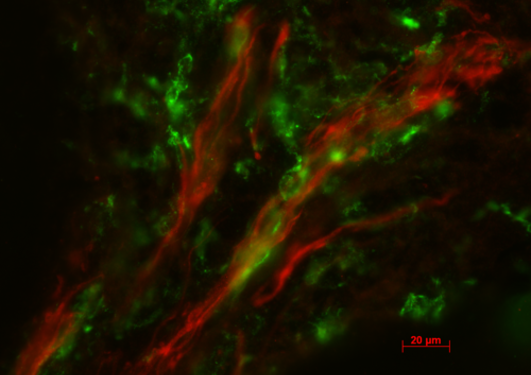
Immunohistochemistry requires a piece of tissue usually taken with a biopsy. The tissue sample is sliced extremely thinly and the slices (sections) are fixed on a glass slide.