New study from MMN reveals important link between mitochondrial dysfunction and degeneration of the substantia nigra
In this study, Charalampos Tzoulis and coworkers show that although mitochondrial dysfunction can cause severe loss of the substantia nigra, patients do not develop features of Parkinson's disease. The findings confirm the vulnerability of the substantial nigra to mitochondrial dysfunction, but also raise important questions about our understanding of the pathophysiology of Parkinson's disease
Main content
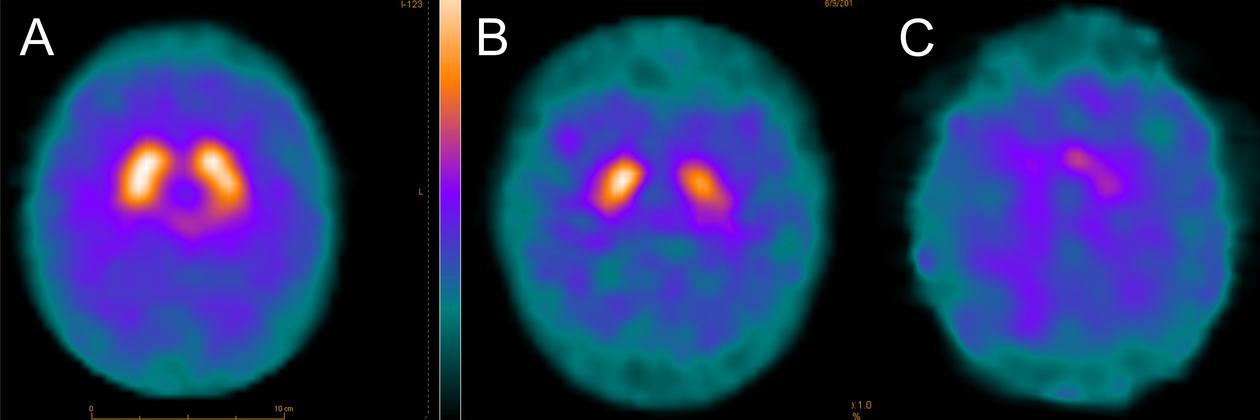
In this work (Tzoulis et al., Brain 2013), we show that inherited mutations of the gene encoding polymerase gamma (POLG), the protein maintaining the mitochondrial genome, cause severe degeneration of the substantia nigra, a part of the brain involved in movement control and coordination. Degeneration of the substantia nigra is a central feature of Parkinson’s disease and is believed to cause most of the disorder’s motor complications. Surprisingly, patients with POLG mutations did not show any clinical signs of parkinsonism despite the fact that the changes in their substantia nigra were more pronounced than those of patients with Parkinson’s disease.
Our findings show that dopaminergic neurons of the substantia nigra (the cells that are lost in Parkinson’s disease) are highly vulnerable to mitochondrial dysfunction and particularly mitochondrial DNA damage.
The lack of parkinsonistic features in our patients suggests that the motor complications that have been traditionally associated with degeneration of the substantia nigra are somehow counteracted and compensated for. We hypothesise that the additional thalamic and cerebellar dysfunction in our patients may play a role in counteracting the effects of nigral depletion. Further elucidation of the mechanisms involved is essential to our understanding of the pathophysiology of Parkinson’s disease and may help identify novel therapeutic targets.