
Nyhetsarkiv for Translasjonell Cellesignalisering og Metabolisme
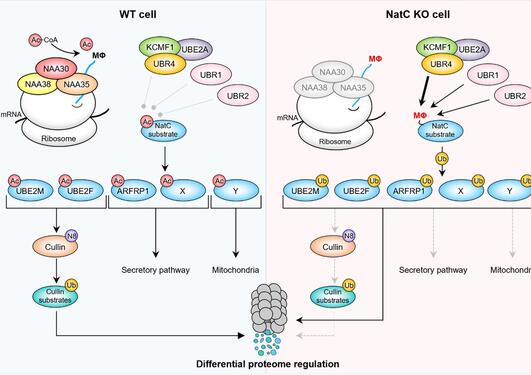
Researchers from the University of Bergen (UiB) have uncovered that proteins use a common chemical label as a shield to protect them from degradation, which in turn affects motility and aging.


On Thursday 12th of March, the University of Bergen was shut down on short notice. Employees and students left their study and workplaces, worried about the recently declared pandemic situation and how the next weeks and months would be like.
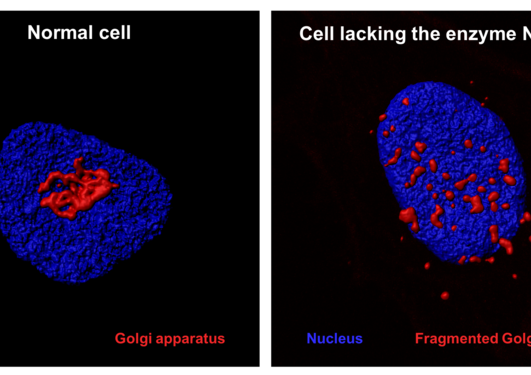
During his Erasmus internship in the Arnesen lab, Tobias B. Beigl took great interest in his project on the recently identified NAA80 enzyme. Beigl was on an interesting and important research track and stayed on for a Master’s project trying to figure out why cells lacking NAA80 typically had a more fragmented Golgi apparatus. He recently published his findings in the scientific journal... Les mer
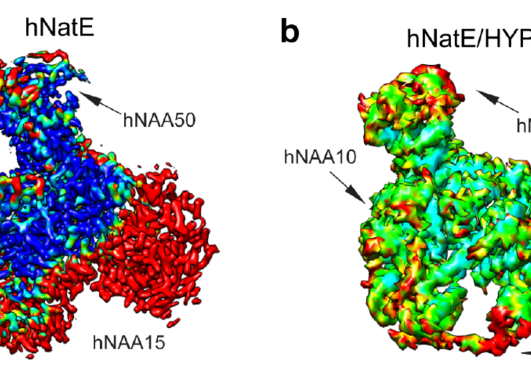
In human cells, N-terminal acetylation is among the most common protein modifications. Now, researchers at the University of Pennsylvania and the University of Bergen have revealed the structural and biochemical properties of the major molecular machine involved in this process. Cancer cells require this enzyme for survival and proliferation.
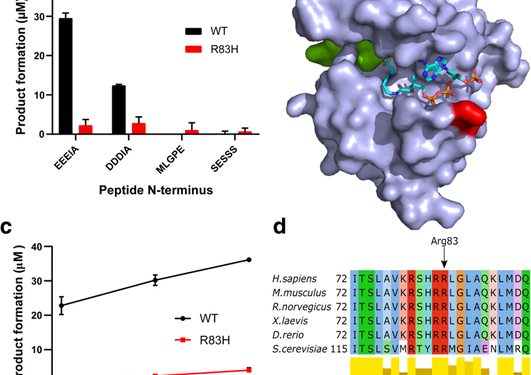
N-terminal acetylation is a very common protein modification and NAA10 is the major responsible enzyme in human cells. Here we found a novel pathological NAA10 variant, NAA10 p. (R83H), in two boys with developmental delay and intellectual disabilities.
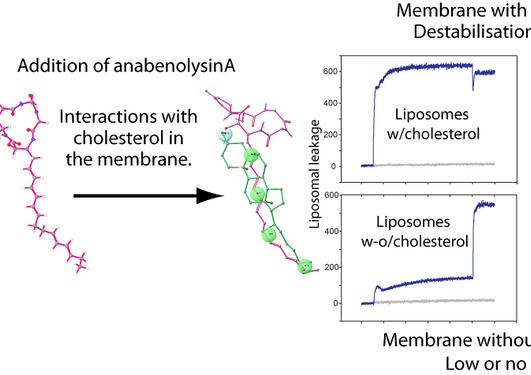
Researchers in TSG have, together with collaborators in Helsinki, identified a novel class of cyclic lipopeptides, named Anabaenolysin after the producing cyanobacterium, Anabaena. The lipopeptides have two glycines, two unusual amino acids, where one contains and a long unsaturated fatty acid chain. Their structures enable them to penetrate into membranes, but preferably membranes containing... Les mer
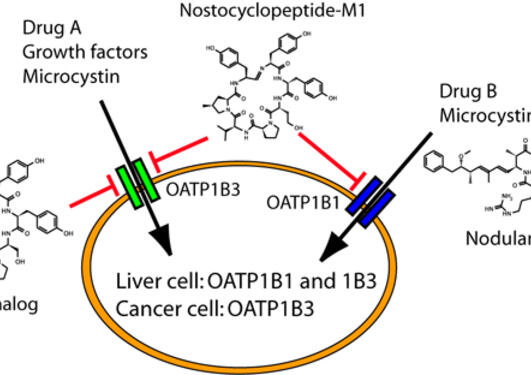
Recently, researchers in TSG found that Ncp-M1 blocks the liver-specific transporter proteins OATP1B1/OATP1B3. These transporters are responsible for hepatocellular uptake of growth-stimulating steroids, several drugs, and toxins like microcystin, and are an important part of the detoxification machinery of the liver. Ncp-M1 is non-toxic to both liver cells and other cell types, and its mechanism... Les mer
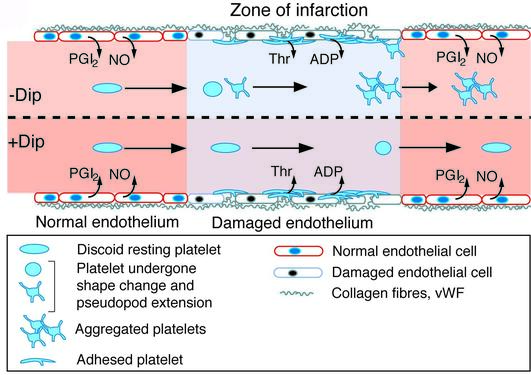
Stroke patients have particular high risk of thrombotic events caused by platelet (thrombocyte) activation, which may lead to new infarctions. Secondary treatment of these patients with anti-platelet therapy consisting of aspirin and dipyridamole is therefore a common protocol. Recent results on the mechanism of action of this treatment suggest that regulation of platelet shape change, the... Les mer

Neuroblastoma cells are typically arrested at an early and immature stage. The stage of neuroblastoma tumor cell differentiation is known to influence patient outcome, with a high differentiation stage correlating to favorable prognosis.
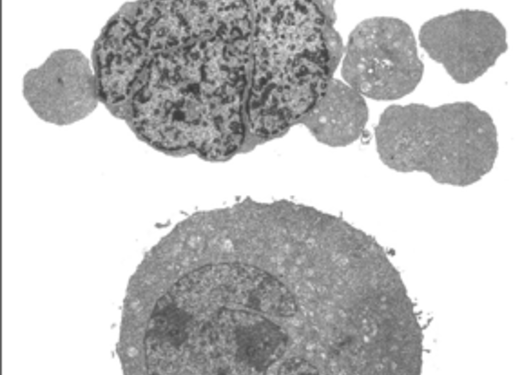
The mechanisms of cancer cell drug resistance is still not fully understood.
The Translational Signaling Group has through professor Stein Ove Døskeland expanded our contribution of selected articles by "The Faculty of 1000".
These publications are resulting from ongoing collaboration with research groups in Denmark and Germany.
- oktober 2023 (1)
- desember 2020 (1)
- september 2020 (1)
- mars 2020 (1)
- februar 2020 (1)
- juni 2019 (1)
- august 2012 (1)
- februar 2011 (1)
- oktober 2010 (1)
- november 2009 (1)
- april 2009 (2)