Akademisk morgenkaffe med Fay Farstad
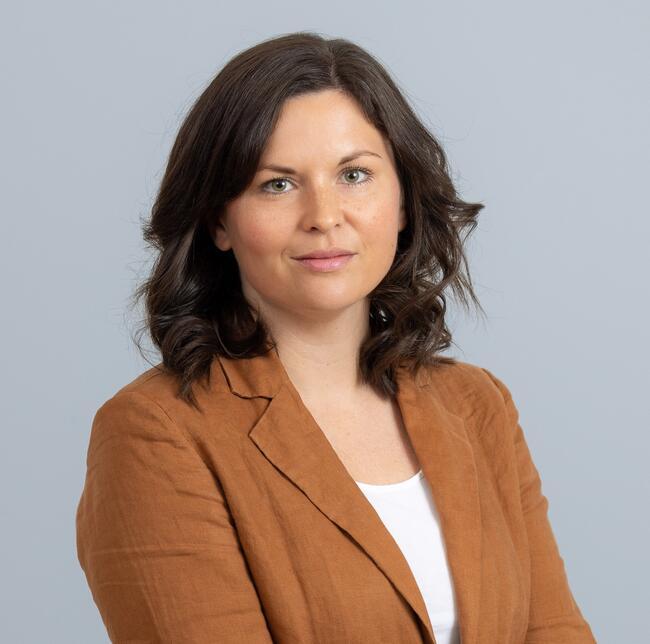
How do parties’ climate positions vary across party families, countries and time? And what explains the variation in parties’ climate positions? This is two of the questions asked by Fay Madeleine Farstad and the PARTYCLIM project.
Hovedinnhold
Political parties lie at the heart of climate change politics, yet the study of their behaviour and relevance has been hampered by the lack of climate-specific and comparative data. The PARTYCLIM project (Political Parties and Climate Change: Positions, Polarisation and Policy Relevance), led by Fay Madeleine Farstad, Associate Professor at the Department of Comparative Politics, seeks to remedy these shortcomings.
Using a state-of-the-art multilingual large language model (LLM) and expert hand-coding of party manifestos, the project has built an original dataset mapping the climate policy preferences of parties across 20 industrialized democracies over two decades (2002-2022).
The dataset allows us to explore questions such as: How do parties’ climate positions vary across party families, countries and time? What explains the variation in parties’ climate positions? To what extent do parties make specific climate policy proposals in their manifestos; what type of climate policies do they propose; and what explains this variation?
The project takes a mixed methods approach, complementing large-N statistical analyses with in-depth country case studies of Australia, Norway, the UK and the US.
During this morning coffee session, Fay Farstad will tell us more about the PARTYCLIM project and its initial findings.
Farstad’s research interests cover comparative environmental and climate politics and policy. Since January 2024 she has been the Principal Investigator of the project (PARTYCLIM), funded by the Researcher Project for Young Talents’ call funded by the Norwegian Research Council. This four-year project has project partners at the University of California Santa Barbara (USA), CICERO Center for International Climate Research (Norway), University of Limerick (Ireland), University of Tasmania (Australia) and University of York (UK).
The conversation will be in English.
Akademisk morgenkaffe
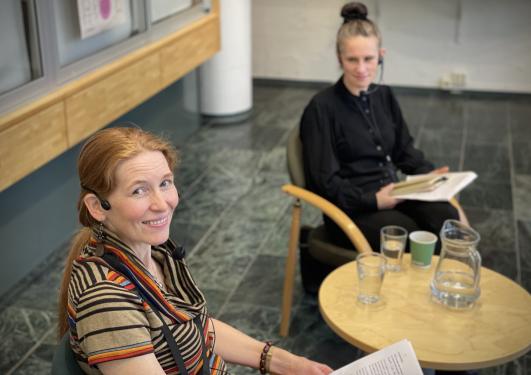
En onsdag i måneden serverer vi kaffe, te og spennende innledninger om hva som skjer i den bergenske samfunnsforskningen.
Arrangementet finner sted i SV kaffebar fra klokken ni.