Frameworks for ocean management in a changing climate
What happens when oceans change faster than the frameworks designed to manage them? Climate change is altering marine ecosystems, moving fish stocks, and increasing uncertainty for decision-makers. In this event, two researchers will share their knowledge on how climate change has an impact on the legal governance and management of ocean resources.

Main content
About the event (held in English)
Climate change is increasingly challenging the management and legal governance of marine resources by altering ecosystems, species distributions, and the assumptions on which existing governance frameworks are built. The North Sea and the Barents Sea, both highly productive and intensively managed regions, illustrate these pressures clearly.
Warming waters, changing ocean circulation, ocean acidification, and declining sea ice are reshaping marine ecosystems. In the Norwegian Sea, key commercial species such as mackerel are shifting their distributions, In the Barents Sea, rapid warming and reduced ice cover allow boreal species to expand into traditionally Arctic areas, affecting species interactions in the ecosystem.
These changes create a growing mismatch between dynamic ecosystems, legal governance and fixed management boundaries. In the Norwegian Sea, complex international quota arrangements are strained as stocks move across national exclusive economic zones. In the Barents Sea, long-standing cooperative management faces new challenges as species distributions change and industrial activity increases.
Climate change also exposes the limits of single-species management. Altered growth rates, recruitment, and species interactions make it harder to rely on historical data, strengthening the case for ecosystem-based and precautionary approaches. Overall, climate change places pressure on marine legal governance to become more adaptive, flexible, and forward-looking, requiring stronger international cooperation, better integration of climate science, and management systems designed for continuous change rather than stable conditions.
In this event, two researchers will share their knowledge on how climate change has an impact on the legal governance and management of ocean resources.
Talks
- The Law of the Ocean: Governance, Justice, and Sustainability: by Rosa Manzo, postdoctoral fellow, Faculty of law, University of Bergen (UiB)
- Climate change and fisheries management with some examples from the Northeast Atlantic: by Bjarte Bogstad, Researcher, Institute of marine research (IMR/HI)
Date & time
WEDNESDAY, November 25th, 2026, 19.00-20.00
Free and open for all!
Rosa Manzo holds a PhD in climate change law and has extensive experience in environmental and climate law. She has worked on topics such as carbon storage, climate justice, and international agreements. She has strong knowledge of the CSR (Corporate Sustainability Reporting Directive), the CSDDD (Corporate Sustainability Due Diligence Directive), and the Carbon Border Adjustment Mechanism (CBAM).
Bjarte Bogstad has many years of experience in stock assessment and advisory work for fish stocks in the Barents Sea. He is stock coordinator for Northeast Arctic cod (cod in the Barents Sea), and has participated in the Norwegian–Russian Fisheries Commission since 2010. He has long-standing experience in collaboration with the Russian research institute PINRO in Murmansk, including responsibility for the joint database on fish stomach content, and is the Norwegian representative to ICES ACOM since 2019.
Organisers
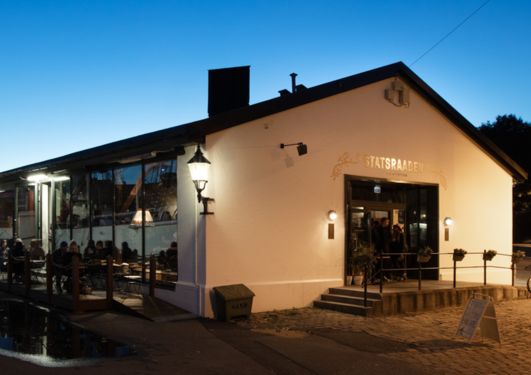
Ocean Science Bar is a collaboration between Statsraad Lehmkuhl, the University of Bergen, the Institute of Marine Research, NORCE, and the Nansen Center. At the Statsraaden Bar & Reception you are welcome to enjoy highlights from marine research and ocean related issues in informal and relaxing surroundings.