The miraculous comeback of the iconic Atlantic bluefin tuna to Norway
Atlantic bluefin tuna are highly migratory fish that have been exploited for more than two millennia. Historical overfishing combined with poor recruitment brought the species close to collapse. The fishery is managed by the International Commission for the Conservation of Atlantic Tunas (ICCAT). A comprehensive 15-year recovery plan and conservation efforts, involving 30 parties, have shown remarkable results. After almost 50 years of absence, this iconic species made a dramatic return to Norwegian waters in 2012. Join us for an ocean story of recovery and inspiration.

Main content
About the event (held in English)
The Atlantic bluefin tuna (Thunnus thynnus) is one of the ocean’s most impressive predators. On Norwegian national television it has even earned the nickname «monstermakrellen» (the monster mackerel), reflecting both its size and reputation.
Bluefin tuna move through the ocean in highly coordinated schools, cooperating as they hunt, migrate, and spawn. They are the largest of all tuna species, reaching more than three metres in length and up to around 700 kg in weight. Their streamlined, torpedo-shaped bodies are built for power and speed, placing them among the fastest fish in the sea. Unlike most fish, bluefin tuna are partially warm‑blooded, an adaptation that allows them to thrive in cold waters of the North Atlantic and to dive to depths of 1,000 metres or more.
With excellent vision and endurance, they are highly effective hunters. Their diet ranges from mackerel and herring near the surface to mesopelagic fish and squid in deeper, darker waters. Bluefin tuna are also renowned for their long-distance migrations, travelling up to 45,000 km annually across the Atlantic. These movements take them from warm spawning grounds in the Mediterranean to cold feeding areas reaching as far north as the Arctic Circle, routes they appear to follow with remarkable consistency year after year.
After almost 50 years of absence, Atlantic bluefin tuna returned to Norwegian waters in 2012. Since then, they have been observed feeding along the coast and in offshore areas, typically from August to October. Their reappearance is widely regarded as a sign of successful fisheries management and ecological recovery.
In addition to their biological significance, bluefin tuna are highly valued as food. Their high fat content gives the flesh a distinctive texture and flavour prized for sashimi and sushi, supporting a high-end global market.
At this event, two researchers will share insights into the biology, history, and recovery of the Atlantic bluefin tuna. Together, they tell a compelling story of a species that combines extraordinary adaptations with a rare example of large-scale marine recovery.
Talks
- Ensuring the future of Atlantic bluefin tuna through international collaborative science and management: by Leif Nøttestad, Researcher, Institute of Marine Research IMR/HI)
- Why do bluefin tuna spawn in ocean deserts?: by Øyvind Fiksen, Professor, University of Bergen (UiB)
Date & time
May 28, 2026, 19.00-20.00
Free and open for all!
Leif Nøttestad is a Researcher and senior stock-assessment scientist at the Institute of Marine Research, responsible for Northeast Atlantic mackerel, horse mackerel, and tuna species including Atlantic bluefin tuna and swordfish. He has long served as Norway’s scientific representative in coastal state negotiations for mackerel and in ICCAT for bluefin tuna and other tuna species, and has coordinated and led major international ecosystem surveys in the Norwegian Sea.
Øyvind Fiksen is a Professor in biological oceanography at the University of Bergen, and work with marine ecosystems, fish and plankton. He teaches marine ecology, and is curious about how we can obtain more food from the ocean, how to model and quantify behaviour and predator-prey interactions and the functioning of ocean productivity.
Organisers
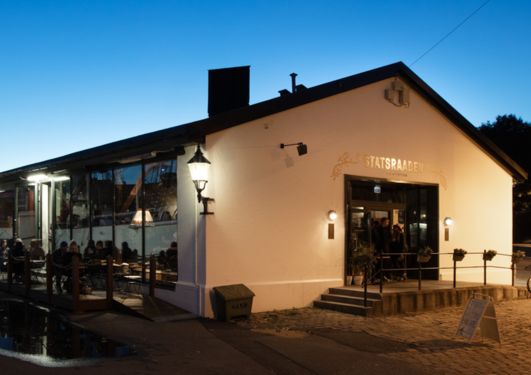
Ocean Science Bar is a collaboration between Statsraad Lehmkuhl, the University of Bergen, the Institute of Marine Research, NORCE, and the Nansen Center. At the Statsraaden Bar & Reception you are welcome to enjoy highlights from marine research and ocean related issues in informal and relaxing surroundings.