Gas Anesthesia: Safety First
Using gas anesthesia requires proper knowledge and strict adherence to safety procedures. These guidelines will help ensure safe operation for both personnel and animals.
Hovedinnhold
Gas Anesthesia: Safe and Effective Use
Gas anesthesia offers the best control over anesthesia depth and provides the most secure option for the animal, reducing the risk of complications.
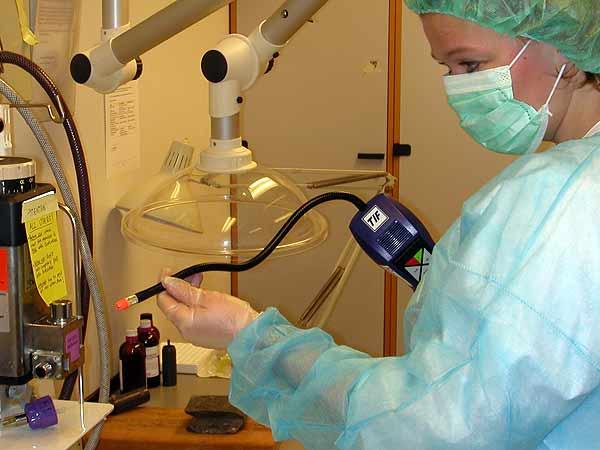
However, working with gas anesthesia requires proper knowledge of the equipment and the ability to perform a leak test before use.
Correct Use
- Each user is responsible for testing the device and equipment before use.
- Report any errors or omissions to the owner or responsible person.
- In case of equipment failure, poor ventilation, or other deviations and undesirable incidents, please submit an electronic non-conformance report
Pregnancy and Gas Anesthesia
Pregnant individuals, or those planning pregnancy, must not work with gas anesthesia at UiB.This restriction is in place to protect both the individual and the unborn child from potential health risks.
For more information and guidance, please contact the Occupational Health Service at UiB.
Training Requirements
Before using gas anesthesia, you must ensure that you have received the appropriate training. The training consists of three mandatory steps:
Course in Laboratory Animal Science
Theoretical introduction
Compulsory Course on Gas Anesthesia
Covers both theory and practical aspects.
On-Site Practical Review
A hands-on review of gas anesthesia procedures and equipment at the facility.
- All training must be completed and documented before you begin working with gas anesthesia.
Alternatives to Gas Anesthesia
Considering alternatives to gas anesthesia
- Assess whether injectable or other anesthesia methods may be suitable for the procedure.
- Implementing measures to minimize exposure risks when gas anesthesia is unavoidable.
- Ensuring proper ventilation and leak testing of equipment to reduce hazards.
Choosing the right method helps protect both personnel and animals while maintaining high standards of safety and welfare.