
Nyhetsarkiv for Institutt for geovitenskap
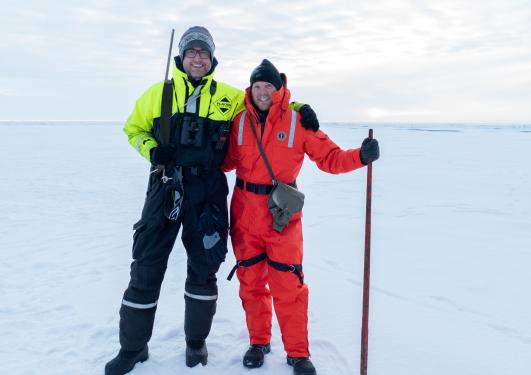
A few years ago, scientists from the University of Bergen, for the first time in history, managed to collect samples from one of the most remote and extreme seafloor environments deep under the Arctic ice. Now, their first findings reveal extreme hot springs, fragile metal-rich chimney structures, and enormous hydrogen release that could be crucial for the search for life in our Solar System.
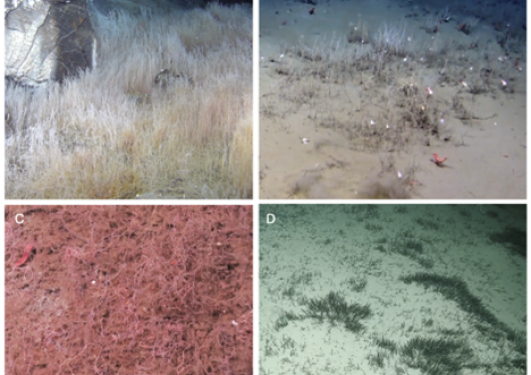
The start of the year marked the launch of WormFEST — a groundbreaking project exploring the fascinating worm forests found deep underwater near Arctic hydrothermal vents and cold seeps.

The University of Bergen (UiB) will host another seven international research fellows after a very successful application round in this year’s competition for MSCA funding from the EU. The grants will fund the researchers' stay at UiB for two years.

Rogue or freak waves (monster waves) are exceptionally large waves that can suddenly loom into existence, seemingly from nowhere. Are these waves truly different from ordinary storm waves, or are they just what you should expect to see if you wait long enough?

In collaboration, five researchers from several research institutions in Bergen have succeeded in attracting the largest international conference in deep-sea biology to Bergen in 2028. The team will jointly organize the conference, supported by local professional network Bergen Bathysphere.
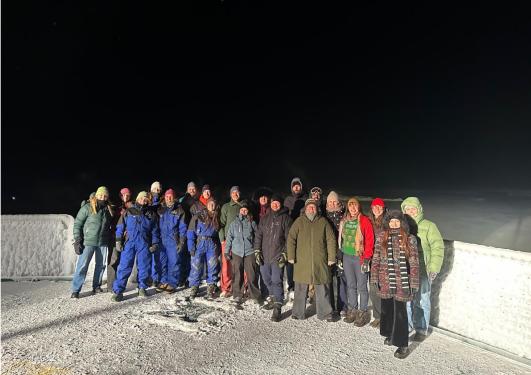
The CDeepSea Ultima Thule expedition on the R/V Kronprins Haakon left Longyearbyen on November 26, 2024 with the primary objective of mapping and sampling in the Lena Trough. However, the researchers and crew onboard were prepared for challenging sea ice conditions given the time of year and the northern latitudes... and that is what they encountered!

On the beautiful island of Milos (Greece), a recent field course offered CDeepSea students a unique opportunity to dive deep into the world of mineral deposits and hydrothermal systems. With an impressive ratio of 8 instructors to 14 students, the participants received training on a wide variety of topics relevant for minerals and mineral exploration, from economic geology and geochemistry to... Les mer
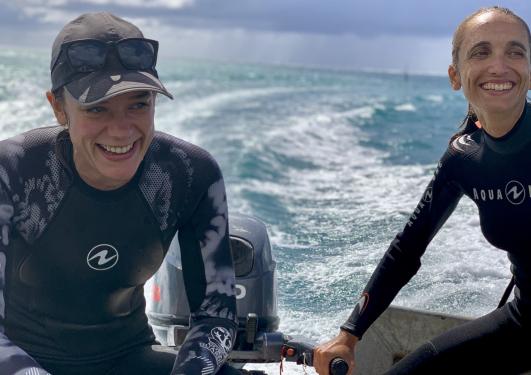
Coral reefs produce a lot of oxygen during the day (thanks to photosynthesis), but at night the oxygen levels decrease. Can this threaten fishes at the reef, or do they have strategies to survive? To find out we spent six months of fieldwork and experiments on the island of Moorea in French Polynesia.
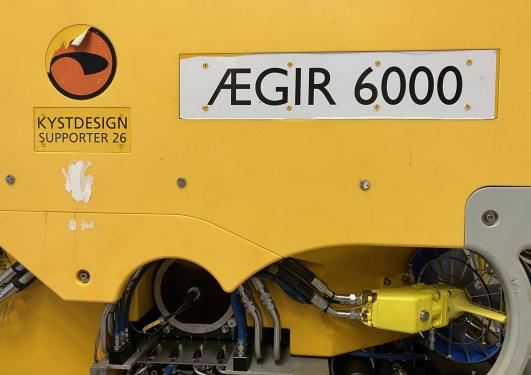
At the end of September it was announced that the NORMAR-II grant for upgrades to the Ægir 6000 ROV system has been approved! This funding ensures the Centre’s continued access to this essential deep-sea infrastructure and will allow us to keep the ROV system state-of-the-art. We’re looking forward to many more dives with upgraded equipment, pushing the boundaries of deep-sea exploration.

The GoNorth 2024 expedition concluded last week after a three-week scientific voyage, from August 29 to September 19, exceeding expectations with a wealth of new data, thanks to favourable ice and weather conditions.
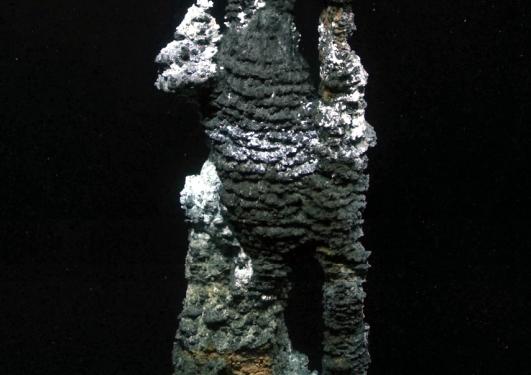
Our colleague at the Centre, deep-sea biologist Pedro Ribeiro, is onboard the RV Maria S. Merian participating in a research cruise led by the German Centre for Marine Environmental Sciences (MARUM) to explore and investigate the Jøtul hydrothermal vent field.
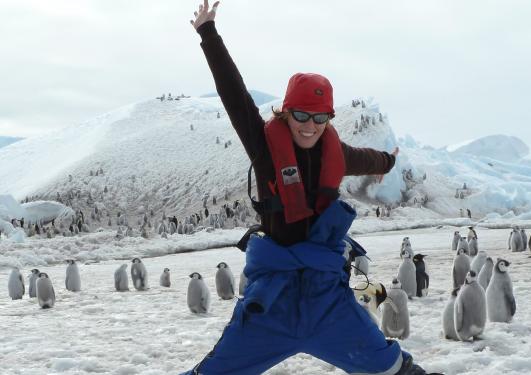
The Antarctic ice shelves – the floating glaciers surrounding most of the continent – are melting from below as oceanic currents bring warm water into the cavity. But how and how fast is the ice melting? In this Ocean Science Bar, you will learn why Antarctic ice shelves matter, about what happens below them, and about what it’s like to do fieldwork ”down south”.

Light is probably the most varying environmental variable in pelagic ecosystems, and the most ignored in ecological studies. In this Ocean Science Bar, you will learn how light structures the distribution of zooplankton and fish.
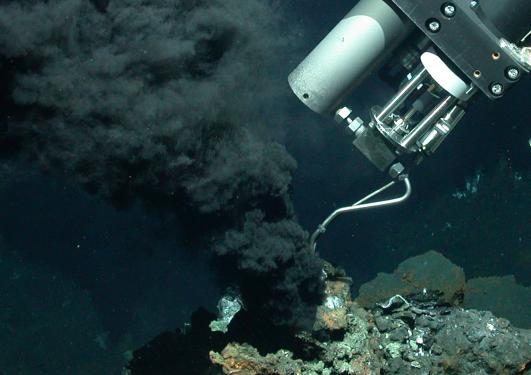
A new study led by Associate Professor Eoghan Reeves at the Centre for Deep Sea Research, just published in Geochimica et Cosmochimica Acta, sheds light on one of the pillars of chemosynthetic life at deep sea hot springs – the dissolved natural gas molecule, methane.
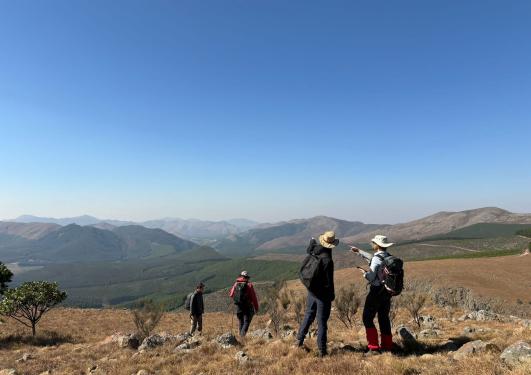
One of the best things of being a researcher is when you get the chance to broaden your horizons. This summer, geochemist Desiree Roerdink traveled to the Barberton Greenstone Belt in South Africa and dove back into the research field of sedimentology to find out how sulfate minerals formed on ancient shorelines, more than 3.2 billion years ago.
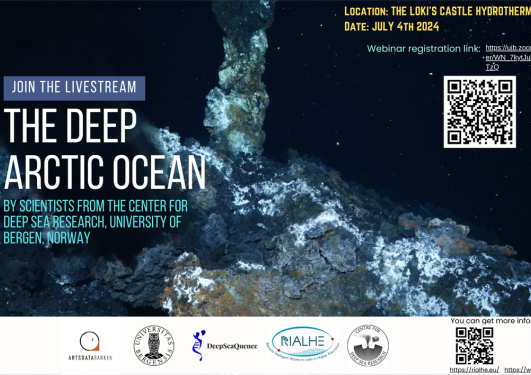
Watch the recording of our live-streamed remotely-operated dive at Loki's castle hydrothermal vent field in the Arctic, 2300 meters below sea level.
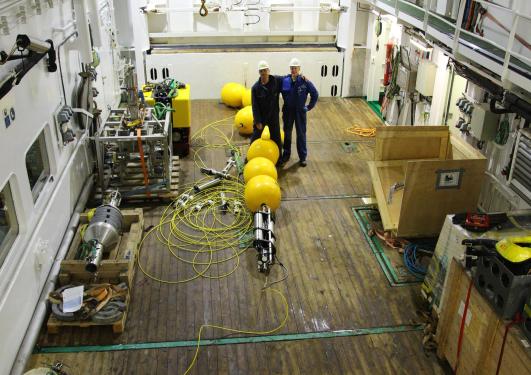
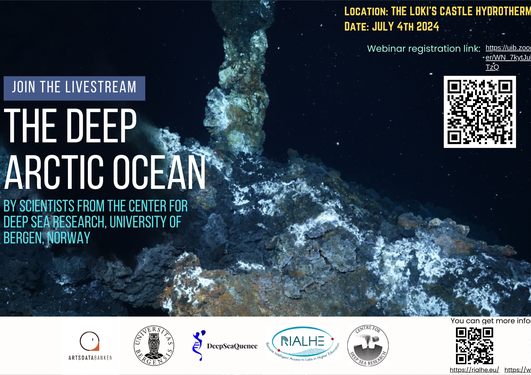
Join us for a live stream of a remotely-operated dive at Loki's castle hydrothermal vent field in the Arctic, 2300 meters below sea level.
Sider
- oktober 2025 (1)
- februar 2025 (3)
- januar 2025 (1)
- desember 2024 (1)
- november 2024 (1)
- oktober 2024 (2)
- september 2024 (3)
- august 2024 (2)
- juli 2024 (3)
- juni 2024 (2)
- april 2024 (3)
- mars 2024 (1)
- februar 2024 (2)
- desember 2023 (2)
- november 2023 (4)
- oktober 2023 (2)
- september 2023 (1)
- august 2023 (1)
- juli 2023 (4)
- juni 2023 (1)
- april 2023 (4)
- februar 2023 (1)
- januar 2023 (2)
- november 2022 (7)
- oktober 2022 (1)
- august 2022 (2)
- juni 2022 (6)
- mai 2022 (1)
- mars 2022 (3)
- februar 2022 (2)
- november 2021 (2)
- oktober 2021 (1)
- september 2021 (2)
- juli 2021 (1)
- juni 2021 (7)
- mai 2021 (1)
- september 2020 (2)
- juni 2020 (2)
- mai 2020 (1)
- april 2020 (2)
- november 2019 (1)
- oktober 2019 (1)
- februar 2019 (4)
- januar 2019 (2)
- oktober 2018 (6)
- juni 2018 (3)
- mars 2018 (1)
- februar 2018 (1)
- januar 2018 (1)
- desember 2017 (2)
- november 2017 (4)
- oktober 2017 (2)
- september 2017 (1)
- juli 2017 (1)
- mai 2017 (1)
- mars 2017 (1)
- februar 2017 (1)
- januar 2017 (1)
- oktober 2016 (1)
- september 2016 (1)
- august 2016 (1)
- juni 2016 (2)
- mai 2016 (1)
- mars 2016 (1)
- oktober 2015 (1)
- juni 2015 (1)
- mars 2015 (1)
- november 2014 (1)
- oktober 2014 (4)
- januar 2014 (1)
- oktober 2013 (3)
- mai 2013 (1)
- mars 2012 (1)
- desember 2011 (1)
- november 2011 (2)
- oktober 2011 (3)
- september 2011 (1)
- juni 2011 (2)
- mai 2011 (3)
- mars 2011 (2)
- februar 2011 (1)
- desember 2010 (2)
- oktober 2010 (1)
- juni 2010 (1)
- mai 2010 (1)
- mars 2010 (2)
- januar 2010 (1)