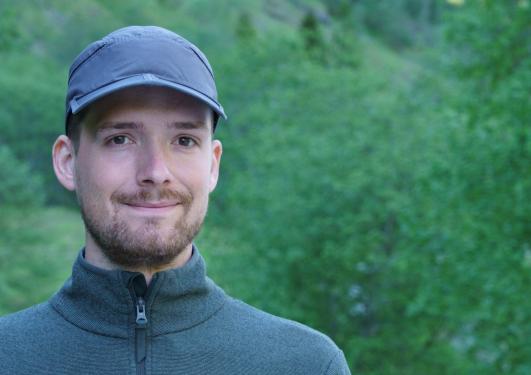
Searching for new antibiotic targets
With her LEAD AI project, Lisa Haarer hopes to identify new chemical structures that can be used to treat bacterial infections.

Main content
"The aim of my project is to investigate small molecules targeting new potential antibiotic targets", Lisa Haarer says.
She arrived in Bergen just over a year ago, as part of the first group of postdoctoral fellows in the LEAD AI programme.
Tackling antimicrobial resistance
The ability to efficiently treat bacterial infections is an important pillar of modern medicine. However, the issue of antimicrobial resistance has grown in the last decades. To tackle this problem, Haarer and her colleagues use AI to develop inhibitors aimed at new bacterial targets, to contribute to the next generation of antibiotics to stay ahead of pathogenic bacteria. To do this she targets the bacterial fatty acid synthesis pathway.
"In my project we aim to increase efficiency in the discovery process. While the overall goal is to improve drug design using machine learning-enhanced methods, my own work focuses on the synthesis of promising molecules, including the implementation of high-throughput experimentation to improve efficacy in these steps", Haarer says.
Promising developments
One year into her project, there have been promising developments:
"The combination of making use of knowledge and techniques from my previous experiences, while exploring a new topic and new methodologies, has significantly expanded my skillset. I have already been able to refine our workflow, enabling more efficient synthesis", she says.
Implementing high-throughput experimentation in an academic setting brings both opportunities and challenges. Navigating the opportunities and using them efficiently is a key part of the work, according to Haarer.
"By increasing not only the amount of data - compared to a conventional lab workflow - but also reliability and reproducibility, the reusability and comparability of our findings increase".
In addition, she hopes her work will contribute to gaining further insight into the potential of the fatty acid synthesis pathway for antibiotic drug discovery and the verification of the design platform.
"Making a contribution to research that can benefit patients in the future is one of the reasons that got me into medicinal chemistry", Haarer says.
Lisa Haarer
Working in the field of Medicinal Chemistry, Haarer did her PhD at University of Tuebingen focusing on the synthesis of covalent inhibitors targeting protein kinases.
As a part of LEAD AI, Haarer is part of the Department of Chemistry.
The aim of her research project is to identify new chemical structures that can be used to treat bacterial infections. In her research she will design, synthesize and test new promising molecules.
Lead ai
- LEAD AI is the University of Bergen's career and mobility fellowship program that will run from 2024 to 2028 and serve as a learning arena for 19 postdoctoral fellows in artificial intelligence (AI).
- The research range from basic AI research for the relevant disciplines to more applied research in the natural sciences and medicine, and issues such as the interaction between AI, people and society with legal and ethical challenges.
- The program has received funding from the European Union’s Horizon Europe research and innovation programme under the Marie Skłodowska-Curie Grant Agreement #101126560.
- Read about all the LEAD AI fellows here.