GEO Research Seminars
Welcome to the GEO Research Seminars - a series of lunch seminars organized by the Geography Department at the University of Bergen.
Main content
The seminars are held on Thursdays and host a variety of speakers on topics ranging from green energy transformation to global inequalities and food security.
When and Where
Thursdays, 12.15 – 13.00
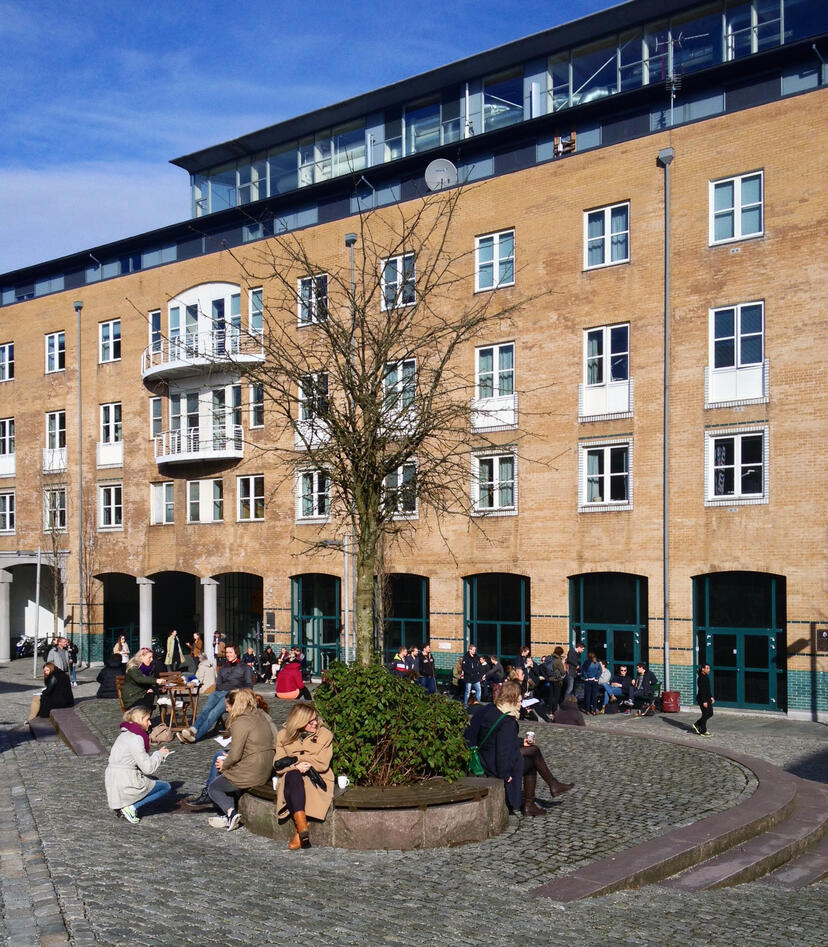
Meeting room 744, 7th floor, Lauritz Meltzer's House (SV buidling), Fosswinckels gt 6
About the seminars
Topics: GEO Research Seminars are opened to anyone interested in contemporary topics such as green transformation, climate change, natural hazards, global inequalities, climate and energy transformation, food security and natural resource management - and many more. For more details on research conducted at the Department, please visit the following link.
Format: Each GEO Research Seminar consists of a 25-minute presentation from a researcher affiliated with the Department, a guest researcher, or other interesting people we meet while conducting research. The presentation is followed by 20 minutes of questions and discussion. The seminars are held in a hybrid format, so you can present your research from anywhere you are. UiB-based speakers and participants are encouraged to join us on the 7th floor at the Department of Geography.
Why do certain people die during conflicts? Identifying socio-spatial factors producing heterogeneous vulnerabilities to violence during the Malian conflict
Speaker: Matthew Pflaum, PhD
The conflict and violence scholarship has mostly examined conflict from the perspective of violent actors in conflicts, rather than victims of it, via studies on borders (OECD/SWAC, 2022; Walther & Miles, 2017), networks, rebels (Salehyan, 2009; Weinstein, 2007), resources (Morelli & Rohner, 2015; van der Ploeg & Rohner, 2012), actor strategies (Liu & Eisner, 2024), and alliances (Christia, 2012; Phillips, 2018), few of which study civilians, vulnerabilities, or heterogeneities. Thus, the conflict scholarship has treated conflict violence as completely determined by actors, utterly disregarding civilian communities and vulnerabilities. This study challenges the orthodox approaches to studying violence in the case study of the Malian civil war by 1) arguing for heterogeneities in impacts of violence against civilians (VAC), 2) identifying the role of vulnerabilities to these insecurities, and 3) comparing impacts of VAC across civilian communities. This study provides some of the incipient empirical evidence to clarify the impacts of VAC on civilian groups, by identifying and comparing impacts across civilian communities like farmers, traders, herders and different socio-cultural dimensions like gender, perceptions of insecurity, indigeneity, and social status. It demonstrates spatial and statistical variations and heterogeneity in impacts of VAC on civilian communities, identifies several key vulnerabilities to violent impacts, and elucidates the interplay between socio-cultural and spatial factors in violent outcomes. Overall, it provides significant evidence that conflict scholarship must examine heterogeneities in impacts of violence and vulnerabilities of civilians to violence rather than solely emphasizing actors involved in violence. During violence, certain civilians are affected, and this is determined through a combination of actor strategies, targeting, spatiality, and civilian vulnerabilities to violence.
Bad data? Or 10 ways to understand public transport development in Sweden over time.
Speaker: Ida Andersson, PhD
Good and reliable data is crucial to understand the effects of governmental changes in policy and planning. Especially in times with increased neo liberal governance and use of key performance indicators (KPI) in public government. In public transport, the focus on optimization, efficiency, and economies of scale influence how policy goals are formulated targeting market shares, customer satisfaction scoring, and the reduction of fossil fuel in operations, etc. Through these measures, public transport authorities hope to showcase development striving towards sustainability of the transport system. At the same time, zooming in on a particular measure, risk presenting rather one-dimensional perspectives to public transport, and focus on elements that are easy to measure, but not necessarily relevant nor representational to the complexity of the transport system.
In Sweden, there are several KPI for public transport that are presented annually. They are collected through self-reporting from operators, ridership surveys and register data. Each KPI come with certain strengths and weaknesses, as to data quality and geographical coverage, individually presenting rather narrow perspectives to public transport development. This paper aims to discuss how different sets of “bad data” can be combined to illustrate a more nuanced view of public transport development over time.
Groundwater Use in Water Stressed Aquifers and System Dynamics Approach in Konya Closed Basin (Turkey)
Speaker: Ali Kerem Saysel (UiB)
Groundwater is an invisible, uncertain, highly irreversible, widely dispersed common pool resource (CPR), hence vulnerable to overexploitation. Now, much of the world’s semi-arid aquifers are under water stress. Sustainable management of groundwater requires pumping rates being reduced to recharge. However, this obvious measure is often difficult to implement due to socio-hydrological complexity, involving multiple actors with asymmetric power and interest and varying knowledge and perceptions on groundwater use. In this seminar, I will present evidence from water stressed Konya Closed Basin (KCB) in Central Anatolia, Turkey, where in the past two decades, the agricultural economy boomed while groundwater levels have dramatically declined. I will outline the role of system dynamics with methods and models, implemented for sustainable groundwater management in the KCB.
This work was conducted under the project InTheMED funded by the PRIMA program grant agreement no 1923, supported by EU HORIZON 2020.
For an overview of our upcoming seminars, please refer to our calendar of events.
If you have any questions, willing to present, or would like to subscribe to seminar updates, please do not hesitate to contact Tim (tsimafei.kazlou@uib.no) or Fridah (fridah.siyanga@uib.no).