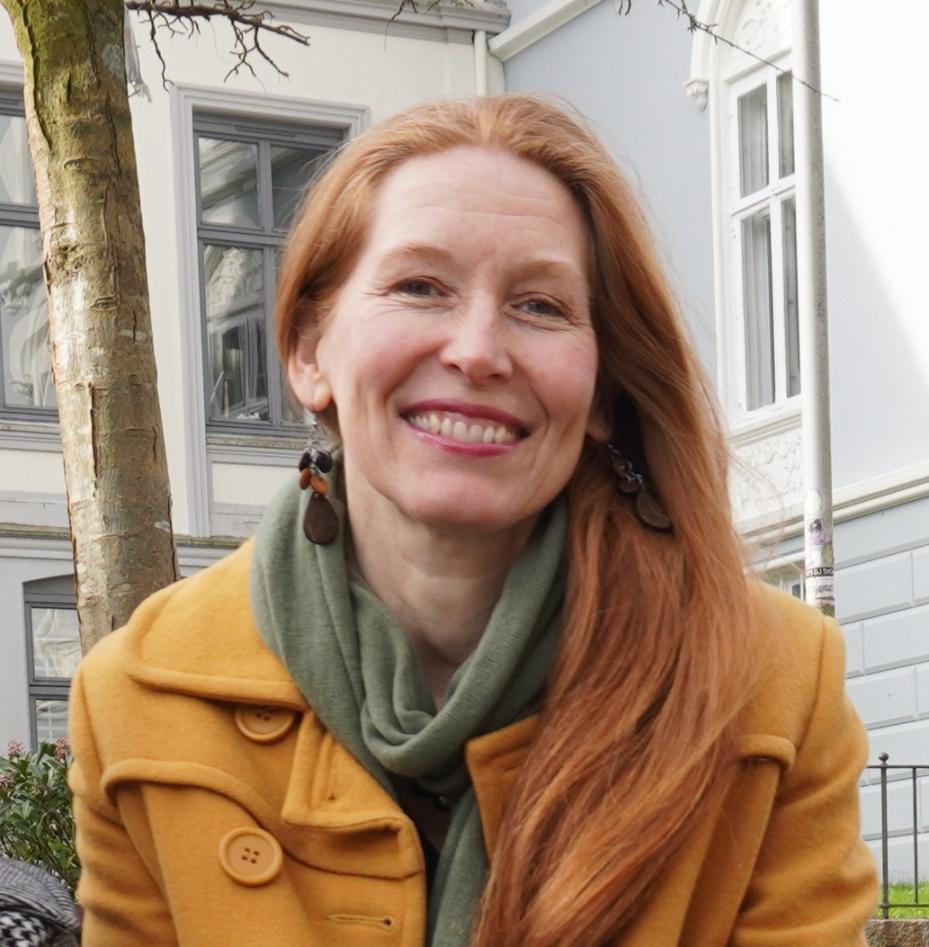
Iselin Åsedotter Strønen awarded ERC Consolidator Grant
She will investigate why gender inequalities in the fisheries sector are so difficult to change.

Main content
In competition with more than 3,000 applicants, Associate Professor at the Department of Social Anthropology (UiB), Iselin Åsedotter Strønen, has been awarded the ERC Consolidator Grant 2025 by the European Research Council (ERC). She is one of 349 researchers in Europe to receive this prestigious funding.
The project is entitled “In/visible women of the sea. Gendering fishery politics and advocacy”, abbreviated GENMAR. The project will explore why women in the fisheries sector globally are to a large extent rendered invisible, economically and socially underprivileged, and underrepresented in arenas where fisheries policy is shaped and managed, and how these conditions are reproduced.
“This is a fantastic opportunity to immerse myself in a topic that I care deeply about, and to have predictability regarding what I will be working on over the next five years. As a researcher today, time and space for ‘slow thinking’ may be what one lacks the most. There is often a great deal of multitasking and a constant pursuit of new resources and opportunities. Now I have the time, space and resources to pursue a long-term research agenda and to think deeply and slowly, and for that I am very grateful,” Åsedotter Strønen says.
An outstanding achievement
The awards were announced in a press release from the ERC on 9 December and entail that Åsedotter Strønen will receive funding amounting to two million euros, or more than NOK 23 million, over a five-year period.
This allows her to establish and lead her own research group and to pursue original ideas within her field of research.
“This is an outstanding achievement that clearly demonstrates the significance of Iselin Åsedotter Strønen’s research. An ERC Consolidator Grant gives our faculty increased academic strength and international visibility, and helps place Norwegian research on the global map. The award is not only a recognition of Iselin’s impressive work, but also an important milestone in the career of a young researcher with great talent. The competition for such grants is extremely fierce. We warmly congratulate Iselin and are incredibly proud of her efforts and results,” says Synnøve Bendixsen, Dean of the Faculty of Social Sciences.
Towards a more holistic understanding
An overarching aim of the project is to develop a holistic understanding of how the fisheries sector is and becomes gendered not only at the local level, but also through policy, governance, advocacy and regulatory frameworks across different levels and arenas.
“Through this, we aim to understand, both empirically and theoretically, why gender inequalities in the fisheries sector are so difficult to change. This constitutes the project’s core academic contribution. At the same time, the project has a strong societal relevance, as it may also provide knowledge about how the sector can actually be influenced in the direction of greater gender equality. Food security and sustainable management of the oceans and water systems are central to our shared future, and gender equality is currently under pressure in various ways. It is therefore essential to gain a broader understanding of the sector and to ensure that women gain greater room for action to participate in shaping the future of fisheries governance,” she says.
Fieldwork across different continents
The project is based on ethnographic fieldwork in four local communities in four countries on four different continents, where women constitute an important part of the fisheries sector and where they are working to organise themselves to strengthen their work and social recognition. The planned case studies are located in Spain, Brazil, Tanzania and Thailand.
“There we will carry out classical anthropological community-based fieldwork in order to gain a deep and broad understanding of the social, political, cultural, ecological and historical contexts of local gender roles and gendered divisions of labour,” Åsedotter Strønen says, and continues:
“Furthermore, we will follow the women’s activities and scale up our research to include institutions, organisations and other actors at the local, national and regional levels who are involved in the sector. By examining a range of institutional arenas across different levels, we aim to identify the points of contact, relationships and dynamics that shape gendered practices in fisheries at multiple scales. A very concrete question, for example, is why there are so few substantial changes despite advocacy efforts, well-intentioned political goals and extensive research-based knowledge on the issue. Where, how and why do these processes stall?”
Åsedotter Strønen will also analyse legislation, administrative regulations and policy documents to understand which conceptions of gender and gendered divisions of labour underpin them, and how these shape gendered dynamics, processes and the distribution of rights within the sector.
“In collaboration with a legal scholar, I will also conduct fieldwork within the EU system and at the FAO (the United Nations Food and Agriculture Organization) to understand how gender inequalities in fisheries are conceptualised by key actors at the supranational level, and how they shape their respective agendas towards the sector,” she says.
Important for further development and renewal
Åsedotter Strønen says she has learned a great deal through this process and looks forward to continuing to develop as a researcher, project leader and supervisor.
“It is also important to emphasise that I have not developed this project entirely on my own. Many colleagues have contributed advice, feedback and encouragement, and I have received excellent support from the Research and Innovation Department. I am therefore very pleased that all of their contributions have borne fruit. Since the project includes two PhD positions, one postdoctoral position and one part-time position, I am also very happy that we will be able to recruit new, young and exciting researchers to our academic environment at the department. This is extremely important for the further development and renewal of the discipline and the working environment at a time when recruitment resources are scarce.”
ERC Consolidator Grant
- Awarded to established researchers 7-12 years after their PhD.
- Up to €2 million over 5 years.
- In total, the ERC is awarding Consolidator Grants to 349 researchers in this round. 7 grants go to researchers at Norwegian institutions.