
News archive for Shaping European Research Leaders for Marine Sustainability (SEAS)

– Because of my passion for using ocean mud as a time capsule, my friends have jokingly called me ‘mud girl’ for years - a name I wear proudly, given that mud often holds some of the most important evidence about Earth’s past, SEAS fellow Ellie Pryor says.
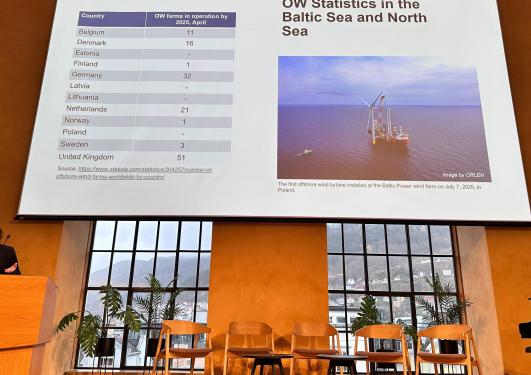
SEAS programme at UiB unites several academic fields in exploring marine sustainability (06.10.2025)
The SEAS programme at UiB is now midway through, with the first fellows finishing their 3-year projects. The programme is unique in the way it unites several academic fields in exploring the topic of marine sustainability.
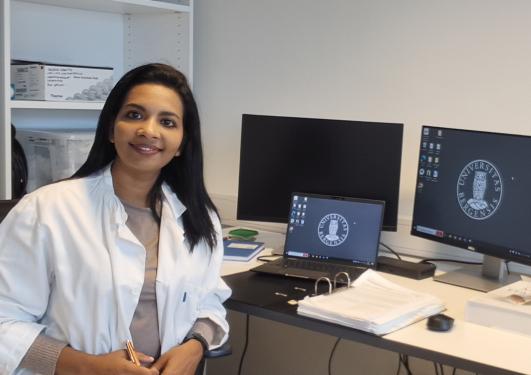
– Given that the health impacts of microplastics remain a relatively new and evolving field, there is a pressing need for robust scientific evidence to draw meaningful conclusions, says Damaris Benny Daniel. Her SEAS project, a collaboration with obstetricians at Haukeland University Hospital, will involve an extensive clinical study on the effects of microplastics during pregnancy.
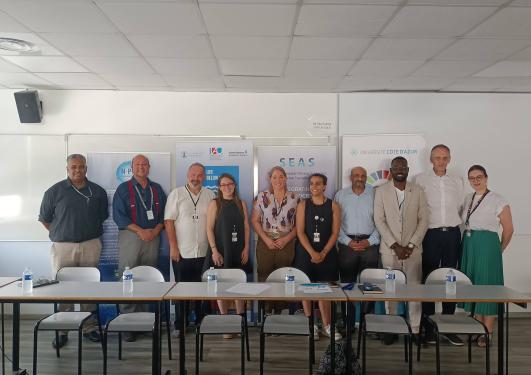
The official UNOC3 side event “Navigating Common Waters: Ocean Science Diplomacy for a Sustainable Common Future” took place on Wednesday 11 June 2025 in Nice. This is the summary report.
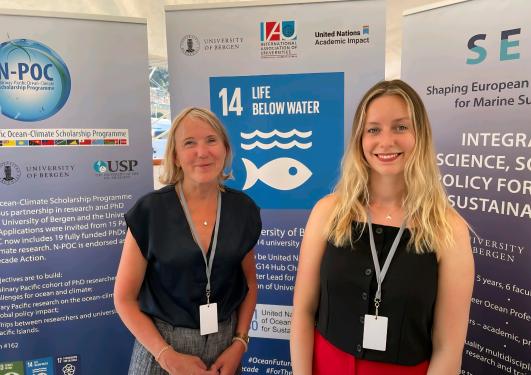
SEAS fellows Chloe Game and Mònica Pons Hernández attended the third UN Ocean Conference (UNOC3) in Nice 9-13 June, both giving lectures and taking part in panels. “The conference provided a rare and powerful space to transcend academic discourse and engage science directly with policy frameworks, diplomatic processes, and diverse perspectives,” SEAS fellow Mònica Pons Hernández says.

- "If sea level rose or fell on a coastal city, such as Bergen, what would that mean for where you would go shopping, set up industry, or raise children?” That’s entered the thoughts of evolutionary archaeologist and SEAS fellow Jeremy A. Beller as he’s been working on his project about historical ancient sea level fluctuation, among other things.
37 post-doctoral fellows from all over the world are working at the University of Bergen as part of the SEAS programme, delving into the subject of marine sustainability through different academic disciplines, often trying to solve complex questions.
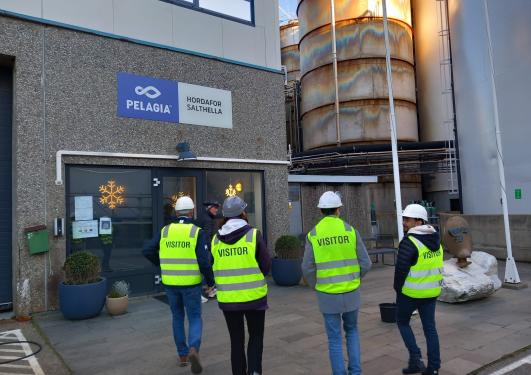
UiB has strong connections to many local companies. As part of the collaboration between Ferd and SEAS with the pilot externship programme, four of our research fellows were invited to Pelagia, a leading producer of fish products for human and animal consumption based just outside Bergen, for a tour of their facilities and an in depth look into their practices and goals.
In this article,... Read more

The SEAS programme at the University of Bergen was recently endorsed as an Ocean Decade Action. It becomes the university’s second Action as part of the United Nations Ocean Decade.

– With my project, we can refine numbers for the ongoing Greenland ice sheet contribution to sea level, including the numbers used in the IPCC report. The IPCC’s sea level estimates are shared as global maps and used by politicians, city planners, civil engineers etc. around the world, to address local sea level changes. Improving estimates on these numbers is highly motivating for me, says SEAS... Read more

“Damn it, there is a lot of social science and humanities research on fish feed going on here at UiB that I’m not even aware of!” This realization hit me in a meeting with colleagues who are part of an informal network of UiB researchers interested in fish feed. To my surprise, the more senior colleagues in this network seemed to be as surprised as I was once we started brainstorming and each of... Read more
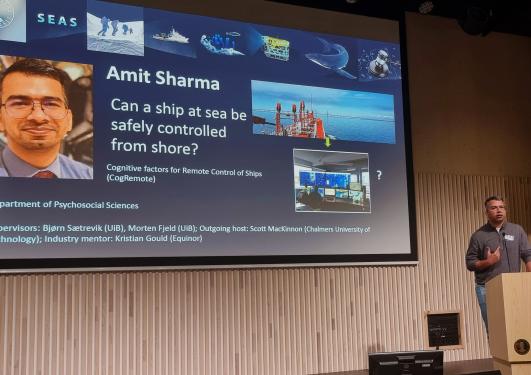
– As the autonomous ships are being developed in the Scandinavian region and within the wider area of Europe, the fundamental nature of maritime operations is in transition from controlling the ships while being onboard, to operating them remotely from shore. Such developments are presenting interesting avenues to how the navigation operations will evolve. This also represent a knowledge gap,... Read more
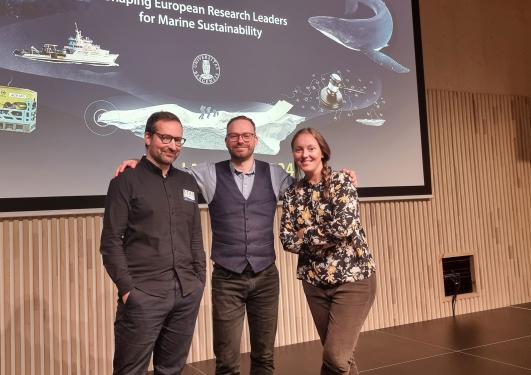
When topics like “what is interdisciplinarity” and “to what degree does my work actually contribute to marine sustainability” came up at meetings, a group of three SEAS postdoc fellows wanted to take the discourse to a more scientific level.
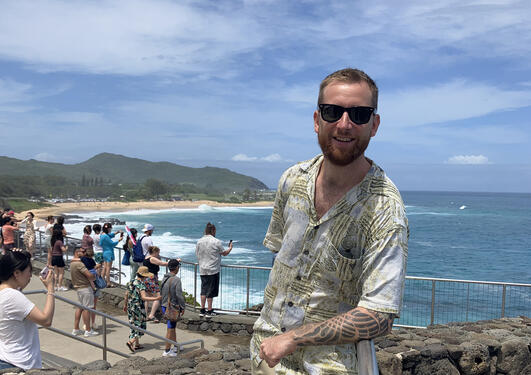
– I've been out in the large saltwater lagoon and for fishing expeditions to different atolls. I've followed the tuna economy onshore by visiting loining plants, participating in industry events and interviewing various tuna actors. Fieldwork is stimulating but also emotionally and psychologically exhausting, Ola G. Berta says of his fieldwork in the Marshall Islands. In this interview, he also... Read more

– By studying the immune responses to different pathogens in lumpfish, I have identified critical factors that promote the health and resilience of the fish. These findings not only pave the way for developing targeted vaccines and immune-boosting strategies for lumpfish but also hold potential for broader applications across other aquaculture species, says SEAS fellow Shreesha Sadashiva Rao.

SEAS fellows span a variety of scientific fields from geology and biology to informatics and law. Some of this variety will also be evident on Monday 28. October, with keynotes and pitches from selected SEAS fellows including topics like «Deep Learning for Smart Shipping» and «the response of macroalgae in a changing climate».
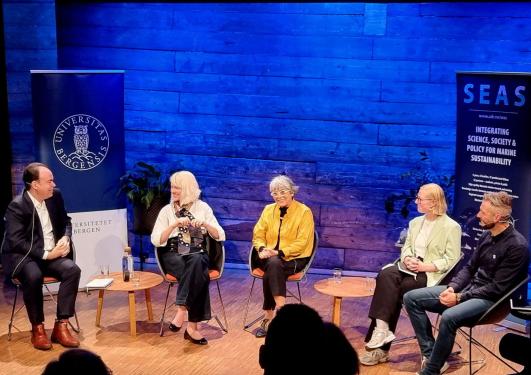
We can only reach the 2030 goal of a sustainable ocean, as SDG14, Life Below Water, envisages, through common and shared governance that excludes no one and belongs to everyone, SEAS Postdoctoral fellow João Bettencourt writes.
Pages
- December 2025 (1)
- November 2025 (1)
- October 2025 (1)
- August 2025 (1)
- July 2025 (1)
- June 2025 (1)
- May 2025 (1)
- March 2025 (1)
- February 2025 (2)
- January 2025 (2)
- December 2024 (2)
- November 2024 (1)
- October 2024 (3)
- September 2024 (4)
- November 2023 (1)