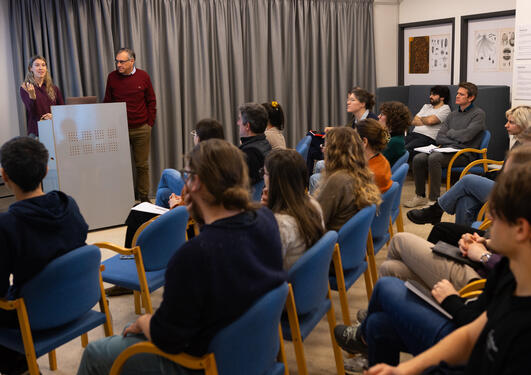
Prof. Nathan Palpant, University of Queensland, Australia
Prof. Nathan Palpant, from the Institute for Molecular Bioscience at the University of Queensland, will present: "Bridging genetics to therapeutics for heart disease"
Main content
Ischemia–reperfusion injury (IRI) remains a central driver of morbidity and mortality in cardiovascular disease, with limited therapeutic options targeting the underlying mechanisms of cardiomyocyte death. Although modern reperfusion therapies restore blood flow after MI, they do not prevent the wave of cell death initiated during ischemia. With over three decades of failed drug trials, cardioprotection remains one of the most persistent and costly failures in modern medicine. This reflects a fundamental misalignment between how disease risk is defined, how disease is modelled, and how therapies are developed and tested in clinical trials. In this seminar, I focus on our recent work developing strategies to overcome these challenges. First, I will present studies identifying metabolic risk factors, particularly glycaemic variability as a key driver of ischaemic heart disease risk. These findings have informed the development of co-morbid disease models that more accurately reflect the clinical risk profiles of patients most in need of cardioprotective therapies. Second, I will present new computational approaches to subtype individuals based on underlying genetic disease risk. Our methods use variant-to-trait models to define genetic risk profiles underpinning cardiovascular disease that may help improve clinical trial design and patient management by identifying patients based on life-long genetic risk. Lastly, our studies have shown that the acid-sensing ion channel 1a (ASIC1a) is a mediator of acidosis-induced injury and evaluated its potential as a therapeutic target in cardiac IRI. Using genetic and pharmacologic approaches, we demonstrate a causal role for ASIC1a in ischemic damage. I will discuss our efforts to advance ASIC1a inhibitors through clinical translation as a first-in-class therapy to mitigate IRI in acute myocardial infarction and improve donor heart preservation in transplantation.
Visit Prof. Palpant's webpage.