Open Access Week 2025
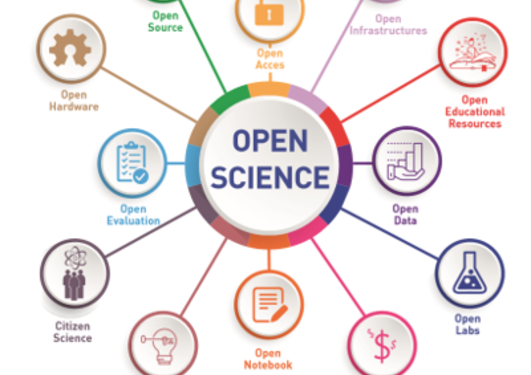
From October 20th to 24th, the global research community will celebrate International Open Access Week. This year's theme is “Who Owns Our Knowledge?”. To mark Open Access Week Norway 2025, universities and knowledge communities across the country are coming together to host a series of engaging webinars focused on open science. These webinars aim to spark dialogue and promote awareness around open access and responsible research practices.

Main content
University libraries across Norway welcome you to attend events for Open Access Week 2025. Lectures and discussions on topics concerning implementing open research practices will be held, including open access and ethical publishing, FAIR and sensitive data, and best practices in research data management. Our events are hosted digitally and open to all.
Sessions for Norway Open Access Week 2025:
One size does not fit all: New insights into qualitative data sharing [English]
Webinar Monday October 20th, 2025
10:00-11:30 CET
Session description
Sharing qualitative data poses many ethical, legal and practical challenges. At the same time, many qualitative datasets, for example rich interview data or video recordings, have a high reuse value and could provide unique benefits for researchers and communities when shared.
In this webinar we will be joined by three special guests from different disciplines and different areas of qualitative inquiry to discuss the unique contexts in which qualitative data sharing should not only be considered but also encouraged and those where a push for openness can lead to many ethical dilemmas or even harm.
Our answer is that one solution simply cannot fit all and qualitative data sharing should be assessed individually, taking into consideration contextual information on the background, method, research tradition and participating communities.
At the same time, we will also strive to provide here some general suggestions, guidance and/or inspiration for students, researchers and research support staff working with qualitative approaches or data sharing more broadly.
Program
1. Welcome and introduction to the webinar from the organizers
2. Invited talks
- Kristian Sandbekk Norsted: Qualitative Research, Data Sharing, and Ethical Engagement in the Age of Big Data
- Lindsay Ferrara: Creating an open-access, multimedia corpus for Norwegian Sign Language: A benefit to researchers and the deaf community
- Åshild Lappegard Hauge and Sigrun Marie Moss: How regulatory norms meet epistemological and ethical challenges in sharing qualitative interview data
3. Questions and discussion
4. Closing remarks
Speakers
Kristian Sandbekk Norsted: Qualitative Research, Data Sharing, and Ethical Engagement in the Age of Big Data
This talk examines some of the unique ethical and practical challenges associated with qualitative research data. As demands for openness and data sharing increase across the research landscape, it considers how researchers can address these expectations without compromising ethical integrity. The discussion is framed by current political-economic conditions—drawing on concepts such as surveillance capitalism and technofeudalism—as well as a Humboldtian understanding of scholarship as a public good. Within this context, openness is presented not as a threat, but as an important way to uphold ethical standards in research.
Kristian Sandbekk Norsted is a senior advisor at Østfold University College, where he leads the institution’s work on open science. He holds a PhD in cultural anthropology and works at the intersection of research policy, ethics, privacy, and open science.
Lindsay Ferrara: Creating an open access, multimedia corpus for Norwegian Sign Language: A benefit to researchers and the deaf community.
This talk will consider some of the issues and benefits of creating an open-access linguistic corpus of Norwegian Sign Language. Specifically, Prof. Ferrara will discuss how researchers can ethically collect and archive personal data, share it with academic and other stakeholders, while maintaining integrity and respect for language users.
Lindsay Ferrara is a theoretical and applied linguist working at NTNU. She has recently collected and published the first Corpus of Norwegian Sign Language, the language of the Norwegian deaf community, as a way to promote this minority language through documentation and description.
Åshild Lappegard Hauge and Sigrun Marie Moss: How regulatory norms meet epistemological and ethical challenges in sharing qualitative interview data
In this presentation, we will explain how the epistemological basis for sharing interview data differs in most qualitative approaches from that in quantitative methods. We will discuss different levels of sharing and provide examples of when interview data is too sensitive and context-dependent to share, and when it is historically valuable and necessary to share.
Åshild Lappegard Hauge is a professor at the Department of Psychology at the University of Oslo, where she teaches qualitative methods. She works mainly within the field of environmental psychology. She also conducts research on the unintended challenging consequences of Open Science on qualitative methods, in the research project ReDemOS.
Sigrun Marie Moss is a professor at the Department of Psychology at the University of Oslo, where she teaches cultural psychology and qualitative methods. She works mainly within the field of cultural and political psychology. She also conducts research on the unintended challenging consequences of Open Science on qualitative methods, in the research project ReDemOS.
Event organisers
University of Oslo ReDemOS project, Norwegian University of Science and Technology, Østfold University College
Host: Agata Bochynska
Co-host: Dag-Even Martinsen Torsøe
Openness in the age of AI – A Conversation with Norway’s National Centres for Artificial Intelligence [English]
Webinar Tuesday October 21st, 2025
10:00-11:30 CET
Teams link to the session here
Meeting ID: 395 641 130 312 3Passcode: 4va7mi2J
Session description
Artificial intelligence is making its way into the research landscape, and in this OA week event we will explore whether it is possible to maintain open science ideals, such as openness, transparency, collaboration, and reproducibility alongside AI?
We will ask the question: How open can AI research be? Voices from several of Norway’s newly established national AI research centres will join us to discuss how they work with open science ideals.
Contributors
Alexander Refsum Jensenius is Professor of Music Technology at the University of Oslo, where he is Director of the RITMO Centre for Interdisciplinary Studies in Rhythm, Time and Motion, and the fourMs Lab. He is also the Director of the MishMash Centre for AI and Creativity.
MishMash is a major Norwegian center dedicated to exploring the intersection of AI and creativity. Its primary aim is to create, explore, and reflect on AI for, though, and within creative practices. The center investigates AI’s impact on creative processes, develops co-creative AI systems, and examines the ethical, cultural, and societal consequences of AI for creative professions.
Michail (Michalis) Giannakos is Professor of Interaction Design and Learning Technologies at the Department of Computer Science at NTNU, Head of the Learner-Computer Interaction Lab, and a co-director of the AI Centre for Empowerment of Human Learning (AI-LEARN) — one of six national AI centres in Norway. His work focuses on developing new ways for humans to interact with intelligent learning systems.
The AI Centre for the Empowerment of Human Learning (AI LEARN) is an interdisciplinary and intersectoral effort dedicated to understanding and shaping the human dimensions of AI interaction and adoption for sustainable, inclusive & responsible integration across both public and private sectors and for all citizens. AI-LEARN focuses on the interaction between humans and AI, with an emphasis on developing human-centred infrastructures designed to enhance and empower human learning.
Anna Smajdor is Professor of Practical Philosophy at the University of Oslo and member of the leadership group at the Norwegian Centre for Trustworthy AI. She studied philosophy at the University of Edinburgh and earned her PhD from Imperial College London, focusing on the ethical and legal implications of artificial gametes. Her research explores ethical challenges in medicine, innovation and the life sciences, with particular emphasis on the intersection of bioethics and artificial intelligence.
The Norwegian Centre for Trustworthy AI (TRUST) aims to make artificial intelligence fair, safe, and responsible. TRUST’s mission is to develop an interdisciplinary knowledge base for the development of safe, fair, and responsible AI. The center conducts research on technology, societal impact, and innovation in close collaboration with academia, research institutes, industry, the public sector, and civil society.
Karin Rydving (chair) is the Assistant Director of the University of Oslo Library, overseeing the Medical and Science Library. She holds a Master's in Management of Library and Information Institutions as well as a Master of Arts in Language Education. With over a decade of experience in university libraries, she has led various departments, focusing on organisational development and change management. Karin is currently part of the LIBER Taskforce on Artificial Intelligence and has represented her institution on numerous committees related to Research Data Management and Library Systems.
Program
10:00–11:00: Presentations from the AI centres
11:00–11:30: Panel discussion
Event organisers
Elin Stangeland (coordinator), UiS
Karin Rydving, UiO
Sondre Strandskog Arnesen, HVL
Therese Skarås Skagen, HVL
Igor Goncharenco, UiA
Research Data Alliance NO - Training and outreach working group
Diamantpublisering i praksis – nye initiativ for åpen tilgang [Norwegian]
Webinar torsdag 23. oktober 2025
10:00-11:30 CET
Møte-ID: 312 494 065 389 1 Passord: yj6SK6wf
Program
Hver av de fire innlederne vil bruke rundt 15 minutter på presentasjonene. Det vil bli diskusjon og spørsmål etter hver presentasjon og til slutt, om tiden strekker til.
Det norske nettverket for diamantpublisering
Aysa Ekanger, nettverkskoordinator og seniorrådgiver i forsknings- og publiseringsstøtte ved UiT Norges arktiske universitet
Det nasjonale publiseringsutvalgets tanker om diamantpublisering
Det nasjonale publiseringsutvalget har vært sterkt engasjert i alle de ulike fasene av overgang til åpen publisering. Den røde linjen i utvalgets arbeid har handlet om å sikre og støtte opp om modeller som sikrer kvalitet i vitenskapelig publisering. Utvalget har vært kritisk til modellene der forfatter betaler for å publisere. Vurderingen er at denne modellen ser ut til å stimulere kvantitet over kvalitet i publiseringen og samtidig lokker frem aktører med uredelige hensikter. Diamantmodellen derimot, ser ut til å forene de beste kvalitetene fra abonnementsmodellen med målet om åpen tilgang. Derfor støtter utvalget initiativer som løfter frem denne modellen, selv om vi ser betydelige uløste utfordringer knyttet til finansiering.
Vidar Røeggen, sekretær for Det nasjonale publiseringsutvalget og seniorrådgiver i Universitets- og høgskolerådet
Publiseringsmodellen Subscribe to Open (S2O) og Scandinavian University Press
Scandinavian University Press har som uttalt mål å bli et 100% open access-forlag. Vi har kommet langt på denne veien allerede, og utgir i 2025 nesten 50 tidsskrifter og 30 antologier/monografier med åpen tilgang. De resterende tidsskriftene er allerede "grønn open access", men vi jobber med å konvertere endelig utgave av alle disse til åpen tilgang ved å introdusere finansieringsmodellen Subscribe to open (S2O). Dette innlegget vil gi en kort inntroduksjon til S2O, presentere funn og observasjoner fra en rekke møter med bibliotek i ulike sektorer og internasjonale forlag på betalingsvilje og -evne for S2O, og gi foreløpige vurderinger på veien videre - både muligheter og utfordringer - for vår vei mot 100% open access.
Nils Lahlum, forlagssjef i Scandinavian University Press
Kan forskningsbibliotekenes litteraturbudsjetter brukes til å støtte diamant? En presentasjon av UiTs diamant-program
6 % av alle forskningsartikler skrevet av forskere tilknyttet norske institusjoner, publiseres i diamant-tidsskrifter. Det er stor politisk vilje til å støtte opp om diamant-modellen. Litteraturbudsjettene er imidlertid bundet opp i dyre PAR-avtaler og andre tiltak for å dekke publiseringsgegbyr (Article Processing Charges/APC). Hvordan skal man da gå fra ord til handling? Nå er PAR-avtalen med Wiley blitt terminert. Samtidig gikk Elsevier med på 25 % kostnadsreduksjon. Det har gitt et visst handlingsrom. For UiT Norges arktiske universitet utgjør dette cirka 4 millioner NOK, eller om lag 6 % av vårt totale litteraturbudsjett. Disse midlene settes nå av til målrettede tiltak for å støtte opp om diamant-løsningen. Diamant betyr gratis for leser, gratis for forfatter – og ledet av forskere. UiT vil ivareta dette ved å la forskerrepresentanter legge føringer for pengebruken i vårt diamant-program.
Per Pippin Aspaas, førstebibliotekar, UiT Norges arktiske universitet
Moderator
Nina Karlstrøm, Sikt
Arrangører
Linda Johnsen, UiS (koordinator)
John David Didriksen, UiS
Herman Strøm, USN
Karin Ytterlid, UiO
Reusing Research Data: Opportunities, Challenges, and the FAIR Way Forward [English]
Webinar Thursday October 23rd, 2025
13:00-14:00 CET
Meeting ID: 979 3586 5586
Passcode: 086300
Session description
Research funders, institutions, and academic journals increasingly require that raw data, where possible, be shared openly through public repositories. This boosts transparency and reproducibility of research, but also unlocks new possibilities through re-use, i.e. secondary data analysis.
When data is reused for purposes beyond its original intent, it can lead to unexpected breakthroughs. What’s more, by combining datasets from different sources, researchers can uncover insights no single team would have been able to achieve alone, or build consensus on complex scientific questions.
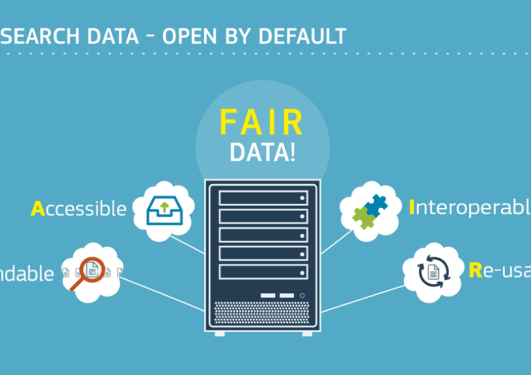
Yet, making sense of someone else’s data isn’t always easy. What are the challenges of interpreting and integrating datasets generated by others? Why is it crucial that the FAIR principles – Findable, Accessible, Interoperable, and Resuable, are followed when data are shared?
In this session, we’ll hear from two experienced practitioners of secondary data analysis. Join us to learn how FAIR data can lead to new discoveries — and what it takes to make that happen.
Speakers
Wout Bittremieux, PhD. Assistant Research Professor, University of Antwerp. Recipient of the 2025 Junior Research Parasite Award.
Wout Bittremieux develops AI-driven approaches that transform large-scale mass spectrometry data into new molecular discoveries in proteomics and metabolomics. He will explore how reanalysis of public mass spectrometry data opens opportunities for new insights, and outline emerging AI strategies to overcome FAIR data challenges such as incomplete and inconsistent metadata.
Josef D. Rasinger has gained hands-on experience in secondary data analysis and FAIR data practices from his work with the European Food Safety Authority (EFSA), the Norwegian Scientific Committe for Food Safety and the Environment (VKM), and FAO/WHO. In his presentation, Josef will highlight the practical hurdles of working with large scale systematic literature reviews and complex data extraction challenges in the context of food safety risk assessments and share insights from a practitioner’s perspective on how FAIR data can support this work.
Please note that the views expressed by the speaker are personal and do not necessarily reflect the official position of the European Food Safety Authority (EFSA).
Program
Each speaker will present for about 20 minutes, followed by a joint Q&A session
Event organizers:
Emma L. Walton, NTNU
Sagnik Sengupta, Nord
Ivana Malovic, UiO
Research Data Alliance Norway, Training and Outreach Working Group
To be FAIR: Conceptions of Purity and Pollution in Research Data Management Practices [English]
Webinar Friday October 24th, 2025
09:00-09:30 CET
Teams link to the session here
Session description
Heterogeneous data management practices have left the research data ecosystem messy and cluttered, worsening the problem of data reuse.
To enable effective reuse, this ecosystem needs to be decluttered and organised. Efforts to address this include making data FAIR by promoting standard research data management practices.
Yet, while these efforts have received significant support, they have also encountered some resistance. Typically, reasons for such resistance pertain to the resource-intensive nature of data management.
In this special Open Access Week edition of the Research Data Insider, Anamika Chatterjee (PhD) will explore another reason for such resistance: scientists hold differing definitions of ‘purity’ and ‘pollution’.
Speaker
Anamika Chatterjee (PhD) is the Centre Manager at the Centre for Digital Life Norway (DLN). With expertise in biotechnology, bioethics, and Responsible Research and Innovation (RRI), she champions interdisciplinary collaboration between researchers, policymakers, industry, and civil society to drive ethical, inclusive innovation.
Previously, Anamika has worked in ELIXIR Europe’s Human Genomics and Translational Data team helping to coordinate responsible practices for cross-border exchange of health data and FAIR data governance across the life science research infrastructure.
Program
15 minutes presentation followed by 15 mins of Q&A. You can ask questions in the chat or by raising your hand after the presentation. The session will be conducted in English.
Event organisers
Research Data Alliance Norway, Training and Outreach Group