
News archive for Global Challenges
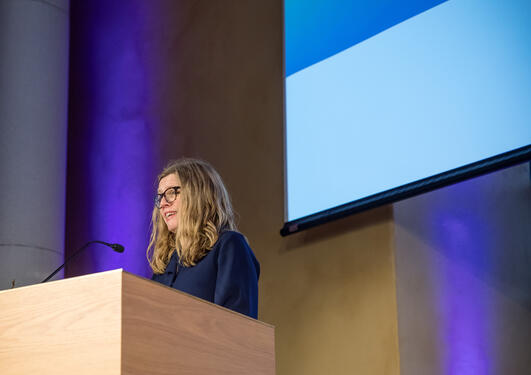
“It is vital for Norway to have a national action plan for the Sustainable Development Goals and only natural for academia to inhabit a key role by contributing with research-based knowledge and critical thinking on the goals,” says Vice-Rector Annelin Eriksen at the University of Bergen.
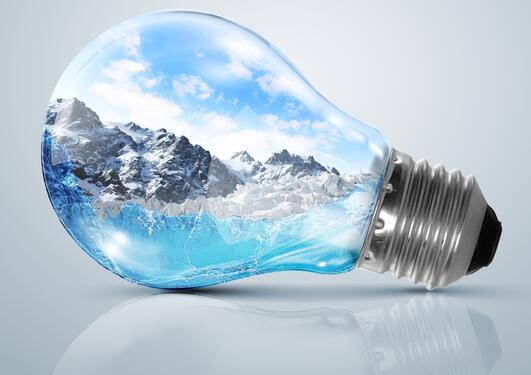
A global alliance of leading climate research universities is urging the G20 countries to embrace a build back better strategy for the post-pandemic recovery. This includes prioritising net zero emissions and planning for a more circular economy.
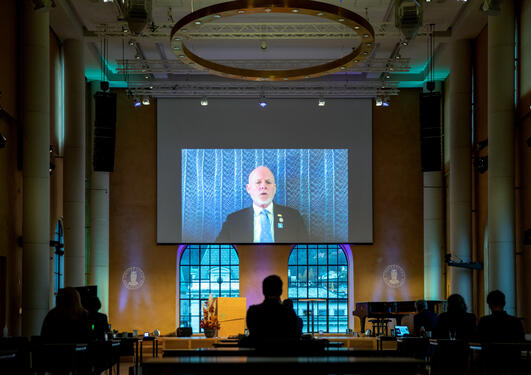
How can scientific knowledge on the treasures of the ocean contribute to informing policy? This was the key topic at the second Ocean Sustainability Bergen Conference.
Every year, several countries present their Voluntary National Reviews (VNRs) to show their progress in implementation of the 2030 Agenda and the Sustainable Development Goals. But how can science play an integral part in these proceedings?

The launch at the University Aula concluded with two large panels representing the diversity of scientific milieus tackling global challenges in Bergen. Together they will work to make Bergen the place of choice for students seeking knowledge and skills to help solve global challenges.
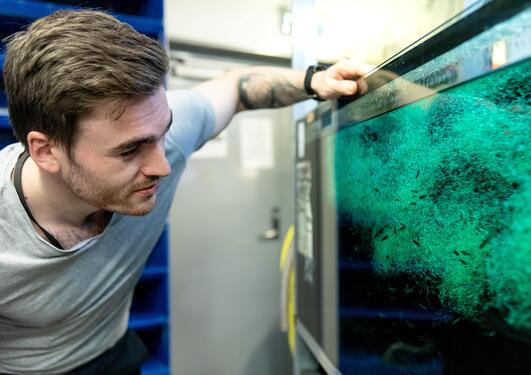
On UN Day 2018 – 24 October, the University of Bergen was announced as the official UNAI Hub for SDG14 – Life below water. Two years on, we look at what has been achieved during this time.
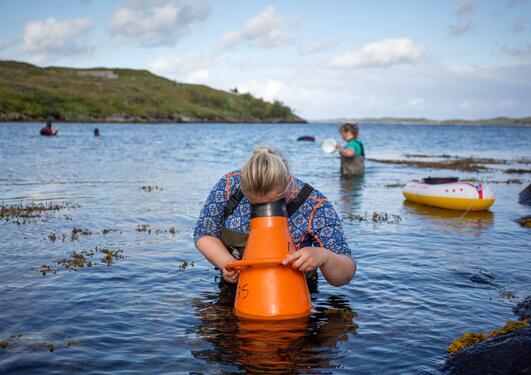
A new interdisciplinary project to create research leaders for marine sustainability is a prime part of the University of Bergen’s engagement with the UN Decade of Ocean Science for Sustainable Development.
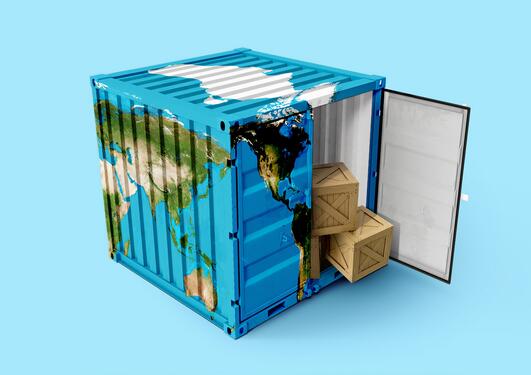
Migration is a global phenomenon bringing both global benefits and global challenges.
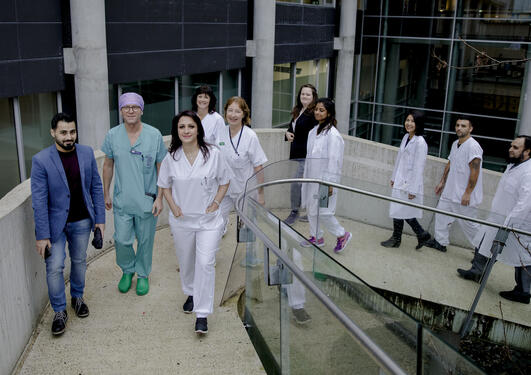
BCEPS Director Ole Frithjof Norheim contributes to a paper in Science Magazine proposing an ethical framework for global COVID-19 vaccine allocation.

– Migration is an important field of law because legal status makes an enormous difference. If you have status as ‘citizen’ you are protected by the law in a completely different way than refugees and migrants.
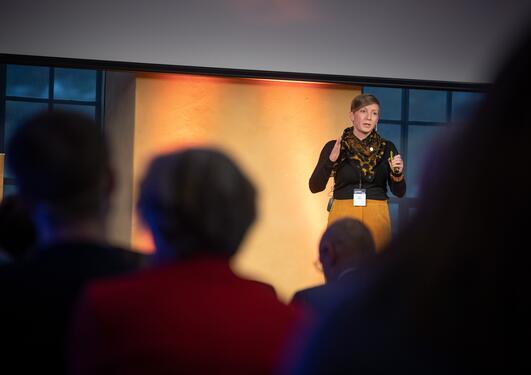
A new initiative has been launched at the University of Bergen to strengthen critical thinking on the Sustainable Development Goals (SDGs) as part of the university's education.

How can the ocean provide knowledge and research for the medicine and food of the future? The Covid-19 pandemic has shown the world community that biodiversity is key to securing solutions for the future and how dependent we are of the secrets of the ocean.

In response to the Covid-19 pandemic, the research programme GRIP launched a series of interviews on global inequality in March 2020. With more than 20 interviews out, GRIP is now looking at how to bring the debate on inequality into the mainstream.
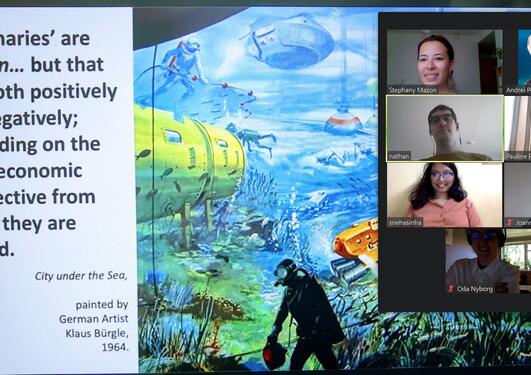
Postdoctoral Fellow Joanna Siekiera reports on a new summer school educating the science diplomats of the future, with participation from around the world.
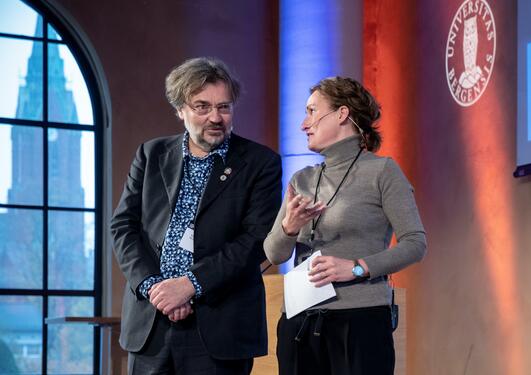
Biodiversity is one of the key issues in the debate for sustaining and developing our common ocean resources. Law researchers at the University of Bergen have long been engaged in judicial questions outside national marine territories.

Ocean science is at the core of the University of Bergen’s science diplomacy activities. By juxtaposing the 17 goals of the 2030 Agenda, the university and its partners are quietly providing policymakers with research-based knowledge for global sustainability.
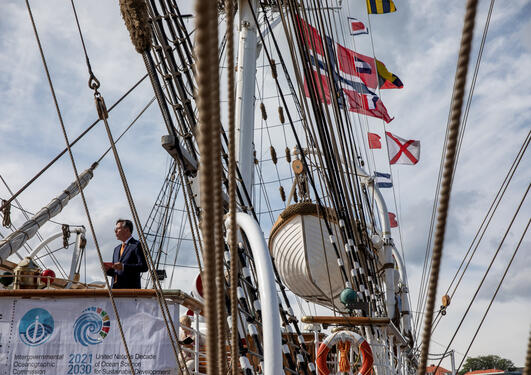
“The ocean has enormous potential. It's not only that we can, but also because we have to produce more from the ocean if we are to avoid climate change,” said Vidar Helgesen aboard tall ship Statsraad Lehmkuhl on World Ocean Day.
Reporting on ocean acidification data directly targeting the Sustainable Development Goals is all in a day’s work for Benjamin Pfeil and his data group at the University of Bergen.
Pages
- June 2026 (3)
- April 2026 (1)
- February 2026 (3)
- January 2026 (1)
- December 2025 (1)
- November 2025 (1)
- September 2025 (1)
- July 2025 (2)
- June 2025 (3)
- April 2025 (2)
- February 2025 (2)
- January 2025 (2)
- November 2024 (2)
- October 2024 (3)
- September 2024 (4)
- August 2024 (3)
- July 2024 (1)
- June 2024 (6)
- May 2024 (1)
- April 2024 (3)
- March 2024 (4)
- February 2024 (2)
- January 2024 (3)
- December 2023 (5)
- November 2023 (3)
- October 2023 (2)
- September 2023 (5)
- August 2023 (2)
- June 2023 (3)
- May 2023 (4)
- April 2023 (4)
- March 2023 (4)
- February 2023 (3)
- January 2023 (3)
- November 2022 (2)
- September 2022 (1)
- June 2022 (1)
- May 2022 (2)
- April 2022 (3)
- March 2022 (1)
- February 2022 (2)
- January 2022 (1)
- December 2021 (2)
- November 2021 (1)
- October 2021 (4)
- September 2021 (1)
- August 2021 (1)
- July 2021 (1)
- June 2021 (7)
- May 2021 (4)
- April 2021 (2)
- March 2021 (7)
- February 2021 (4)
- January 2021 (1)
- December 2020 (4)
- November 2020 (5)
- October 2020 (3)
- September 2020 (1)
- August 2020 (2)
- July 2020 (2)
- June 2020 (5)
- May 2020 (3)
- April 2020 (5)
- March 2020 (2)
- February 2020 (2)
- January 2020 (3)
- December 2019 (2)
- November 2019 (4)
- October 2019 (7)
- September 2019 (3)
- August 2019 (2)
- July 2019 (6)
- June 2019 (2)
- May 2019 (3)
- April 2019 (3)
- March 2019 (2)
- February 2019 (4)
- January 2019 (3)
- December 2018 (1)
- November 2018 (4)
- October 2018 (3)
- September 2018 (2)
- August 2018 (2)
- July 2018 (4)
- June 2018 (3)
- May 2018 (1)
- April 2018 (1)
- March 2018 (2)
- February 2018 (3)
- January 2018 (3)
- December 2017 (1)
- November 2017 (3)
- October 2017 (1)
- September 2017 (1)
- August 2017 (1)
- July 2017 (1)
- June 2017 (6)
- May 2017 (3)
- April 2017 (1)
- March 2017 (1)
- January 2017 (1)
- November 2016 (1)
- August 2016 (1)
- June 2015 (1)