
News archive for Department of Global Public Health and Primary Care

In early October the Research Group for Global Mental Health at CIH attended the 15th Congress of the International Federation for Psychiatric Epidemiology and hosted one of the symposia.
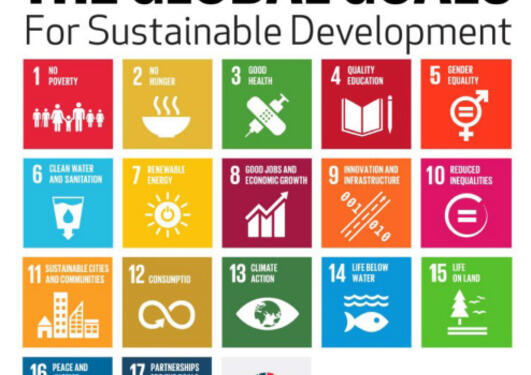
The United Nation’s Global Goals for Sustainable Development (SDG) were officially launched Friday 25 September 2015. Never before have so many peoples and countries agreed about something.
Professor and research group leader Ole Frithjof Norheim is one of 22 commissioners contributing to the new Lancet Commission on Refraiming NCDs and and Injuries for the Poorest Billion.

From reducing the incidence of hip fracture, to better understanding mental health and treating pain, IGS researchers have recently been involved in a number of studies presenting results that aim to improve life quality for the elderly as well as providing more support for health care professionals.

Could it be fair to use people's life-style choices with potential adverse impact on their health as criteria for priority settings in health care? This question is thoroughly addressed by a new paper recently published online in Journal of Medical Ethics. The paper is written by our research group member Kristine Bærøe together with Cornelius Cappelen.

Post.doc. Trygve Ottersen has published an article as part of a special symposium in Journal of Law, Medicine and Ethics on the global treath of antibiotic resistance.

Health care professionals' refusals to provide certain medical goods and services that they consider morally objectionable is a well-known and often hotly debated phenomenon. In this review paper for Philosophy Compass, post doc and group member Gry Wester provides an introduction and overview of some of the key issues.
Post.doc. and research group member Trygve Ottersen is contributing alongside prominant politicians and leaders like Margaret Chan, Bill Clinton and Jonas Gahr Støre in this new book from Oxford university Press.

Vitamin D, consumed via oily fish or cod liver oil supplements, may lower the risk of adult-onset multiple sclerosis (MS). Adolescence may be a particularly susceptible life period for such vitamin D-based risk reduction.

The 7th International Congress of Pain in Dementia gathered leading researchers on dementia in Bergen, Norway. The goal was to share knowledge, raise awareness and find solutions to challenges related to pain in people with dementia.
Is equality best understood as a distributive concern, or should it be viewed as a social and political ideal? The former view dominates in the justice and health literature, but in a new essay Gry Wester and Kristin Vogt explore the latter view.

Estimates of the expected remaining lifetime of critically ill patients and expected life years gained from intensive care unit (ICU) admission could inform priority setting of intensive care.

Helicopter emergency medical services (HEMS) have a number of theoretical advantages. After nearly 30 years in operation, how is the Norwegian HEMS doing in terms of flying times and primary mission rates?
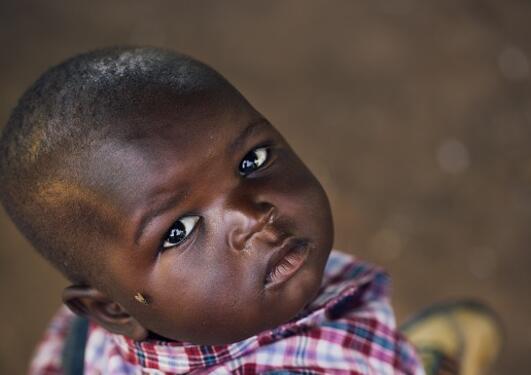
Deaths due to diarrhoea is one of the main killers of children in Sub Saharan Africa. In a new paper published in BMJ open Solomon Tessema Memire and Kjell Arne Johansson together with US examine the impact of universal public financing of rotavirus vaccination and diarrhoeal treatment in Ethiopia.

Identifying unfair health inequality is important in order to make correct priorities in health. But only a portion of observed health inequality can be explaind empircaly. A new paper explains why how we treat this unexplained inequality is not only a methodological question, but also an ethical one.
The 7th International Congress of Pain in Dementia gathered leading researchers on dementia in Bergen, Norway. The goal was to share knowledge, raise awareness and find solutions to challenges related to pain in people with dementia.

In a recent article published in the Lancet, Stephane Verguet, Dawit Desalegn, Kjell Arne Johansson, Solomon Memirie, and others used a new method "Extended cost-effectiveness analysis" to assess the health gains and financial risk protection benefits of health interventions that could be financed by the Ethiopian government.

Improving access to surgical care could save 1.5 million lives per year in poor countries, according to findings released today by the Disease Control Priorities Network at University of Washington’s Department of Global Health.
Pages
- March 2026 (1)
- February 2026 (1)
- January 2026 (1)
- November 2025 (1)
- October 2025 (1)
- May 2025 (2)
- April 2025 (1)
- March 2025 (4)
- February 2025 (1)
- January 2025 (1)
- December 2024 (1)
- November 2024 (5)
- October 2024 (9)
- August 2024 (1)
- June 2024 (4)
- May 2024 (1)
- April 2024 (1)
- February 2024 (1)
- January 2024 (2)
- December 2023 (1)
- October 2023 (3)
- September 2023 (1)
- August 2023 (7)
- July 2023 (1)
- June 2023 (4)
- May 2023 (2)
- April 2023 (1)
- March 2023 (2)
- February 2023 (3)
- January 2023 (1)
- November 2022 (2)
- September 2022 (1)
- August 2022 (1)
- July 2022 (1)
- May 2022 (1)
- April 2022 (2)
- March 2022 (2)
- February 2022 (3)
- January 2022 (1)
- December 2021 (1)
- October 2021 (4)
- September 2021 (3)
- June 2021 (4)
- May 2021 (4)
- April 2021 (2)
- March 2021 (1)
- February 2021 (5)
- January 2021 (4)
- December 2020 (5)
- November 2020 (2)
- October 2020 (5)
- September 2020 (7)
- August 2020 (2)
- July 2020 (1)
- May 2020 (2)
- April 2020 (1)
- March 2020 (4)
- January 2020 (3)
- December 2019 (1)
- November 2019 (3)
- October 2019 (4)
- September 2019 (1)
- August 2019 (1)
- July 2019 (1)
- June 2019 (5)
- May 2019 (3)
- April 2019 (3)
- February 2019 (3)
- January 2019 (5)
- December 2018 (1)
- November 2018 (5)
- October 2018 (3)
- September 2018 (1)
- August 2018 (3)
- July 2018 (1)
- June 2018 (5)
- May 2018 (5)
- April 2018 (3)
- March 2018 (11)
- January 2018 (1)
- December 2017 (2)
- October 2017 (2)
- September 2017 (6)
- June 2017 (1)
- May 2017 (4)
- April 2017 (4)
- March 2017 (2)
- January 2017 (2)
- December 2016 (3)
- November 2016 (3)
- October 2016 (3)
- September 2016 (1)
- August 2016 (1)
- June 2016 (2)
- May 2016 (2)
- April 2016 (4)
- March 2016 (1)
- February 2016 (3)
- January 2016 (4)
- December 2015 (1)
- November 2015 (3)
- October 2015 (9)
- September 2015 (4)
- August 2015 (3)
- June 2015 (3)
- May 2015 (4)
- April 2015 (2)
- March 2015 (2)
- February 2015 (1)
- January 2015 (1)
- November 2014 (2)
- October 2014 (1)
- September 2014 (4)
- August 2014 (2)
- July 2014 (1)
- June 2014 (1)
- May 2014 (1)
- April 2014 (4)
- March 2014 (5)
- February 2014 (3)
- January 2014 (2)
- December 2013 (7)
- November 2013 (2)
- October 2013 (2)
- September 2013 (2)
- July 2013 (1)
- June 2013 (1)
- March 2013 (2)
- October 2012 (1)
- March 2012 (2)
- November 2011 (3)
- September 2011 (1)