
News archive for Department of Global Public Health and Primary Care

Recent results from the Department of Global Public Health and Primary Care (IGS) show that bariatric surgery patients need more than just physical follow-up.

A new article discusses the new, comprehensive framework for priority setting laid out by the third Norwegian Committee on Priority Setting in the Health Sector in November 2014. The authors also discuss the debate and work that followed in the wake of the Committee’s report.

21st Century women – in rich and poor countries alike – do not receive the support they need to breastfeed.

A new study from IGS shows no association between folic acid use before and during pregnancy and the risk of maternal and childhood cancer. The study included more than 430,000 women and 690,000 children in the period 1999-2010, and 3,780 women and 800 children developed cancer. Information on supplement use was obtained from the Medical Birth Registry of Norway.

Guri Rørtveit kicked off her leadership job at the Department of Global Public Health and Primary Care (IGS) with an open meeting where she outlined her plans and ideas for the next 4-year period.

Surgical disease cause a high disease burden and there is limited access to surgical services in low- and middle-income countries. In a new article published in Health Policy and Planning , a DCP-Ethiopia and Priorities2020 team examined how policies to expand access to surgery in rural Ethiopia would impact health, impoverishment and equity.

Vaccine and treatment interventions for children can bring large health and financial benefits to households in Ethiopia, most particularly among the poorest socio-economic groups.

How, and in what specific ways, can research institutions provide opportunities for their scientific employees to exercise well-qualified, ethical judgement in their research? Kristine Bærøe discusses this question in a recently published anthology on ethical judgment in research.
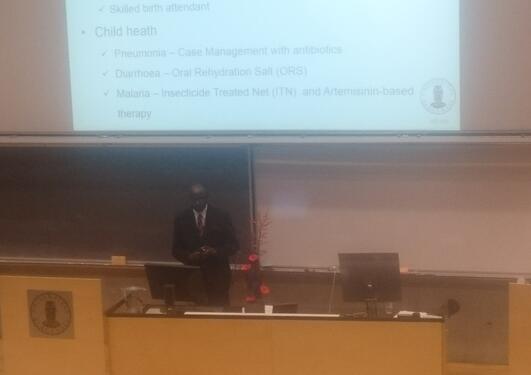
Research group member George Ruhago successfully defended his PhD thesis "Economic evaluation and equity impact analysis of interventions or maternal and child health in Tanzania" on Friday 6yh of November.

People born into families in which someone already has cerebral palsy are themselves at elevated risk, depending on their degree of relatedness.

A contextualized cost-effectiveness analysis (CEA) of neuropsychiatric interventions in Ethiopia could advise authorities to prioritize between treatments. Epilepsy treatment is most cost-effective, while treatment for schizophrenia and bipolar disorder avert fewer DALYs.
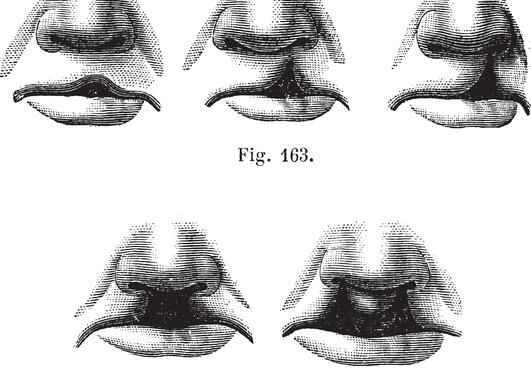
When both parents are old, the risk of cleft palate in the offspring is increased, but not if only one parent is older than 31 years (mothers) or 34 years (fathers).

The research school for health and care in the municipal health services will be coordinated by the University of Oslo, and IGS will be a collaborating partner represented by Berit Rokne and Eva Gjengedal.

Association between maternal preeclampsia and congenital heart defect in the offspring. (27.10.2015)
The prevalence of severe congenital heart defects is increased among newborns of mothers who experienced preeclampsia during pregnancy, especially if the preeclampsia was early onset.

Esperanza Diaz was the principal investigator of a research team that evaluated the impact of factors such as length of stay, immigrant group and other sociodemographic variables on immigrant health.

Cancer was the second leading cause of death after cardiovascular disease globally in 2013. Over the past few months, researchers from different research groups at the Department of Global Public Health and Primary Care (IGS) have been involved in a number of individual studies and one important global review.
Cancer was the second leading cause of death after cardiovascular disease globally in 2013. Over the past few months, researchers from different research groups at the Department of Global Public Health and Primary Care (IGS) have been involved in a number of individual studies and one important global review.

Nine out of ten physicians have regretted their choice of profession due to lack of resources and difficult rationing dilemmas.
Pages
- March 2026 (1)
- February 2026 (1)
- January 2026 (1)
- November 2025 (1)
- October 2025 (1)
- May 2025 (2)
- April 2025 (1)
- March 2025 (4)
- February 2025 (1)
- January 2025 (1)
- December 2024 (1)
- November 2024 (5)
- October 2024 (9)
- August 2024 (1)
- June 2024 (4)
- May 2024 (1)
- April 2024 (1)
- February 2024 (1)
- January 2024 (2)
- December 2023 (1)
- October 2023 (3)
- September 2023 (1)
- August 2023 (7)
- July 2023 (1)
- June 2023 (4)
- May 2023 (2)
- April 2023 (1)
- March 2023 (2)
- February 2023 (3)
- January 2023 (1)
- November 2022 (2)
- September 2022 (1)
- August 2022 (1)
- July 2022 (1)
- May 2022 (1)
- April 2022 (2)
- March 2022 (2)
- February 2022 (3)
- January 2022 (1)
- December 2021 (1)
- October 2021 (4)
- September 2021 (3)
- June 2021 (4)
- May 2021 (4)
- April 2021 (2)
- March 2021 (1)
- February 2021 (5)
- January 2021 (4)
- December 2020 (5)
- November 2020 (2)
- October 2020 (5)
- September 2020 (7)
- August 2020 (2)
- July 2020 (1)
- May 2020 (2)
- April 2020 (1)
- March 2020 (4)
- January 2020 (3)
- December 2019 (1)
- November 2019 (3)
- October 2019 (4)
- September 2019 (1)
- August 2019 (1)
- July 2019 (1)
- June 2019 (5)
- May 2019 (3)
- April 2019 (3)
- February 2019 (3)
- January 2019 (5)
- December 2018 (1)
- November 2018 (5)
- October 2018 (3)
- September 2018 (1)
- August 2018 (3)
- July 2018 (1)
- June 2018 (5)
- May 2018 (5)
- April 2018 (3)
- March 2018 (11)
- January 2018 (1)
- December 2017 (2)
- October 2017 (2)
- September 2017 (6)
- June 2017 (1)
- May 2017 (4)
- April 2017 (4)
- March 2017 (2)
- January 2017 (2)
- December 2016 (3)
- November 2016 (3)
- October 2016 (3)
- September 2016 (1)
- August 2016 (1)
- June 2016 (2)
- May 2016 (2)
- April 2016 (4)
- March 2016 (1)
- February 2016 (3)
- January 2016 (4)
- December 2015 (1)
- November 2015 (3)
- October 2015 (9)
- September 2015 (4)
- August 2015 (3)
- June 2015 (3)
- May 2015 (4)
- April 2015 (2)
- March 2015 (2)
- February 2015 (1)
- January 2015 (1)
- November 2014 (2)
- October 2014 (1)
- September 2014 (4)
- August 2014 (2)
- July 2014 (1)
- June 2014 (1)
- May 2014 (1)
- April 2014 (4)
- March 2014 (5)
- February 2014 (3)
- January 2014 (2)
- December 2013 (7)
- November 2013 (2)
- October 2013 (2)
- September 2013 (2)
- July 2013 (1)
- June 2013 (1)
- March 2013 (2)
- October 2012 (1)
- March 2012 (2)
- November 2011 (3)
- September 2011 (1)