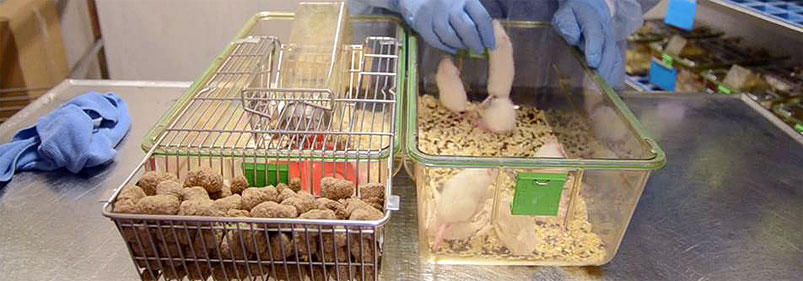
Practical Training for Improved Animal Welfare and Research Quality
To carry out procedures on animals responsibly, you must master the practical skills required by the study. The purpose of hands-on training is to acquire the necessary knowledge and techniques to handle animals in a gentle and respectful manner. This helps reduce stress in the animals, promotes good animal welfare, and minimizes unwanted variation (noise) in experimental results.
Main content
Training Requirements According to the EU Education Framework (§23)
The training requirements outlined in the EU education framework under Directive §23 are outcome-based.
This means there are no specific requirements for the duration of practical training. Instead, candidates must be able to demonstrate competence in the techniques they will actually use in their work. Furthermore, any training involving live animals must be relevant to the procedures and species the candidate will be working with.
As a result, training must be individually tailored, ensuring that each person receives the necessary instruction in the specific skills required to promote both high standards of animal welfare and reliable research outcomes.
The EU framework has also defined minimum practical training modules to support this process.
Who Needs to Learn What – Mastering Relevant Techniques
With the implementation of new regulations in 2015, the Animal Facility must ensure that individuals performing procedures on animals are properly trained.
Procedures must be carried out without unnecessary burden on the animal.Training must be relevant to the species you will work with and the procedures required for your research.
Training is Perishable
To get the most out of practical training, it should be completed just before starting your own experiments. This ensures that skills are fresh and can be immediately applied through repetition and practice. This leads to a safer and more efficient start, both for you and the animals.
New Roles and Requirements in Laboratory Animal Work
With the introduction of the EU Directive on laboratory animals in 2015, new classifications of personnel working with research animals were established.The classification is function-based and clarifies who needs which skills:
- Function A and D: Individuals performing procedures on animals or euthanizing animals must demonstrate practical competence in relevant techniques.
- Function B: Individuals planning experiments but not performing procedures must understand the methods and their impact on animals but are not required to demonstrate practical skills.
Mandatory Skills for Working with Laboratory Animals at UiB’s Animal Facility
Everyone working with animals at the Animal Facility must be able to perform the following tasks safely and responsibly:
- Handle animals securely, e.g., using tunnel or cup methods
- Recognize signs of pain and reduced animal welfare
- Perform humane euthanasia of rodents using CO₂ or cervical dislocation
- Follow hygiene procedures and use appropriate protective equipment
- Report concerns related to animal welfare to responsible personnel
These skills are essential to ensure good animal welfare and high-quality research.
Practical Training – Step by Step
Practical training in laboratory animal science follows a structured progression designed to safeguard both animal welfare and operator safety.
The Animal Facility follows this policy for procedural training:
- Training on models – Practice on models and equipment in a safe and controlled environment
- Practice on deceased animals – Realistic training without burdening live animals
- Practice on anesthetized animals – Refine techniques with minimal impact
- Work with awake animals – Only after demonstrating sufficient skill and confidence
CAREiN Training – Your Path to Safe Animal Handling
If you have completed the CAREiN course, your practical training follows modules 3.2 and 8 of the EU training framework for laboratory animal personnel.
Training is based on a detailed template describing standardized methods for common procedures.It is led by certified CAREiN instructors and provides a solid foundation for further supervised practice.
Demonstrate Your Skills – and Get Certified
During the CAREiN course, you will have the opportunity to demonstrate mastery of one or more learning objectives from modules 3.2 and 8.Once you show competence, a certified CAREiN instructor can attest your skills.
This certification serves as documentation of your practical training and can be uploaded to your FOTS profile.
Common Procedures – and Performance Requirements
Research involving laboratory animals often includes minor technical procedures. The most common are:
- Animal restraint
- Injection techniques
- Blood sampling
- Minimally invasive procedures without anesthesia
- Humane euthanasia
To participate in an animal study, you must document competence in relevant procedures based on the species and experimental design.
This ensures both good animal welfare and research quality.
Advanced Procedures Require Specialized Training
Some procedures are more complex and require specialized skills, such as:
- Invasive procedures with anesthesia
- Sterile setup and aseptic techniques during surgery
- Administration and monitoring of anesthesia
- Operation and control of anesthesia gas equipment
These skills require thorough training and are not covered by general practical training alone.
Specialized Training May Be Required
In many cases, you must seek external specialized training, such as microsurgery or advanced surgical techniques.This ensures procedures are performed correctly and with a high standard of animal welfare.
Practical Training at the Animal Facility
- Registration for basic practical training – [Link to registration]
- Request to use animals for further training or new procedures – [Submit your request here]
Training Documentation – What You Need to Do
When applying to perform animal experiments, you must document that you have completed relevant training.
Upload Documentation to FOTS
You should upload all training documentation to your FOTS profile:
- Theoretical training
- Practical training
- Continuing and further education
Confirmation of Practical Training
It is important that an impartial person from the Animal Facility signs off on your practical skills for several reasons:
- Ensures Academic Quality and Objective Assessment
- Protects Animal Welfare
- Meets Regulatory and Ethical Requirements
- Strengthens Trust in Research
Documentation may be in the form of a certificate or letter from your trainer, describing:
- The techniques you have learned
- The species the training applies to
- Confirmation that you master the techniques and can work independently
Registation for the next CAREiN training event
The next CAREiN training event will take place in March–April 2026.
Registration is available via Skjemaker
The training fee is NOK 3,500, which includes one assessment for practical training documentation.