
News archive for The Department of Biomedicine

The role of integrin a11 in breast cancer
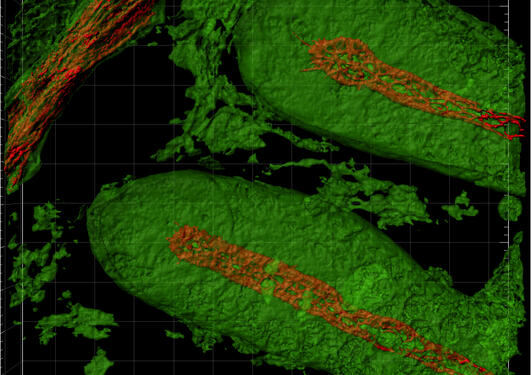
Welcome to a 2-days workshop 17.-18. Oct. with the Andor Academy team and Bitplane (Imaris) representatives.
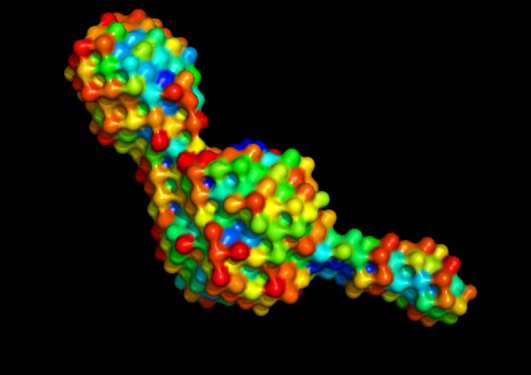
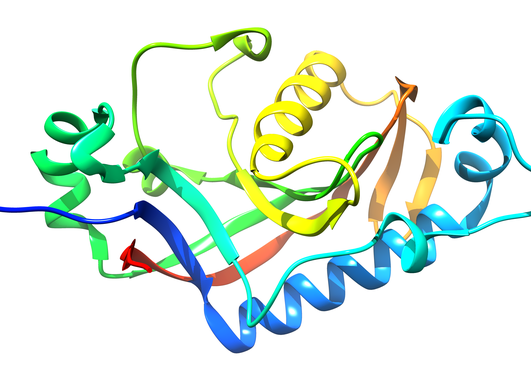
The post-synaptic protein Arc has been termed a master regulator of memory. In line with its homology to certain viral proteins, it has also been shown recently to form virus-like capsids. We have elucidated for the first time the 3D structure of full-length monomeric Arc.
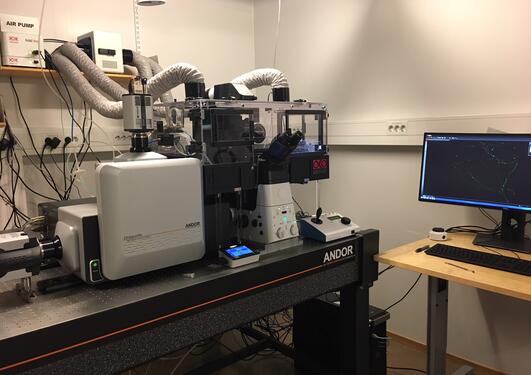
Thanks to funding from the Faculty of Medicine MIC recently got a new confocal in house. It was installed before summer and is ready to use.
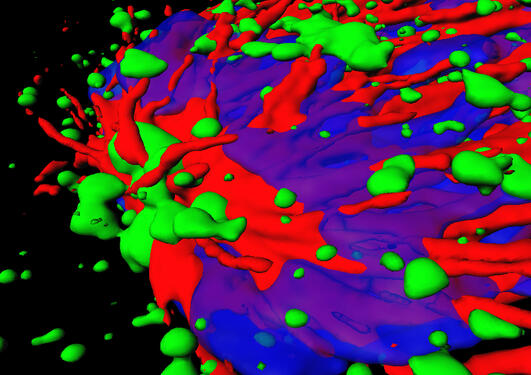
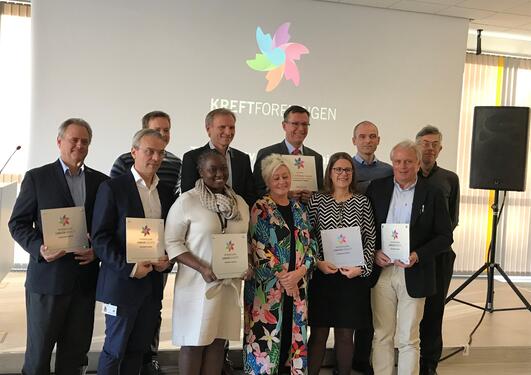
Bortezomib as chemosensitizer for glioblastoma patients with unmethylated MGMT promoter: Phase IB/II clinical trial and mechanisms of therapeutic efficacy

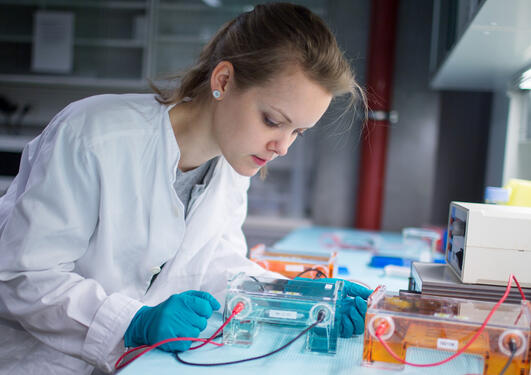
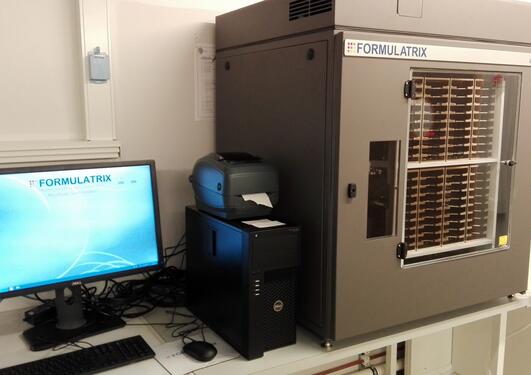
A state-of-the-art imaging system for high-throughput crystallization experiments has been installed at BiSS at the Department of Biomedicine. The system is capable of imaging samples using both visible and UV light. The imager is a significant addition to the crystallization laboratory as well as BiSS, providing a seamless workflow from the Mosquito LCP pipetting robot to automated imaging. It... Read more

The Workshop in Applied Structural Bioinformatics will be organized at the University of Bergen October 16-20. This workshop will provide a practical introduction to popular tools for biomolecular visualisation, analysis and simulations. Lectures will be given by both international and local speakers from the research fields of structural bioinformatics and computer-aided drug design.

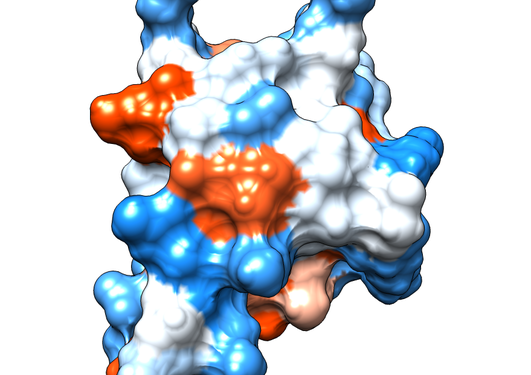
The Shank family of proteins functions as a molecular scaffold in the neuronal post-synaptic density, enabling numerous protein-protein interactions. Shanks are large multi-domain molecules, and one of the conserved domains is an SH3 domain. Using high-resolution X-ray crystallography, we show that the SH3 domain in the Shank family has lost its canonical ligand-binding site.
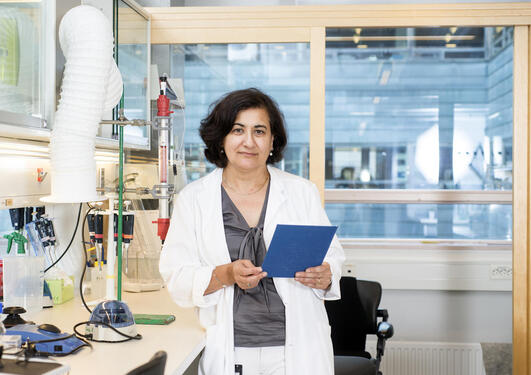
Sarsia Seed recently announced their new seed funds in Bergen consisting of 300 million NOK. Initial investment can be in the biotechnology company Pluvia founded by Prof. Aurora Martinez according to Sarsia officials.
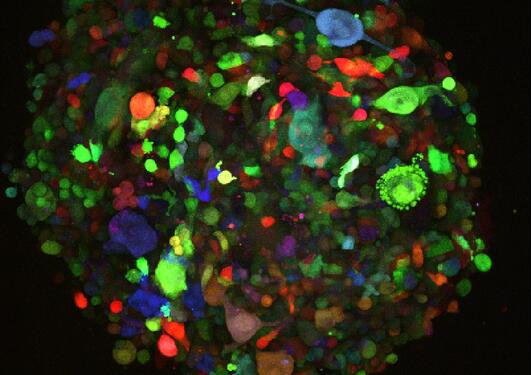
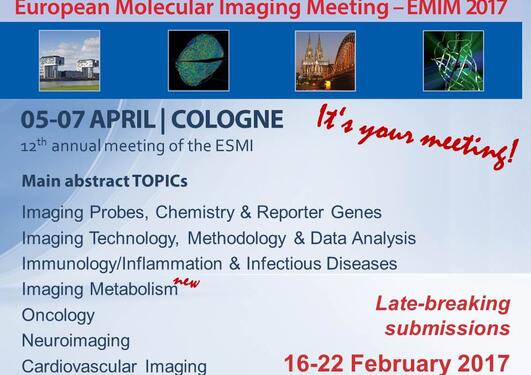
Interesting meeting in Molecular Imaging in Cologne, Germany, 05-07.04.2017
The molecular processes of myelin maturation are to a large extent still unknown. A coordinated interplay between regulatory and functional molecules must take place for correct timing of myelin membrane apposition and compaction, such that cytoplasmic channels are also formed in a correct way.
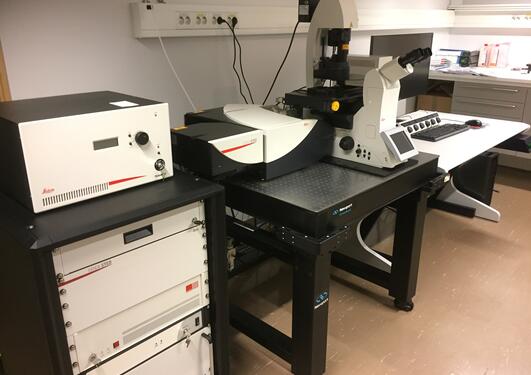
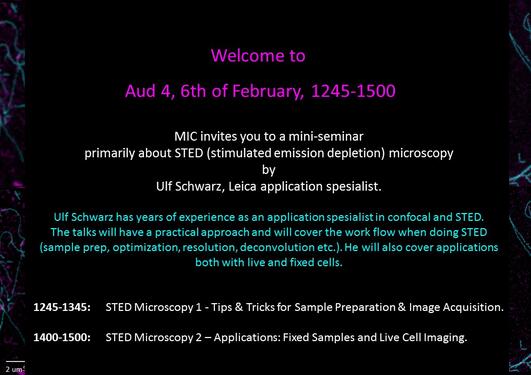
A new system for confocal and super-resolution imaging avalible at MIC.
Pages
- February 2026 (2)
- June 2025 (5)
- April 2025 (1)
- March 2025 (2)
- January 2025 (3)
- December 2024 (1)
- November 2024 (2)
- September 2024 (1)
- August 2024 (2)
- June 2024 (3)
- May 2024 (1)
- April 2024 (1)
- February 2024 (3)
- January 2024 (1)
- October 2023 (1)
- September 2023 (2)
- August 2023 (2)
- July 2023 (2)
- March 2023 (4)
- February 2023 (1)
- January 2023 (1)
- December 2022 (4)
- November 2022 (1)
- October 2022 (4)
- September 2022 (3)
- June 2022 (2)
- May 2022 (4)
- April 2022 (3)
- March 2022 (8)
- December 2021 (1)
- November 2021 (3)
- September 2021 (3)
- August 2021 (2)
- July 2021 (1)
- June 2021 (1)
- May 2021 (1)
- March 2021 (1)
- February 2021 (3)
- January 2021 (1)
- December 2020 (1)
- November 2020 (1)
- October 2020 (2)
- September 2020 (3)
- June 2020 (1)
- April 2020 (3)
- March 2020 (2)
- February 2020 (3)
- January 2020 (1)
- December 2019 (3)
- November 2019 (4)
- August 2019 (1)
- June 2019 (2)
- May 2019 (1)
- April 2019 (1)
- March 2019 (1)
- January 2019 (2)
- December 2018 (2)
- November 2018 (2)
- October 2018 (2)
- September 2018 (3)
- August 2018 (2)
- February 2018 (1)
- January 2018 (1)
- November 2017 (2)
- October 2017 (3)
- August 2017 (1)
- June 2017 (1)
- March 2017 (1)
- January 2017 (4)
- November 2016 (1)
- October 2016 (2)
- August 2016 (2)
- July 2016 (2)
- March 2016 (2)
- January 2016 (2)
- October 2015 (1)
- July 2015 (1)
- June 2015 (2)
- April 2015 (1)
- February 2015 (1)
- January 2015 (1)
- December 2014 (1)
- October 2014 (1)
- August 2014 (1)
- April 2014 (2)
- March 2014 (1)
- February 2014 (1)
- January 2014 (2)
- November 2013 (2)
- October 2013 (3)
- September 2013 (1)
- June 2013 (1)
- May 2013 (1)
- April 2013 (1)
- January 2013 (1)
- December 2012 (1)
- November 2012 (1)
- September 2012 (2)
- August 2012 (1)
- July 2012 (1)
- May 2012 (1)
- April 2012 (1)
- March 2012 (2)
- February 2012 (1)
- January 2012 (1)
- November 2011 (2)
- October 2011 (3)
- June 2011 (3)
- May 2011 (1)
- April 2011 (3)
- February 2011 (2)
- January 2011 (2)
- December 2010 (1)
- November 2010 (3)
- October 2010 (2)
- March 2010 (2)
- November 2009 (1)
- October 2009 (3)
- September 2009 (1)
- July 2009 (2)
- May 2009 (1)
- April 2009 (2)
- February 2009 (1)
- January 2009 (1)