
News archive for The Department of Biomedicine

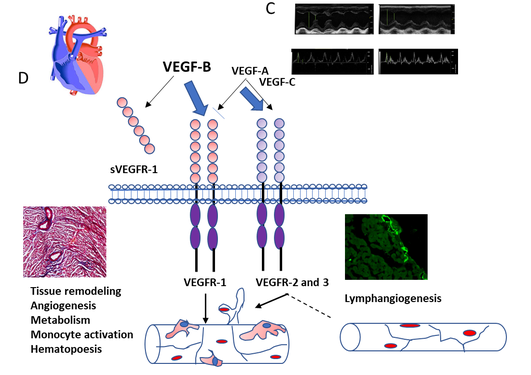
A new study undertaken at UiB does answer one set of questions, however, raises many more with regards to the potential use of specific VEGF isoforms in order to promote re-vascularisation in heart failure.
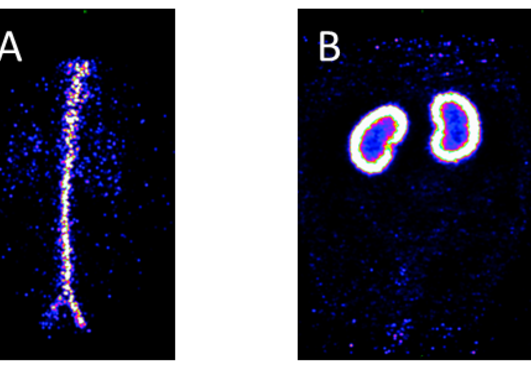
We have established a new method to use Positron emission tomography CT (PET CT) to evaluate Glomerular Filtration Rate (GFR) in rats. GFR is a pivotal parameter for kidney function. The traditional method to evaluate GFR is cumbersome with several time-points for blood and urine sampling. Imaging modalities are ideal to evaluate small animal kidney function due to the non-invasive and repeatable... Read more
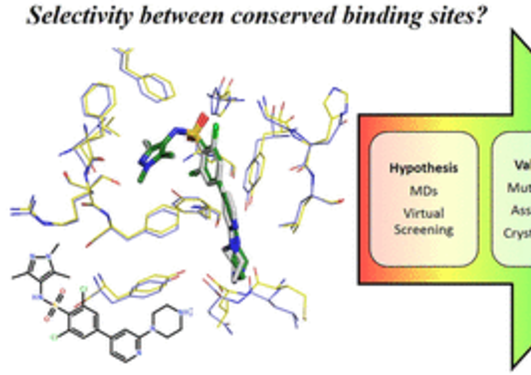
Our new paper on entangling selectivity determining features and on how to use this knowledge to design selective ligands has been published in J Med Chem!
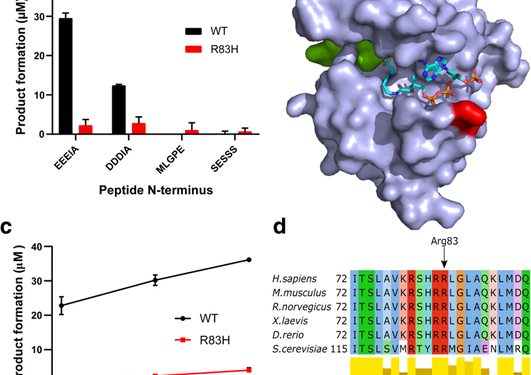
N-terminal acetylation is a very common protein modification and NAA10 is the major responsible enzyme in human cells. Here we found a novel pathological NAA10 variant, NAA10 p. (R83H), in two boys with developmental delay and intellectual disabilities.

The week-long matrix biology (BMED904) course was held for 4th time at the Dept. of biomedicine and next BMED904 course will be given in June 2021.
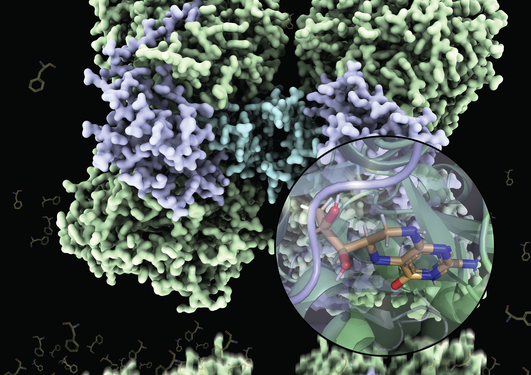
The structure of full-length phenylalanine hydroxylase in complex with the cofactor BH4 is presented in the most recent issue of PNAS. As the cofactor is also used as a therapy for PKU, this structure is of medical importance.
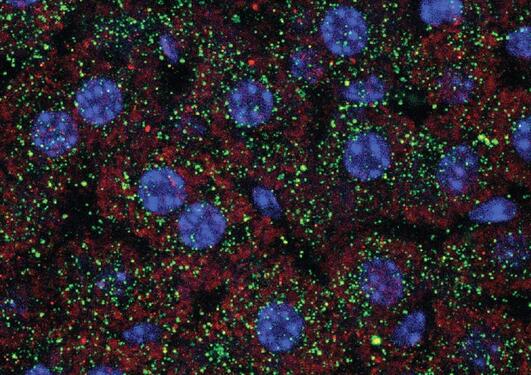
Researchers from the lab of Aurora Martinez describe a novel mechanism for the degradation of enzymes involved in phenylketonuria and other neurometabolic disorders.

Cancer is a complex disease caused by a multitude of factors gone wrong in the cell. NAA10 may be one such factor. This is a protein that performs many different tasks, including the most common which is catalyzing the acetylation of cellular proteins. NAA10 can therefore be viewed as a ”Jack of all trades”-protein. For two decades it has been linked to cancer progression, but recent data puts... Read more
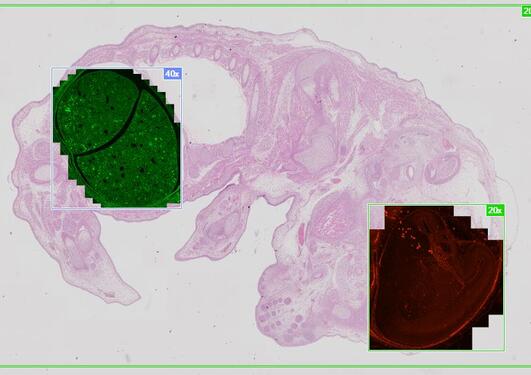

Attention-deficit/hyperactivity disorder and autoimmune diseases: etiological relationships and therapeutic possibilities
Suicide gene therapy of glioblastoma induces an immunosuppressive microenvironment.
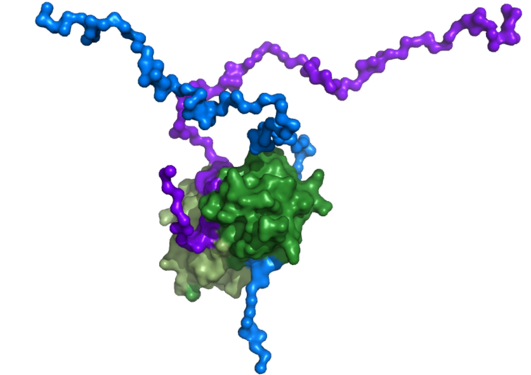
One long-standing question in myelin biochemistry was solved, as a new binding partner specific for the large isoform of MAG was identified.

Matrix Biology group leader and CCBIO PI Donald Gullberg recently returned from an inspiring conference in China.
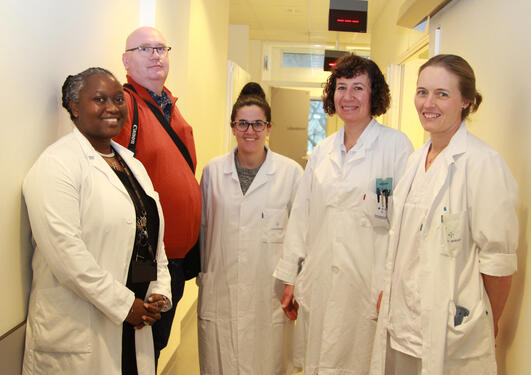
The research laboratory for brain cancer immunology and therapy at the Department of Biomedicine has received the secretary general of the Brain-Tumour Society Rolf Ledal to discuss current and future research projects.

This phase IB/II trial is designed to investigate the safety and survival benefits for patients with recurrent glioblastoma with unmethylated MGMT promoter treated with Bortezomib and Temozolomide in a specific schedule.


Meg Veruki and Espen Hartveit from the Retinal Microcircuits Research Group at the Department of Biomedicine have been chosen to be the Visionaries of the Quarter for the European Vision Institute.
Pages
- February 2026 (2)
- June 2025 (5)
- April 2025 (1)
- March 2025 (2)
- January 2025 (3)
- December 2024 (1)
- November 2024 (2)
- September 2024 (1)
- August 2024 (2)
- June 2024 (3)
- May 2024 (1)
- April 2024 (1)
- February 2024 (3)
- January 2024 (1)
- October 2023 (1)
- September 2023 (2)
- August 2023 (2)
- July 2023 (2)
- March 2023 (4)
- February 2023 (1)
- January 2023 (1)
- December 2022 (4)
- November 2022 (1)
- October 2022 (4)
- September 2022 (3)
- June 2022 (2)
- May 2022 (4)
- April 2022 (3)
- March 2022 (8)
- December 2021 (1)
- November 2021 (3)
- September 2021 (3)
- August 2021 (2)
- July 2021 (1)
- June 2021 (1)
- May 2021 (1)
- March 2021 (1)
- February 2021 (3)
- January 2021 (1)
- December 2020 (1)
- November 2020 (1)
- October 2020 (2)
- September 2020 (3)
- June 2020 (1)
- April 2020 (3)
- March 2020 (2)
- February 2020 (3)
- January 2020 (1)
- December 2019 (3)
- November 2019 (4)
- August 2019 (1)
- June 2019 (2)
- May 2019 (1)
- April 2019 (1)
- March 2019 (1)
- January 2019 (2)
- December 2018 (2)
- November 2018 (2)
- October 2018 (2)
- September 2018 (3)
- August 2018 (2)
- February 2018 (1)
- January 2018 (1)
- November 2017 (2)
- October 2017 (3)
- August 2017 (1)
- June 2017 (1)
- March 2017 (1)
- January 2017 (4)
- November 2016 (1)
- October 2016 (2)
- August 2016 (2)
- July 2016 (2)
- March 2016 (2)
- January 2016 (2)
- October 2015 (1)
- July 2015 (1)
- June 2015 (2)
- April 2015 (1)
- February 2015 (1)
- January 2015 (1)
- December 2014 (1)
- October 2014 (1)
- August 2014 (1)
- April 2014 (2)
- March 2014 (1)
- February 2014 (1)
- January 2014 (2)
- November 2013 (2)
- October 2013 (3)
- September 2013 (1)
- June 2013 (1)
- May 2013 (1)
- April 2013 (1)
- January 2013 (1)
- December 2012 (1)
- November 2012 (1)
- September 2012 (2)
- August 2012 (1)
- July 2012 (1)
- May 2012 (1)
- April 2012 (1)
- March 2012 (2)
- February 2012 (1)
- January 2012 (1)
- November 2011 (2)
- October 2011 (3)
- June 2011 (3)
- May 2011 (1)
- April 2011 (3)
- February 2011 (2)
- January 2011 (2)
- December 2010 (1)
- November 2010 (3)
- October 2010 (2)
- March 2010 (2)
- November 2009 (1)
- October 2009 (3)
- September 2009 (1)
- July 2009 (2)
- May 2009 (1)
- April 2009 (2)
- February 2009 (1)
- January 2009 (1)