
News archive for Department of Earth Science
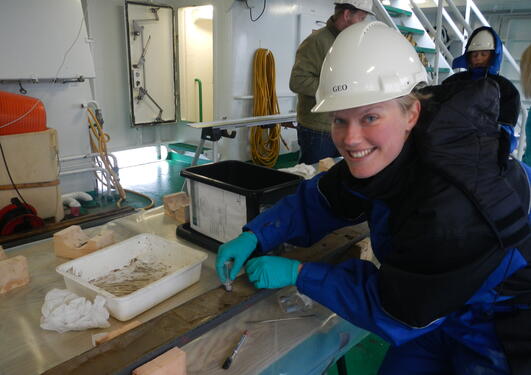
Are inactive hydrothermal area really inactive? Maybe not... At least not microbiologically.
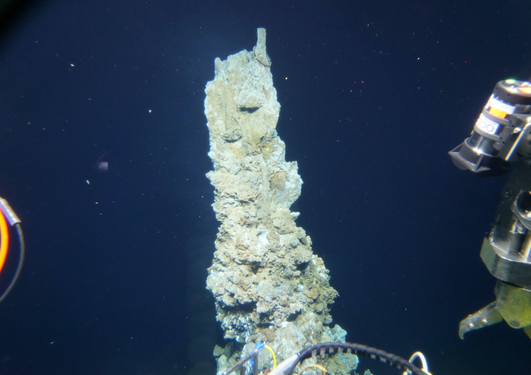
New microbiology research shows inactive hydrothermal vents are not so ‘dead’ after all (01.02.2024)
A new microbiology study points to highly active microorganisms living on ‘dead’ chimneys long after fluid flow has ceased to supply them with traditional chemical fuels. The findings have important implications for understanding inactive hydrothermal vents of commercial interest for deep-sea mining.
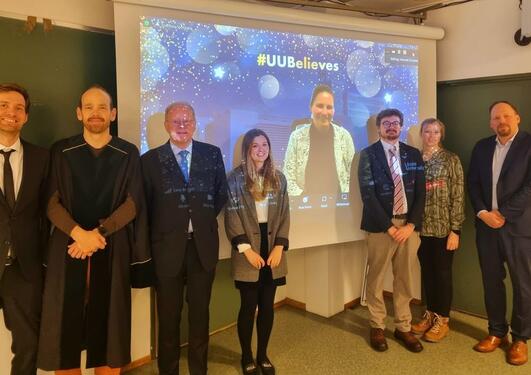
Thursday 30. November 2023 Hannah Elizabeth Petrie defended her thesis: An integrated geological characterization of marine ground conditions in the North Sea
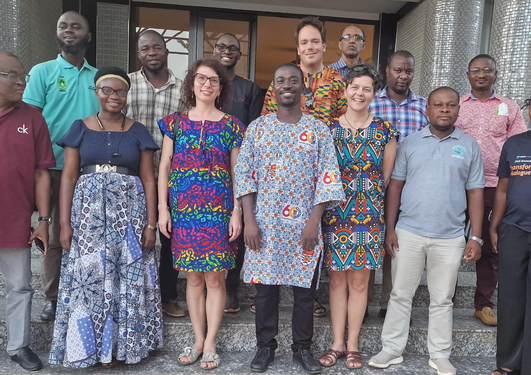
A comprehensive UAV Data Utilization Workshop Successfully Empowers Trainers in Agriculture and Environmental Monitoring in Ghana, Africa.

On 28 November the annual Seismology Seminar took place in Litteraturhuset.
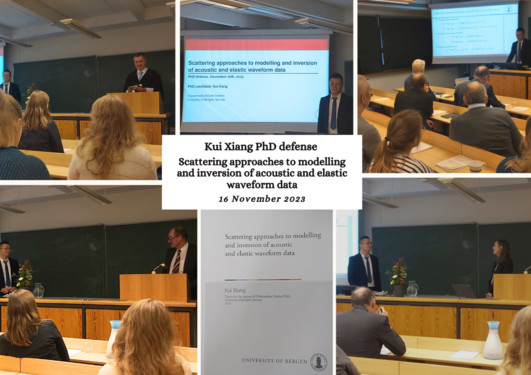
PhD candidate Kui Xiang successfully defended his thesis entitled 'Scattering approaches to modelling and inversion of acoustic and elastic waveform data' on 16 November.

PhD student Kui Xiang gave an interesting trial lecture on artificial learning and seismic modeling and inversion.
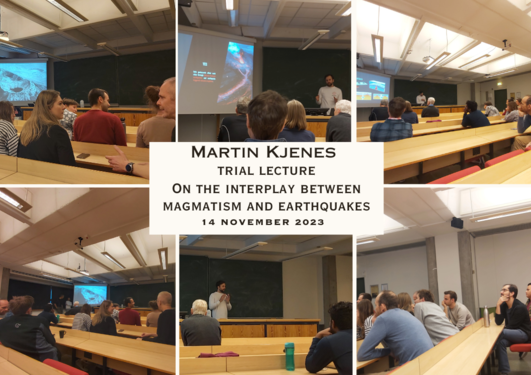
Martin Kjenes had on 14. November his trial lecture "On the interplay between magmatism and earthquakes". Martin will defend his PhD thesis next week, on Friday 24. November.
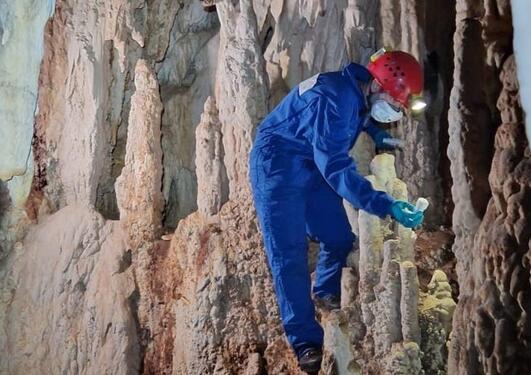
A recent study demonstrates how dripstones can be crucial for reconstructing past climates. The new approach can provide a detailed picture of the climate around early human occupations in South Africa.
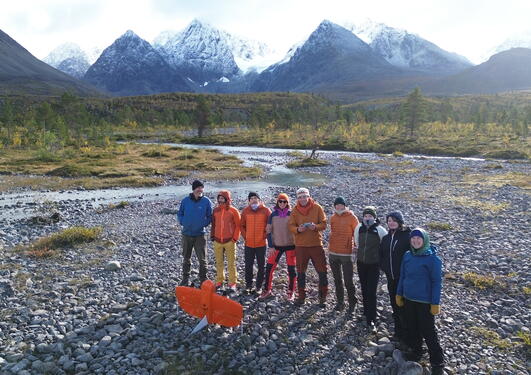
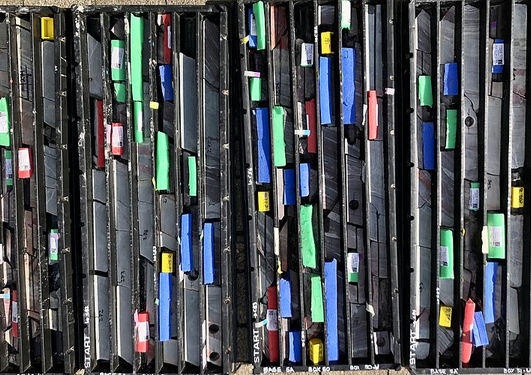
What did the surface of Earth look like more than three billion years ago? What kinds of microbes lived there and when did they start producing oxygen? And what was the temperature and composition of the ancient oceans and atmosphere? Big questions like these is what drew a group of 41 scientists to sunny Berlin last week, including our Associate professor Desiree Roerdink.

Underneath the ocean floor, thrives a vast biosphere which activity profoundly impacting our global environment; from the air that we breathe, to the balance of the global carbon budget. The functioning of this biosphere is what the new director at the Centre for Deep Sea Research at UiB, Steffen Leth Jørgensen, seeks to understand.
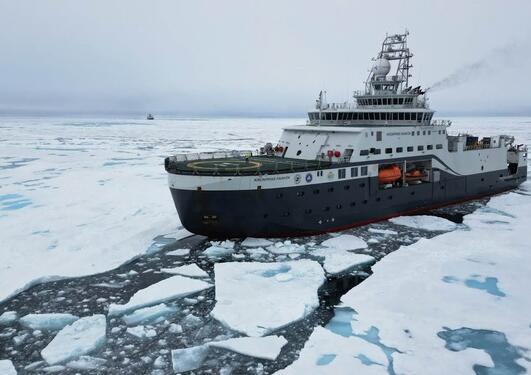
Scientists taking part in the 2023 GoNorth expedition have discovered a new hydrothermal field – an area with sea floor hot springs – in the Lena Trough, part of a mid-ocean ridge between Svalbard and Greenland.
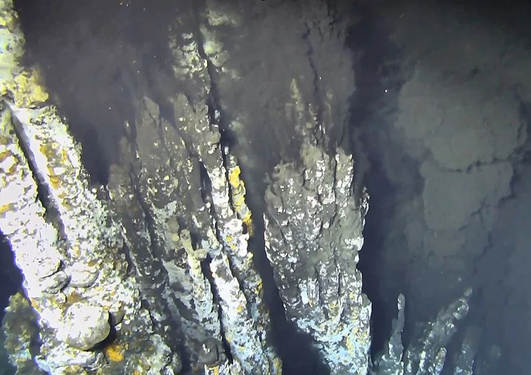
Early August, the GONORTH cruise organised by several Norwegian institutions came to an end. On its last ROV dive, a new hydrothermal vent field, named Ultima Thule, was discovered on the Lucky Ridge!
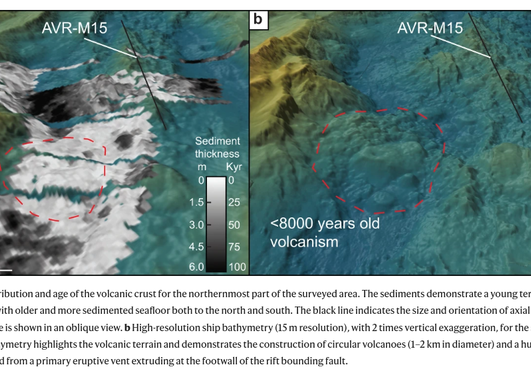
Håvard Stubseid and his colleagues just published a new article in Nature communication.
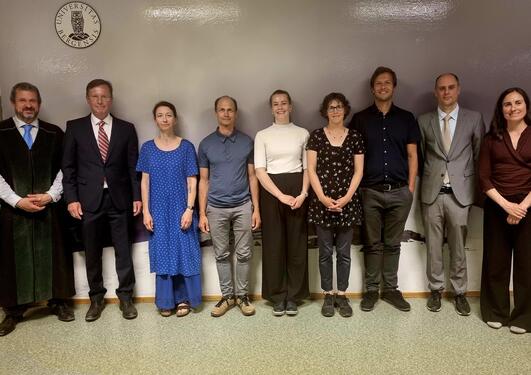
On Monday 19. June 2023 Åse Hestnes defended her PhD thesis: The post-Caledonian tectono-thermal evolution of Western Norway
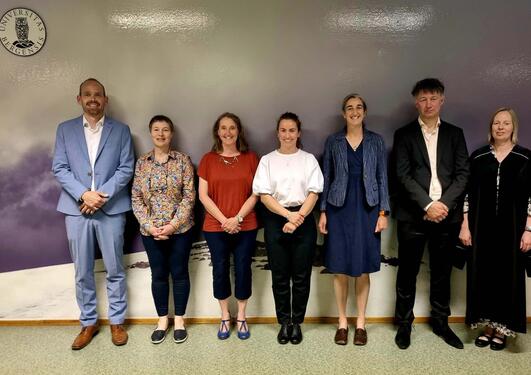
On Friday 16. June 2023 Vilde Dimmen defended her PhD thesis "Geologic controls on fluid flow and seismic imaging of faults in carbonate rocks - Insights from quantitative outcrop analysis and reflection seismic modelling"
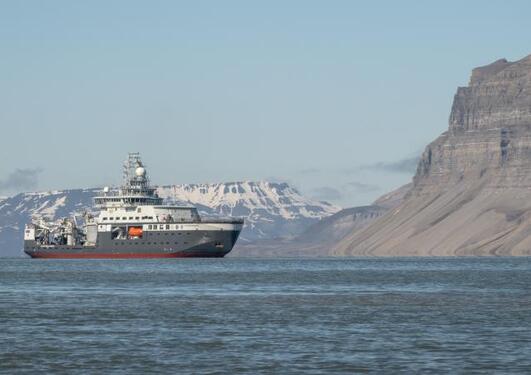
The ongoing GONORTH cruise is pushing the limits of deep sea exploration in the north.
Pages
- June 2026 (1)
- February 2026 (1)
- January 2026 (1)
- December 2025 (3)
- November 2025 (1)
- October 2025 (4)
- August 2025 (1)
- February 2025 (3)
- January 2025 (1)
- December 2024 (1)
- November 2024 (1)
- October 2024 (3)
- September 2024 (4)
- August 2024 (2)
- July 2024 (3)
- June 2024 (2)
- April 2024 (3)
- March 2024 (1)
- February 2024 (2)
- December 2023 (2)
- November 2023 (4)
- October 2023 (2)
- September 2023 (1)
- August 2023 (3)
- July 2023 (4)
- June 2023 (1)
- April 2023 (4)
- March 2023 (2)
- February 2023 (1)
- January 2023 (2)
- December 2022 (1)
- November 2022 (8)
- October 2022 (1)
- August 2022 (2)
- June 2022 (6)
- May 2022 (1)
- April 2022 (1)
- March 2022 (3)
- February 2022 (2)
- December 2021 (2)
- November 2021 (2)
- October 2021 (1)
- September 2021 (2)
- July 2021 (1)
- June 2021 (9)
- May 2021 (1)
- February 2021 (1)
- September 2020 (2)
- June 2020 (2)
- May 2020 (1)
- April 2020 (2)
- November 2019 (1)
- October 2019 (1)
- April 2019 (1)
- February 2019 (4)
- January 2019 (2)
- December 2018 (1)
- October 2018 (6)
- June 2018 (3)
- March 2018 (1)
- February 2018 (1)
- January 2018 (2)
- December 2017 (2)
- November 2017 (4)
- October 2017 (3)
- September 2017 (1)
- July 2017 (1)
- May 2017 (1)
- March 2017 (1)
- February 2017 (1)
- January 2017 (2)
- December 2016 (1)
- November 2016 (1)
- October 2016 (2)
- September 2016 (2)
- August 2016 (1)
- June 2016 (3)
- May 2016 (3)
- April 2016 (1)
- March 2016 (1)
- January 2016 (1)
- November 2015 (2)
- October 2015 (3)
- June 2015 (2)
- May 2015 (1)
- March 2015 (1)
- February 2015 (1)
- November 2014 (1)
- October 2014 (4)
- May 2014 (2)
- March 2014 (1)
- January 2014 (1)
- December 2013 (4)
- November 2013 (1)
- October 2013 (5)
- August 2013 (1)
- June 2013 (1)
- May 2013 (2)
- April 2013 (2)
- February 2013 (1)
- January 2013 (3)
- December 2012 (1)
- October 2012 (1)
- September 2012 (1)
- August 2012 (1)
- March 2012 (1)
- January 2012 (1)
- December 2011 (2)
- November 2011 (5)
- October 2011 (4)
- September 2011 (6)
- July 2011 (3)
- June 2011 (6)
- May 2011 (4)
- April 2011 (2)
- March 2011 (5)
- February 2011 (2)
- January 2011 (1)
- December 2010 (2)
- November 2010 (3)
- October 2010 (2)
- September 2010 (1)
- June 2010 (4)
- May 2010 (2)
- April 2010 (3)
- March 2010 (3)
- February 2010 (3)
- January 2010 (3)
- September 2009 (1)
- August 2009 (2)
- July 2009 (1)
- June 2009 (4)
- March 2009 (2)
- February 2009 (1)
- January 2009 (1)