
News archive for Faculty of Science and Technology

Next Tuesday, September 8, Dept. of Mathematics, room 640 at 14.15
Det norske forskningsskuta "G.O. Sars" havner i klasse med verdens største containerskip og bilfrakteverktøy i dokumentaren "Mighty Ships".

Ksenia Lavrichenko is a new master student in the Analysis Group
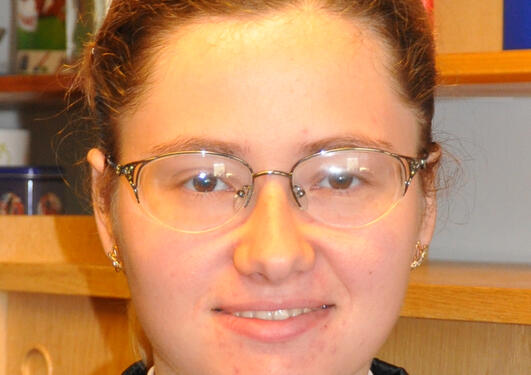
Elena Belyaeva is a new master student in the Analysis Group.
Ole Brix and Ivar Rønnestad et al have just published an article entitled, “Whether depositing fat or losing weight, fish maintain a balance” in the Proceedings of TheRoyal Society Biological Sciences. the article was selected as a “highlighted paper”.
DNA-sequencing gives us the possibility to study the genetic code of all living organisms. Many researchers today take advantage of developments in molecular biology technology that have led to the development of massive parallel pyrosequencing.
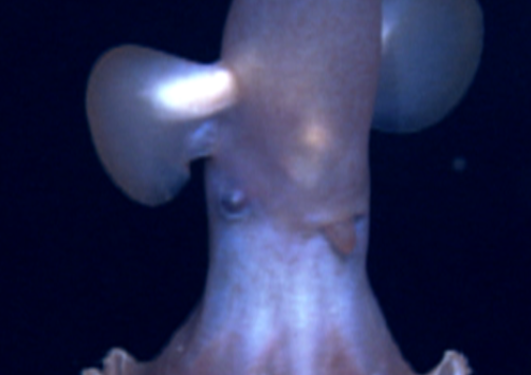
CGB researchers re-visited Loki's Castle, the world's northernmost identified Black Smoker, and Håkon Mosby Mud Volcano. This year Discovery channel was also onboard.
For his research on mathematical and numerical analysis of issues related to CO2 storage in the sea bottom.

CGB will be taking an active role in an Astrobiology summer school addressing these issues 29 June-13 July 2009. Professor Nils-Kåre Birkeland will be one of the lecturers, lecturing on the "Genetics of thermophiles" and the "Molecular basis of the stability of biomoleculees in hot environments". Researcher Ida Helene Steen and research assistant Solveig Hoem are leading some of the lab courses... Read more
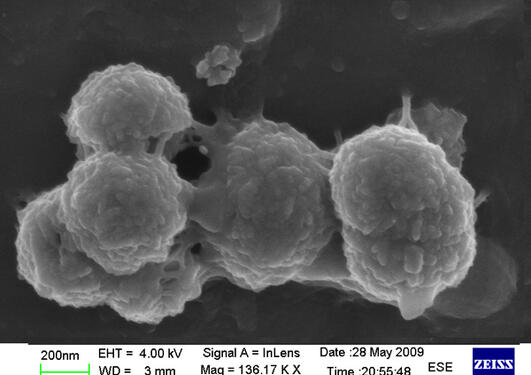
Guest researcher and mineralogist Beata Smieja-Król says that peatland is only interesting when it is polluted!

Professor Lise Øvreås is participating in a research cruise in the Lau basin, east of Fiji, where scientists are investigating extreme organisms living around the hydrothermal vents found there.
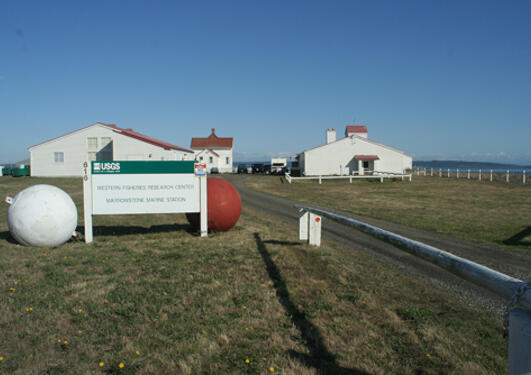
Knut Wiik Vollset had a six-month exchange in the US. He definitely recommends that other PhD students have an exchange experience.

Written by Friederike Hoffman, Sars Centre.
Sponges are major constitutes of coral reef and deep sea communities. They excrete high amounts of ammonium and, due to the activity of associated microorganisms, nitrite and nitrate; these are essential nutrients, and sponges are thus considered as important nutrient sources in the marine ecosystem.

With no less than four co-authored papers, postdoc Saket Saurabh at the Department of Informatics has set a new record in at the respected ICALP conference.
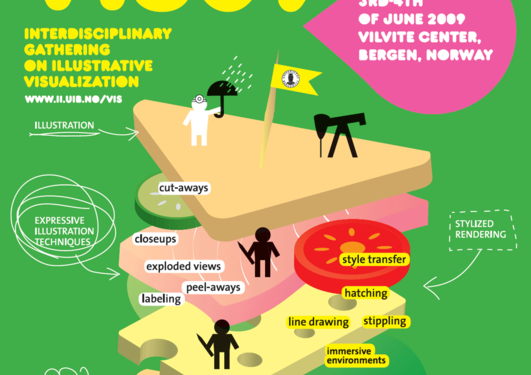
Welcome to IllustraVis09, an interdisciplinary gathering on illustrative visualization, 3rd and 4th of June 2009.
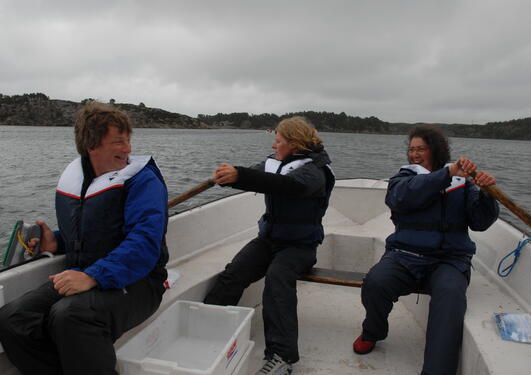
The FØH research group held their annual summer seminar at Espegrend on 17-18 June 2009.
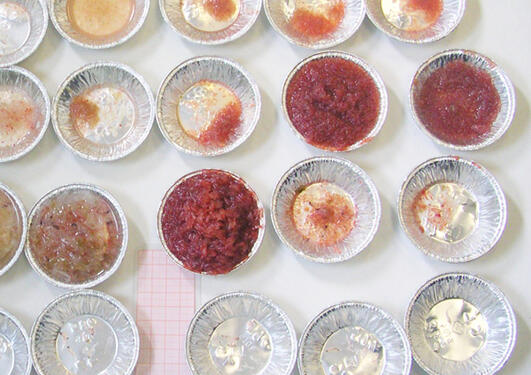
The marine microbial community contributes to almost 50% of the earth’s total carbon production and thus plays a major role in the ecology of our biosphere. But do we understand how it works? Can we predict how it will respond to changes such as those involved in climate change? Increased understanding of the earth’s geo- and bio-sphere, and its bio-geochemical cycles, particularly in marine... Read more
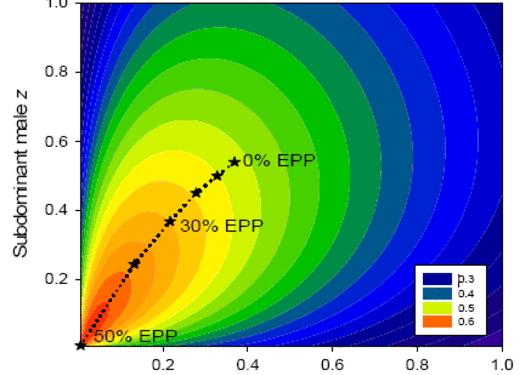
BIO researcher, Sigrunn Eliassen proposes this as a new hypothesis to a long-standing conundrum in sexual selection theory. By offering an explanation to patterns in nature that have proven difficult to interpret, understand, and predict with existing theory, the FriBIO evaluators in 2008 clearly agreed with Eliassen that her work has the potential for significant impact.
Pages
- April 2026 (4)
- March 2026 (4)
- February 2026 (6)
- January 2026 (6)
- December 2025 (4)
- November 2025 (1)
- October 2025 (6)
- September 2025 (6)
- August 2025 (1)
- July 2025 (3)
- June 2025 (7)
- May 2025 (7)
- April 2025 (4)
- March 2025 (10)
- February 2025 (13)
- January 2025 (4)
- December 2024 (11)
- November 2024 (7)
- October 2024 (11)
- September 2024 (11)
- August 2024 (8)
- July 2024 (10)
- June 2024 (7)
- May 2024 (13)
- April 2024 (16)
- March 2024 (7)
- February 2024 (15)
- January 2024 (6)
- December 2023 (7)
- November 2023 (18)
- October 2023 (10)
- September 2023 (13)
- August 2023 (8)
- July 2023 (3)
- June 2023 (10)
- May 2023 (7)
- April 2023 (13)
- March 2023 (8)
- February 2023 (12)
- January 2023 (18)
- December 2022 (3)
- November 2022 (25)
- October 2022 (8)
- September 2022 (8)
- August 2022 (4)
- July 2022 (5)
- June 2022 (9)
- May 2022 (5)
- April 2022 (6)
- March 2022 (7)
- February 2022 (9)
- January 2022 (6)
- December 2021 (6)
- November 2021 (3)
- October 2021 (10)
- September 2021 (5)
- August 2021 (6)
- July 2021 (3)
- June 2021 (21)
- May 2021 (11)
- April 2021 (3)
- March 2021 (6)
- February 2021 (4)
- January 2021 (3)
- December 2020 (5)
- November 2020 (2)
- October 2020 (3)
- September 2020 (4)
- August 2020 (3)
- July 2020 (2)
- June 2020 (3)
- May 2020 (3)
- April 2020 (5)
- March 2020 (1)
- February 2020 (2)
- January 2020 (3)
- December 2019 (5)
- November 2019 (4)
- October 2019 (9)
- September 2019 (3)
- August 2019 (2)
- July 2019 (3)
- June 2019 (6)
- May 2019 (8)
- April 2019 (6)
- March 2019 (7)
- February 2019 (10)
- January 2019 (10)
- December 2018 (7)
- November 2018 (6)
- October 2018 (9)
- September 2018 (4)
- August 2018 (6)
- July 2018 (1)
- June 2018 (4)
- May 2018 (5)
- April 2018 (3)
- March 2018 (4)
- February 2018 (3)
- January 2018 (3)
- December 2017 (3)
- November 2017 (7)
- October 2017 (7)
- September 2017 (3)
- August 2017 (3)
- July 2017 (3)
- June 2017 (9)
- May 2017 (3)
- April 2017 (1)
- March 2017 (4)
- February 2017 (6)
- January 2017 (5)
- December 2016 (4)
- November 2016 (4)
- October 2016 (4)
- September 2016 (7)
- August 2016 (2)
- June 2016 (3)
- May 2016 (4)
- April 2016 (4)
- March 2016 (1)
- February 2016 (5)
- January 2016 (6)
- December 2015 (6)
- November 2015 (3)
- October 2015 (2)
- September 2015 (2)
- August 2015 (1)
- July 2015 (2)
- June 2015 (3)
- May 2015 (3)
- April 2015 (2)
- March 2015 (2)
- February 2015 (3)
- January 2015 (5)
- December 2014 (3)
- November 2014 (2)
- October 2014 (6)
- September 2014 (6)
- August 2014 (1)
- July 2014 (1)
- June 2014 (1)
- May 2014 (6)
- March 2014 (6)
- February 2014 (4)
- January 2014 (3)
- December 2013 (6)
- November 2013 (3)
- October 2013 (9)
- September 2013 (4)
- August 2013 (6)
- July 2013 (1)
- June 2013 (5)
- May 2013 (6)
- April 2013 (8)
- March 2013 (2)
- February 2013 (3)
- January 2013 (5)
- December 2012 (4)
- November 2012 (3)
- October 2012 (4)
- September 2012 (5)
- August 2012 (4)
- July 2012 (2)
- June 2012 (6)
- May 2012 (2)
- March 2012 (4)
- February 2012 (2)
- January 2012 (6)
- December 2011 (3)
- November 2011 (8)
- October 2011 (6)
- September 2011 (9)
- August 2011 (2)
- July 2011 (4)
- June 2011 (7)
- May 2011 (5)
- April 2011 (5)
- March 2011 (7)
- February 2011 (7)
- January 2011 (5)
- December 2010 (2)
- November 2010 (5)
- October 2010 (5)
- September 2010 (7)
- August 2010 (2)
- June 2010 (5)
- May 2010 (4)
- April 2010 (4)
- March 2010 (5)
- February 2010 (5)
- January 2010 (9)
- December 2009 (1)
- October 2009 (6)
- September 2009 (7)
- August 2009 (5)
- July 2009 (2)
- June 2009 (6)
- May 2009 (5)
- April 2009 (1)
- March 2009 (4)
- February 2009 (2)
- January 2009 (4)