
News archive for Faculty of Science and Technology
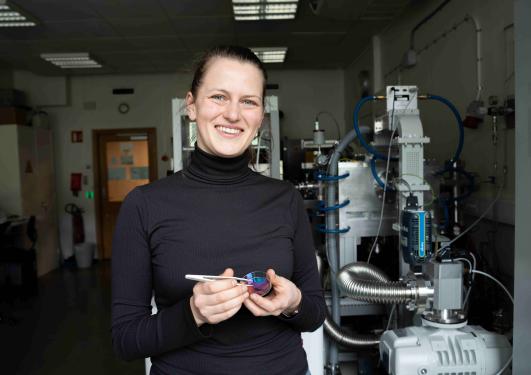
Four researcher projects and three student projects have been funded by the innovation program UiB Idé.
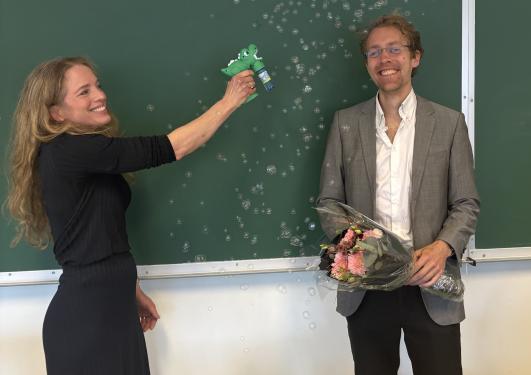
Ivar Stefansson receives funding for four years to investigate new techniques for simulating fracture propagation.
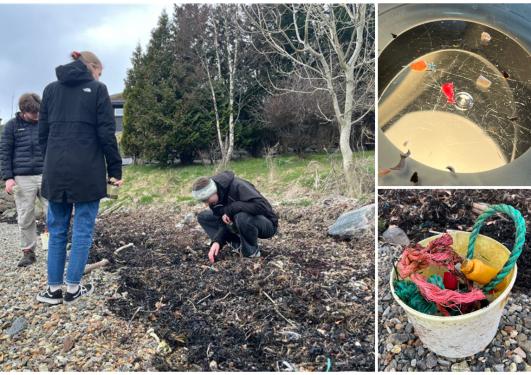
On April 8–9, 2025, our team had the pleasure of organizing and participating in a hands-on student workshop on microplastics, hosted at the Espeland Marine Biological Station. Nestled by the coast just a short trip from Bergen, this site provided a perfect setting for students from the BIO316 course to immerse themselves in a critical issue facing our oceans: microplastic pollution.
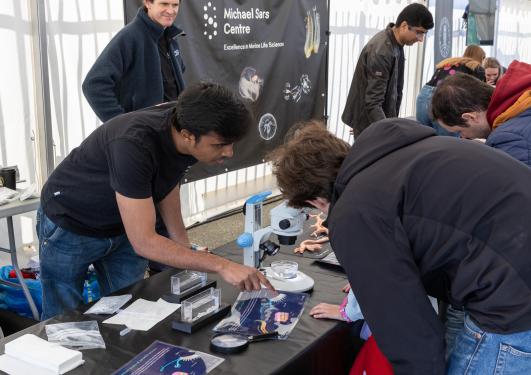
Researchers from the Michael Sars Centre participated in the third edition of One Ocean Week. On the program, engaging the public with our research projects and exchanging with industry stakeholders.

The University of Bergen is represented by four of the 19 finalists in the national competition to establish new AI centres. Discover the candidates here.
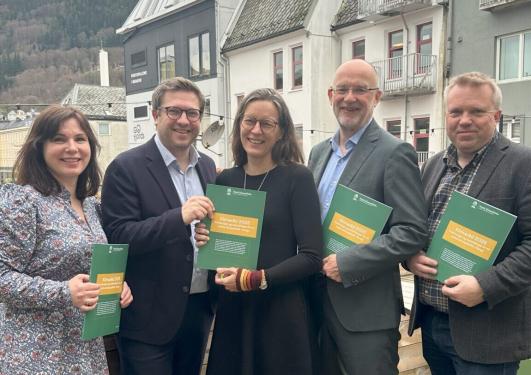
The Norwegian green think tank Klimastiftelsen recently presented their report with recommendations for better green policy to the minister of research and higher education Sigrun G. Aasland. The report was written by the Climate Council 2025 (Klimaråd 2025), which included Vigdis Vandvik (CeSAM) and Kikki Kleiven (Bjerknes center) from UiB.
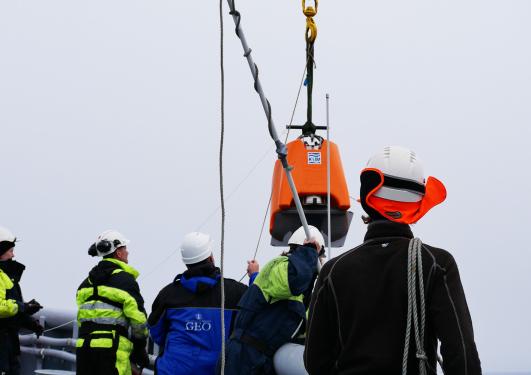
EPOS-NG is a project aimed at building the future research infrastructure for geohazards in Norway.

”Since so much of AI research is driven by commercial forces, societal impact often becomes an afterthought, rather than something that has to be studied on a fundamental level”
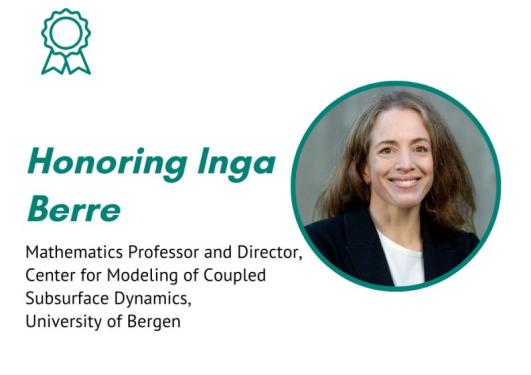
SIAM (Society for Industrial and Applied Mathematics) has celebrated Women’s History Month in March by highlighting influential women in the mathematics community. Professor Inga Berre, Director of the Center for Modeling of Coupled Subsurface Dynamics at the University of Bergen, is one of the featured researchers.

UNESCO Chair Inger Måren peer reviewed recent UNESCO report on how UNESCO sites can be utilized in education for sustainable development.
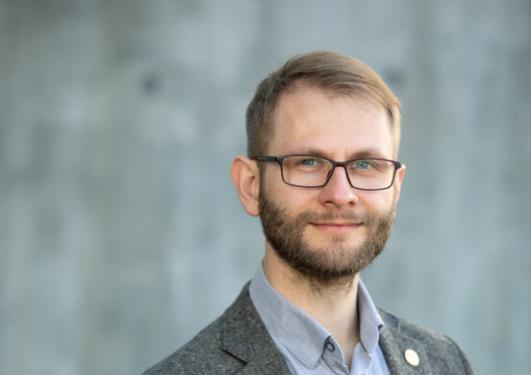
Jakub Both has been awarded the 2025 SIAG/GS Early Career Prize by the Society for Industrial and Applied Mathematics (SIAM).

In the chemistry lab on the fourth floor of the Realfagbygget, Professor Vidar Remi Jensen's research group combines artificial intelligence with virtual and robot-based searches for the next generation of medicines, catalysts, and sustainable fuels.

UiB's election campaigns are in full swing. But what do the two teams think about sustainability? How do we address big global and local challenges through our research, education and outreach? What are UiB's strengths and what can be improved?
In this debate, organized by CET, the Sustainability Pilots, and CeSAM, we ask Margareth Hagen, Sigrunn Eliassen, Lise Øvreås and Endre Tvinnereim... Read more
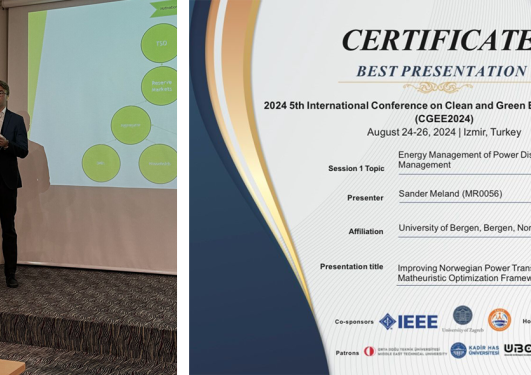
Sander ble ferdig med mastergraden sin for er par måneder siden. Denne helgen vant han pris for sin akademiske artikkel.

Jan Martin Nordbotten was awarded the InterPore Medal for porous media research in 2025.
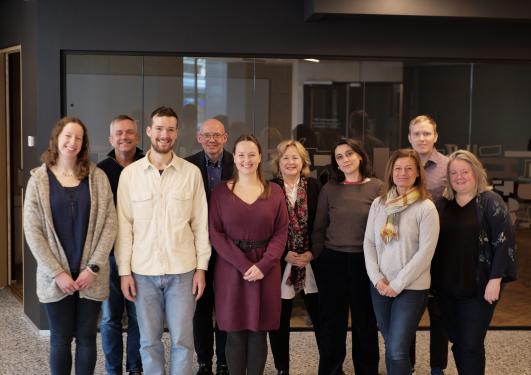
This week, the new LEAD AI researchers met each other for the first time.
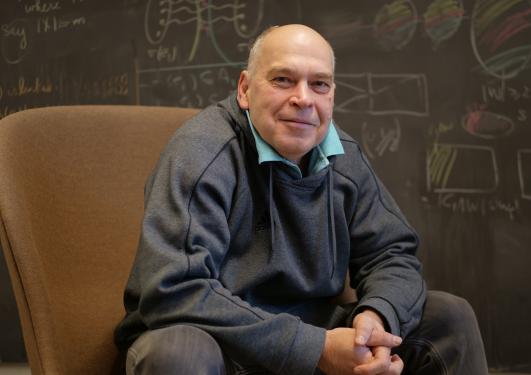
Professor of informatics Fedor Fomin explains what he does for a living and talks about the current challenges in algorithmic theory.
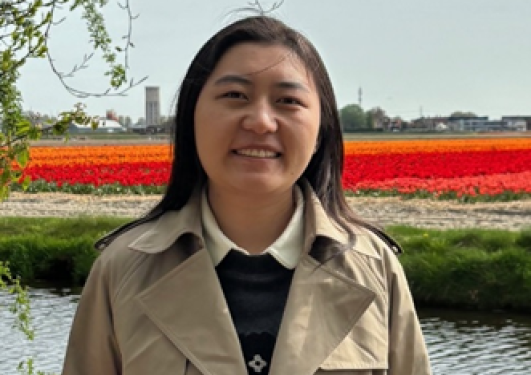
Yuhe Zhang is a new Ph.D. student at the Department of Mathematics and her project is part of the Center for Modeling of Coupled Subsurface Dynamics. We met her to find out more about his background and the project.
Pages
- June 2026 (2)
- April 2026 (4)
- March 2026 (4)
- February 2026 (6)
- January 2026 (6)
- December 2025 (4)
- November 2025 (1)
- October 2025 (6)
- September 2025 (5)
- August 2025 (1)
- July 2025 (3)
- June 2025 (7)
- May 2025 (7)
- April 2025 (4)
- March 2025 (10)
- February 2025 (13)
- January 2025 (4)
- December 2024 (11)
- November 2024 (7)
- October 2024 (11)
- September 2024 (11)
- August 2024 (8)
- July 2024 (10)
- June 2024 (7)
- May 2024 (13)
- April 2024 (16)
- March 2024 (7)
- February 2024 (15)
- January 2024 (6)
- December 2023 (7)
- November 2023 (18)
- October 2023 (10)
- September 2023 (13)
- August 2023 (8)
- July 2023 (3)
- June 2023 (10)
- May 2023 (7)
- April 2023 (13)
- March 2023 (8)
- February 2023 (12)
- January 2023 (18)
- December 2022 (3)
- November 2022 (25)
- October 2022 (8)
- September 2022 (8)
- August 2022 (4)
- July 2022 (5)
- June 2022 (9)
- May 2022 (5)
- April 2022 (6)
- March 2022 (7)
- February 2022 (9)
- January 2022 (6)
- December 2021 (6)
- November 2021 (3)
- October 2021 (10)
- September 2021 (5)
- August 2021 (6)
- July 2021 (3)
- June 2021 (21)
- May 2021 (11)
- April 2021 (3)
- March 2021 (6)
- February 2021 (4)
- January 2021 (3)
- December 2020 (5)
- November 2020 (2)
- October 2020 (3)
- September 2020 (4)
- August 2020 (3)
- July 2020 (2)
- June 2020 (3)
- May 2020 (3)
- April 2020 (5)
- March 2020 (1)
- February 2020 (2)
- January 2020 (3)
- December 2019 (5)
- November 2019 (4)
- October 2019 (9)
- September 2019 (3)
- August 2019 (2)
- July 2019 (3)
- June 2019 (6)
- May 2019 (8)
- April 2019 (6)
- March 2019 (7)
- February 2019 (10)
- January 2019 (10)
- December 2018 (7)
- November 2018 (6)
- October 2018 (9)
- September 2018 (4)
- August 2018 (6)
- July 2018 (1)
- June 2018 (4)
- May 2018 (5)
- April 2018 (3)
- March 2018 (4)
- February 2018 (3)
- January 2018 (3)
- December 2017 (3)
- November 2017 (7)
- October 2017 (7)
- September 2017 (3)
- August 2017 (3)
- July 2017 (3)
- June 2017 (9)
- May 2017 (3)
- April 2017 (1)
- March 2017 (4)
- February 2017 (6)
- January 2017 (5)
- December 2016 (4)
- November 2016 (4)
- October 2016 (4)
- September 2016 (7)
- August 2016 (2)
- June 2016 (3)
- May 2016 (4)
- April 2016 (4)
- March 2016 (1)
- February 2016 (5)
- January 2016 (6)
- December 2015 (6)
- November 2015 (3)
- October 2015 (2)
- September 2015 (2)
- August 2015 (1)
- July 2015 (2)
- June 2015 (3)
- May 2015 (3)
- April 2015 (2)
- March 2015 (2)
- February 2015 (3)
- January 2015 (5)
- December 2014 (3)
- November 2014 (2)
- October 2014 (6)
- September 2014 (6)
- August 2014 (1)
- July 2014 (1)
- June 2014 (1)
- May 2014 (6)
- March 2014 (6)
- February 2014 (4)
- January 2014 (3)
- December 2013 (6)
- November 2013 (3)
- October 2013 (9)
- September 2013 (4)
- August 2013 (6)
- July 2013 (1)
- June 2013 (5)
- May 2013 (6)
- April 2013 (8)
- March 2013 (2)
- February 2013 (3)
- January 2013 (5)
- December 2012 (4)
- November 2012 (3)
- October 2012 (4)
- September 2012 (5)
- August 2012 (4)
- July 2012 (2)
- June 2012 (6)
- May 2012 (2)
- March 2012 (4)
- February 2012 (2)
- January 2012 (6)
- December 2011 (3)
- November 2011 (8)
- October 2011 (6)
- September 2011 (9)
- August 2011 (2)
- July 2011 (4)
- June 2011 (7)
- May 2011 (5)
- April 2011 (5)
- March 2011 (7)
- February 2011 (7)
- January 2011 (5)
- December 2010 (2)
- November 2010 (5)
- October 2010 (5)
- September 2010 (7)
- August 2010 (2)
- June 2010 (5)
- May 2010 (4)
- April 2010 (4)
- March 2010 (5)
- February 2010 (5)
- January 2010 (9)
- December 2009 (1)
- October 2009 (6)
- September 2009 (7)
- August 2009 (5)
- July 2009 (2)
- June 2009 (6)
- May 2009 (5)
- April 2009 (1)
- March 2009 (4)
- February 2009 (2)
- January 2009 (4)