
News archive for Faculty of Science and Technology

With cakes, champagne and balloons, we have celebrated five master students this fall.
All of the students have done a good job – and we wish them the best of luck!
In august this year two scientists from the K.G. Jebsen Centre for Deep Sea Research led a session called "Geobiology of the Deep Ocean and Subsurface: Contributions of the Deep Biosphere to Earth Systems" during the yearly Goldschmidt conference, giving the stage to geochemists, microbiologists and geologists working on deep-sea environments.
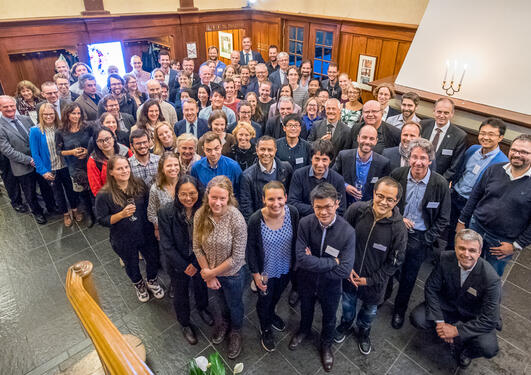
The Geophysical Institute is a hundred years in 2017. In October, the centenary was celebrated with a scientific symposium on climate, energy and geophysics.
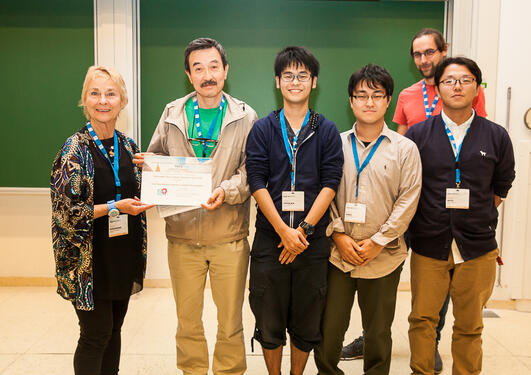
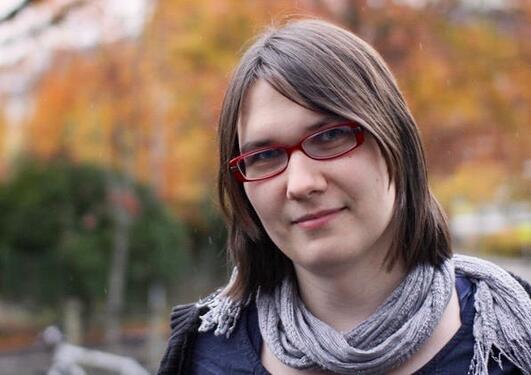
She’s both a groundbreaking computer scientist and an excellent teacher; and now she’s awarded the Teaching Prize at the Faculty of Mathematics and Natural Sciences.
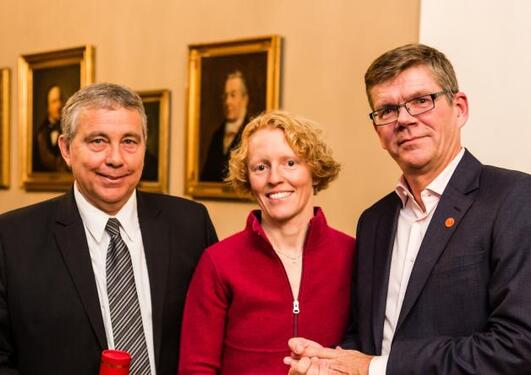
On Fridtjof Nansen's birthday, Elin Darelius was awarded by the Fram committee for her polar science, shared with Jan Inge Faleide at UiO.
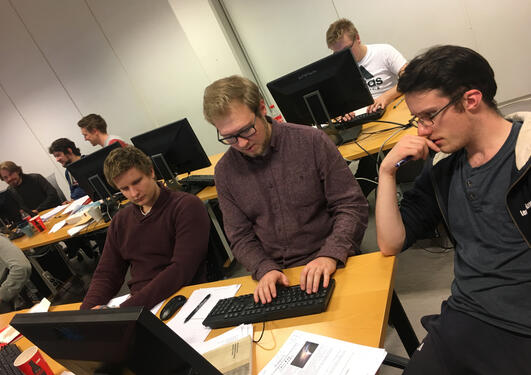
Last weekend, NCPC, the Nordic Collegiate Programming Contest, was held, and students from informatics did well! In the student class (ICPC eligible) UiB became the best Norwegian
university with 5 of the top 6 places.
Thibaut Barreyre at the K.G. Jebsen Centre for Deep Sea research has been appointed to lead a new InterRidge working group focusing on Integrating Multidisciplinary Observations in Vent Environments (IMOVE).
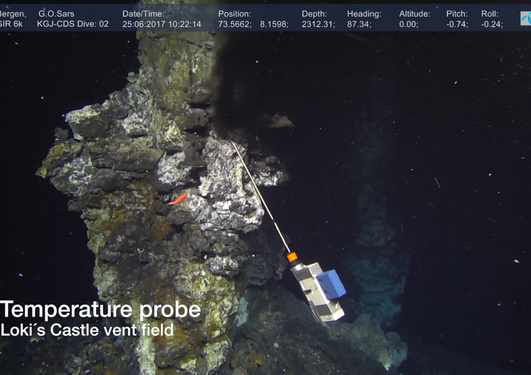
The summer of 2017 a long-term temperature sensors, current meters, pressure gauge and ocean bottom seismometers (OBS) was deployed to look at how natural physical processes (e.g. ocean tides, micro-earthquakes) to constrain subsurface permeability structure beneath Loki’s Castle hydrothermal site.
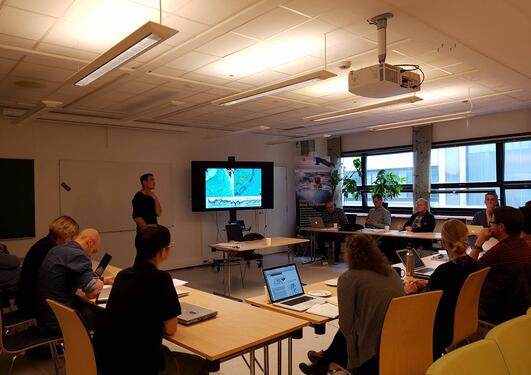
September 6th to 8th we arranged the MagellanPlus Workshop Series Programme in Bergen, at the K.G. Jebsen Centre for Deep Sea Research. The goal was to discuss to plan and draft up an IODP proposal for JR-style drilling of a series of holes on and off axis of the SKR to assess the cycling of carbon and consequences for life in sediments and shallow basement.
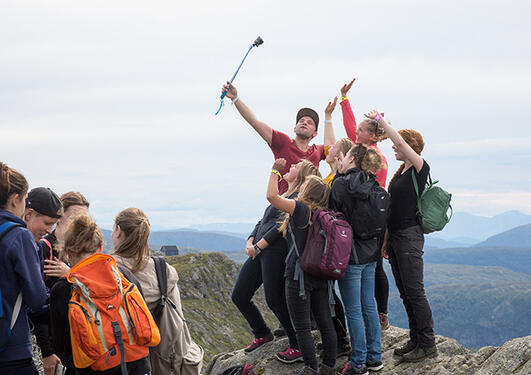
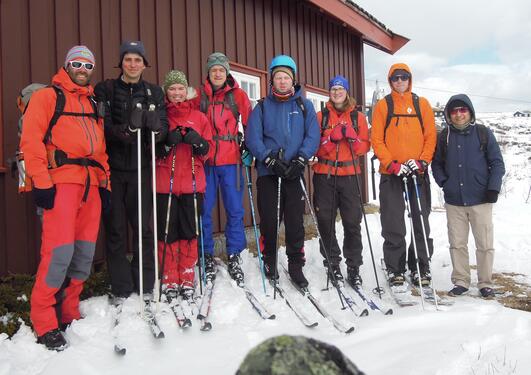
When the sad April weather became unbearable, six students went to Ustaoset at the far end of Hardangervidda one week after Easter, together with Professor Thomas Spengler and Course Assistant Sunil Kumar Pariyar, to hold a seminar in Mesoscale Dynamics with special focus on mountain meteorology.
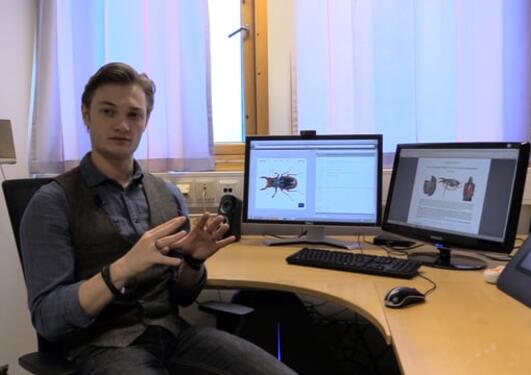
Meet our PhD candidate, Sergej Stoppel, who teach computers to understand what you want to do. How about having a robot draw your portrait for example?
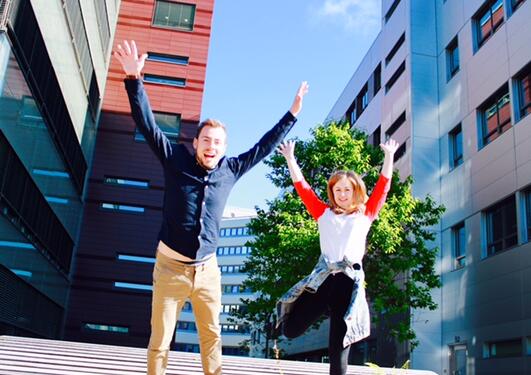
- I think it's really nice to study informatics in Bergen. We have a very good study environment. There is always a possibility to get help from both lecturers and fellow students, no matter what it should be! It's a good environment for learning here, and everyone helps everyone learn new things.
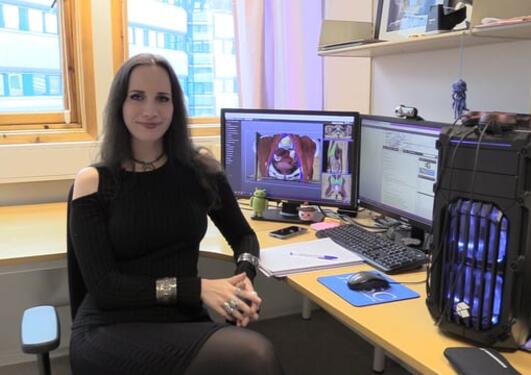
- I really enjoy working here with the people in the visualization group, and also the opportunities for collaborating with other scientists. Besides work, I think the city of Bergen is really amazing. Both my partner and I love the nature that the surroundings of Bergen have to offer, and the large metal community here as well.
Scientists will look into the heart of Surtsey, an island created 50 years ago by a volcanic eruption.
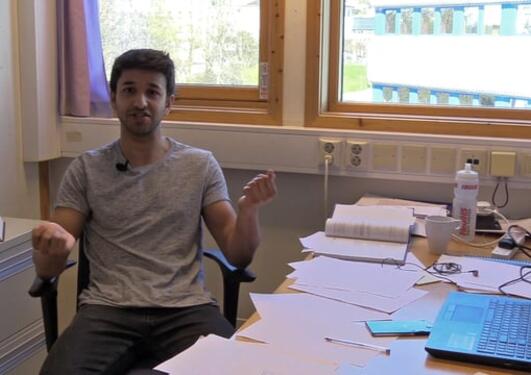
- The position offered by UiB was perfectly catered to my research interests, and the project allowed for progression in an exciting direction that would be of personal appeal. Not to mention the opportunity to work at a great institute situated in such a picturesque city!
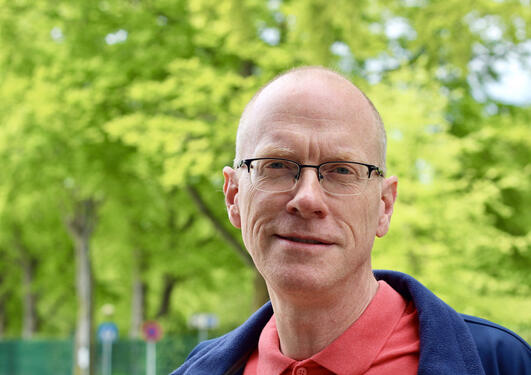
This is a message to new students from our (very own) professor Fredrik Manne, who was recently appointed outstanding lecturer. Well deserved for a professor with 20 years of experience, who is passionate about his field and is loved by his students. The man who walks into the auditorium with anticipation, loves teaching and puts his students first. This is what we call excellent teaching!
Pages
- June 2026 (2)
- April 2026 (4)
- March 2026 (4)
- February 2026 (6)
- January 2026 (6)
- December 2025 (4)
- November 2025 (1)
- October 2025 (6)
- September 2025 (5)
- August 2025 (1)
- July 2025 (3)
- June 2025 (7)
- May 2025 (7)
- April 2025 (4)
- March 2025 (10)
- February 2025 (13)
- January 2025 (4)
- December 2024 (11)
- November 2024 (7)
- October 2024 (11)
- September 2024 (11)
- August 2024 (8)
- July 2024 (10)
- June 2024 (7)
- May 2024 (13)
- April 2024 (16)
- March 2024 (7)
- February 2024 (15)
- January 2024 (6)
- December 2023 (7)
- November 2023 (18)
- October 2023 (10)
- September 2023 (13)
- August 2023 (8)
- July 2023 (3)
- June 2023 (10)
- May 2023 (7)
- April 2023 (13)
- March 2023 (8)
- February 2023 (12)
- January 2023 (18)
- December 2022 (3)
- November 2022 (25)
- October 2022 (8)
- September 2022 (8)
- August 2022 (4)
- July 2022 (5)
- June 2022 (9)
- May 2022 (5)
- April 2022 (6)
- March 2022 (7)
- February 2022 (9)
- January 2022 (6)
- December 2021 (6)
- November 2021 (3)
- October 2021 (10)
- September 2021 (5)
- August 2021 (6)
- July 2021 (3)
- June 2021 (21)
- May 2021 (11)
- April 2021 (3)
- March 2021 (6)
- February 2021 (4)
- January 2021 (3)
- December 2020 (5)
- November 2020 (2)
- October 2020 (3)
- September 2020 (4)
- August 2020 (3)
- July 2020 (2)
- June 2020 (3)
- May 2020 (3)
- April 2020 (5)
- March 2020 (1)
- February 2020 (2)
- January 2020 (3)
- December 2019 (5)
- November 2019 (4)
- October 2019 (9)
- September 2019 (3)
- August 2019 (2)
- July 2019 (3)
- June 2019 (6)
- May 2019 (8)
- April 2019 (6)
- March 2019 (7)
- February 2019 (10)
- January 2019 (10)
- December 2018 (7)
- November 2018 (6)
- October 2018 (9)
- September 2018 (4)
- August 2018 (6)
- July 2018 (1)
- June 2018 (4)
- May 2018 (5)
- April 2018 (3)
- March 2018 (4)
- February 2018 (3)
- January 2018 (3)
- December 2017 (3)
- November 2017 (7)
- October 2017 (7)
- September 2017 (3)
- August 2017 (3)
- July 2017 (3)
- June 2017 (9)
- May 2017 (3)
- April 2017 (1)
- March 2017 (4)
- February 2017 (6)
- January 2017 (5)
- December 2016 (4)
- November 2016 (4)
- October 2016 (4)
- September 2016 (7)
- August 2016 (2)
- June 2016 (3)
- May 2016 (4)
- April 2016 (4)
- March 2016 (1)
- February 2016 (5)
- January 2016 (6)
- December 2015 (6)
- November 2015 (3)
- October 2015 (2)
- September 2015 (2)
- August 2015 (1)
- July 2015 (2)
- June 2015 (3)
- May 2015 (3)
- April 2015 (2)
- March 2015 (2)
- February 2015 (3)
- January 2015 (5)
- December 2014 (3)
- November 2014 (2)
- October 2014 (6)
- September 2014 (6)
- August 2014 (1)
- July 2014 (1)
- June 2014 (1)
- May 2014 (6)
- March 2014 (6)
- February 2014 (4)
- January 2014 (3)
- December 2013 (6)
- November 2013 (3)
- October 2013 (9)
- September 2013 (4)
- August 2013 (6)
- July 2013 (1)
- June 2013 (5)
- May 2013 (6)
- April 2013 (8)
- March 2013 (2)
- February 2013 (3)
- January 2013 (5)
- December 2012 (4)
- November 2012 (3)
- October 2012 (4)
- September 2012 (5)
- August 2012 (4)
- July 2012 (2)
- June 2012 (6)
- May 2012 (2)
- March 2012 (4)
- February 2012 (2)
- January 2012 (6)
- December 2011 (3)
- November 2011 (8)
- October 2011 (6)
- September 2011 (9)
- August 2011 (2)
- July 2011 (4)
- June 2011 (7)
- May 2011 (5)
- April 2011 (5)
- March 2011 (7)
- February 2011 (7)
- January 2011 (5)
- December 2010 (2)
- November 2010 (5)
- October 2010 (5)
- September 2010 (7)
- August 2010 (2)
- June 2010 (5)
- May 2010 (4)
- April 2010 (4)
- March 2010 (5)
- February 2010 (5)
- January 2010 (9)
- December 2009 (1)
- October 2009 (6)
- September 2009 (7)
- August 2009 (5)
- July 2009 (2)
- June 2009 (6)
- May 2009 (5)
- April 2009 (1)
- March 2009 (4)
- February 2009 (2)
- January 2009 (4)